What Is the Best Garage Door Opener for a Cold Climate?
The best garage door opener for a cold climate is one built around a belt or chain drive system with a DC motor, battery backup, and cold-resistant components that can handle sub-zero temperatures without binding, slipping, or stalling.
Here is a quick breakdown of the top drive types for cold-weather performance:
| Drive Type | Cold Climate Performance | Best For |
|---|---|---|
| Belt Drive | Excellent — quiet, minimal contraction | Attached garages, moderate cold |
| Chain Drive | Excellent — durable, handles frozen doors | Unheated garages, heavy doors, extreme cold |
| Jackshaft (Wall-Mount) | Very Good — tested to -25°F | Garages with limited ceiling space |
| Screw Drive | Poor — prone to binding in cold | Not recommended for cold climates |
Key features to prioritize:
- DC motor with soft start/stop
- Battery backup for winter power outages
- Cold-resistant lubricants and seals
- At least 3/4 HP for heavier insulated doors
- Smart connectivity (myQ or Aladdin Connect) for remote monitoring
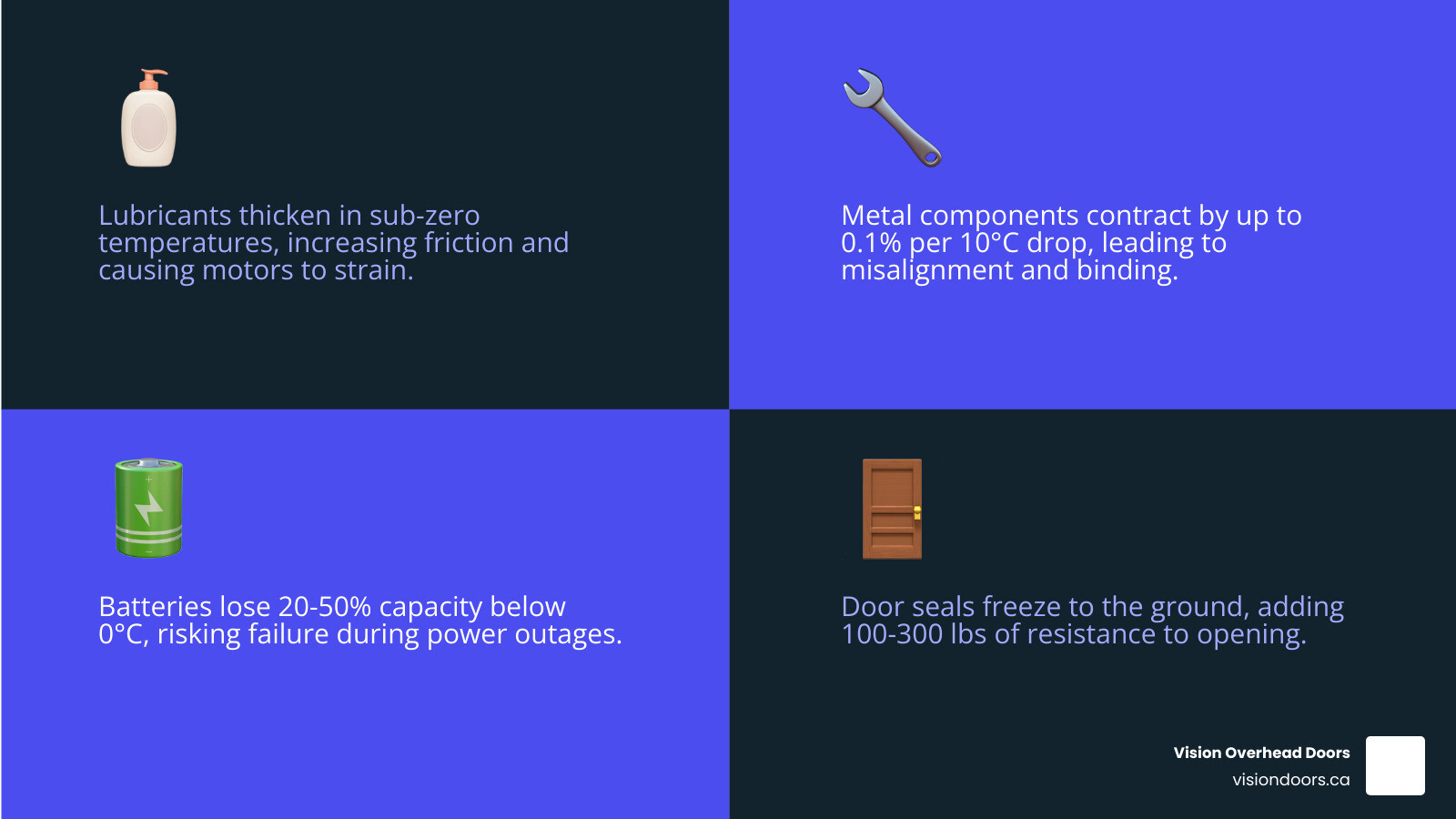
When winter hits the Okanagan Valley, a garage door opener that worked fine in September can become a frustrating problem by January. Lubricants thicken, metal components contract, door seals freeze to the ground, and batteries lose their charge — all at once, often on the coldest morning of the year. Choosing the right opener before that happens is not just about convenience. In a region where temperatures can drop well below freezing for weeks at a time, it is about making sure your garage door actually opens when you need it to.
As someone who has spent over 26 years installing and servicing garage doors across the Okanagan, I am Daryl Rands, and I have seen what separates a reliable cold-climate opener from one that fails the moment frost sets in — making me well-positioned to help you find the best garage door opener for a cold climate for your specific situation. Let’s walk through everything you need to know.
Understanding How Freezing Temperatures Affect Your Opener
When the mercury drops in places like Salmon Arm or Vernon, physics starts working against your garage door system. It isn’t just the opener itself that struggles; it’s the entire mechanical ecosystem of the door.
Thickened Lubricants and Metal Contraction
One of the most common issues we see is lubricant viscosity. Standard grease often turns into a thick, tacky paste in sub-zero temperatures. Instead of helping parts glide, it creates “drag,” forcing the motor to work twice as hard. Simultaneously, metal components—like your tracks, rollers, and the opener’s rail—contract. This can lead to minor misalignments that cause the door to bind or the safety sensors to “ghost,” thinking there is an obstruction when there isn’t.
Battery Power Loss and Frozen Seals
If you have a battery backup, extreme cold is its natural enemy. Lead-acid batteries can lose a significant portion of their capacity when frozen, which is a major concern during winter power outages. Furthermore, if moisture pools at the bottom of your door, the rubber weatherstripping can freeze solid to the concrete. When you hit the button, a weak opener might burn out its motor trying to break that icy bond, or a belt might slip its teeth. This is why Garage Door Opener Repair calls spike the moment the first deep freeze hits the Okanagan.
Comparing Drive Types: Which is the Best Garage Door Opener for a Cold Climate?
Not all openers are created equal when it comes to fighting frost. The “drive type” refers to the mechanism that moves the trolley along the rail.
| Feature | Belt Drive | Chain Drive | Screw Drive | Jackshaft |
|---|---|---|---|---|
| Cold Resistance | High | High | Low | High |
| Noise Level | Ultra-Quiet | Moderate | Loud | Quiet |
| Strength | High | Very High | Medium | High |
| Maintenance | Low | Moderate | High | Low |
Why Belt Drives Excel in BC Winters
For homeowners in Kelowna or Lake Country with attached garages, the belt drive is often the best garage door opener for a cold climate. Modern belts are made of steel-reinforced rubber or polyurethane. Unlike metal chains, these materials don’t contract as severely in the cold and don’t require heavy lubrication that can gum up. They offer a “thermal stability” that keeps them flexible even when it’s -20°C outside.
The Durability of Chain Drives for Heavy Snow Loads
If you have an unheated detached shop in Enderby or a heavy, double-wide insulated door, a chain drive is a powerhouse. Metal chains are incredibly durable and provide the raw pulling force needed to break a door free if the bottom seal is slightly iced over. We recommend models with a one-piece I-beam rail system for these setups, as they resist flexing under the heavy torque required for winter operation.
The Problem with Screw Drives
In the past, screw drives were marketed for their speed and few moving parts. However, in cold climates, they are notoriously finicky. The long threaded steel rod requires constant lubrication with specialized low-temperature grease. If that grease thickens even slightly, the screw can bind, causing the motor to reverse or stall. In our professional opinion, they are rarely the right choice for the Okanagan’s winters.
Explore our full range of Garage Door Openers to see which drive suits your home.
Essential Features for Reliable Winter Performance
When you are looking for the best garage door opener for a cold climate, the “bells and whistles” actually serve a functional purpose in the snow.
DC Motors vs. AC Motors
Most modern high-end openers now use DC (Direct Current) motors. These are smaller, quieter, and much more efficient than old AC motors. More importantly, they allow for “soft start/stop” technology. This means the opener starts the cycle slowly, ramps up speed, and slows down before closing. This reduces the jarring impact on the door’s hardware—crucial when metal parts are brittle from the cold.
Battery Backup and Smart Tech
Winter storms often bring power outages. A battery backup ensures you aren’t trapped outside in a blizzard. Additionally, smart connectivity like myQ or Aladdin Connect allows you to monitor your door from your phone. If the door doesn’t close properly because of a snowdrift or a frozen sensor, you’ll get an instant alert on your phone in the comfort of your living room.
Selecting the Best Garage Door Opener for a Cold Climate Based on Horsepower
Horsepower (HP) is a bit of a misnomer with DC motors (which use “HP-equivalent” ratings), but the principle remains: more power equals less strain.
- 1/2 HP: Suitable for single, uninsulated aluminum doors.
- 3/4 HP to 1-1/4 HP: Strongly recommended for the Okanagan. Most homes here use heavy, high-R-value insulated doors to keep the heat in. A 3/4 HP motor has the torque to lift these doors reliably even when the hardware is stiff from the cold.
Preventing motor strain is the number one way to ensure your Garage Door Opener Installation lasts for 15+ years instead of five.
Maintenance Tips to Survive a Canadian Winter
You wouldn’t head into a BC winter without winter tires on your car; your garage door needs a similar “tune-up.”
- Use the Right Lube: Avoid WD-40. Use a high-quality silicone-based or lithium-based spray designed for low temperatures. Lubricate the rollers, hinges, and springs every six months.
- Check the Balance: Disconnect the opener and lift the door manually. It should stay in place halfway up. If it slams down or shoots up, your springs are out of whack, which will kill your opener motor in the cold.
- Inspect Weatherstripping: Cracked or worn seals let in cold air and allow water to pool and freeze the door to the ground.
- Clean the Sensors: Snow, ice, and even cobwebs can trigger the safety sensors. Wipe them down with a soft cloth regularly.
If you notice your door struggling, don’t wait for it to fail. A quick Garage Door Opener Repair visit can save you from a much larger bill later.
Frequently Asked Questions about Winter Garage Openers
Are wall-mount jackshaft openers good for unheated garages?
Yes, they are excellent. Because they mount on the wall and connect directly to the torsion bar, they eliminate the need for a long rail and trolley. This means fewer moving parts to bind in the cold. They have been tested in extreme environments like Alaska down to -25°F on large doors with zero temperature-related failures. They are also a great space-saver for garages with high ceilings.
Does a battery backup work in extreme cold?
It does, but performance can vary. Most modern units from top brands are designed to handle typical Canadian garage temperatures. However, if your garage is completely unheated and hits -30°C, the battery’s lifespan may be shorter. We recommend testing your battery backup every autumn to ensure it’s holding a charge before the storm season starts.
Why is professional installation recommended in cold regions?
In the Okanagan, a “good enough” DIY install often fails in January. Professional installers understand how to set the “force limits” correctly. If the force is set too low, a slightly stiff cold door will trigger a safety reversal. If it’s too high, the opener might damage the door if it’s frozen to the ground. We ensure the rail is perfectly aligned to account for seasonal shifting and that the sensors are calibrated for high-glare snow conditions.
Conclusion
Finding the best garage door opener for a cold climate doesn’t have to be a chilling experience. By prioritizing a powerful DC motor, a reliable belt or chain drive, and essential features like battery backup, you can ensure your garage remains accessible all winter long.
At Vision Overhead Doors, we pride ourselves on our local expertise across the Okanagan Valley—from Salmon Arm to Kelowna and everywhere in between. We know the local climate because we live here, and we only install industry-leading products that we trust to handle our toughest winters. Whether you need a same-day repair or a brand-new, winter-proof installation, our team is ready to provide the personal, professional service you deserve.
Ready to winter-proof your home? Explore our Garage Door Openers or contact us today for a consultation.