Your Garage Door Works Harder Than You Think — Here’s How Long It Should Last
How long does a garage door last? For most homeowners, the answer is 15 to 30 years — but that range depends heavily on the material, how often you use it, where you live, and how well it’s maintained.
Here’s a quick breakdown:
| Factor | Typical Lifespan Impact |
|---|---|
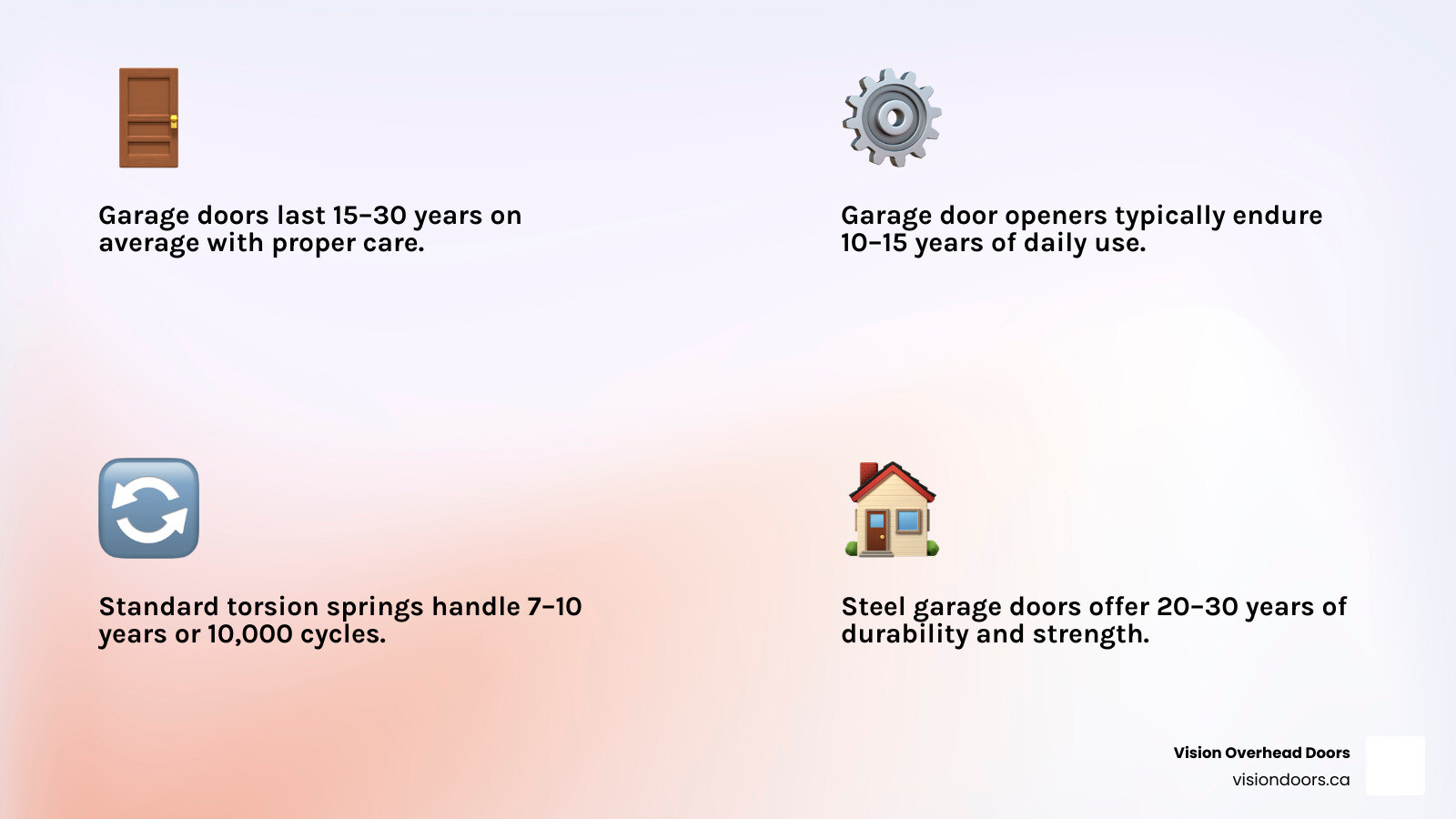
| Well-maintained garage door | 15–30 years |
| Garage door opener | 10–15 years |
| Standard torsion springs | 7–10 years (10,000 cycles) |
| High-cycle torsion springs | 15–20+ years (20,000–30,000 cycles) |
| Steel doors | 20–30 years |
| Wood doors | 15–25 years |
| Aluminum doors | 20–25 years |
| Fiberglass/vinyl doors | 20–30 years |
Your garage door is one of the hardest-working parts of your home. Most families use it more often than their front door — opening and closing it multiple times every single day. That adds up to thousands of cycles a year, and every one of those cycles puts wear on the springs, opener, rollers, and panels. A door that looks perfectly fine from the outside can be quietly wearing out on the inside.
But here’s the good news: with the right materials, proper installation, and a bit of routine care, many garage doors comfortably reach the top end of that 30-year range — or beyond.
I’m Daryl Rands, owner of Vision Overhead Doors and a Red Seal Carpenter with 26 years of hands-on experience in the Okanagan Valley’s garage door industry — and one of the most common questions I hear from homeowners is exactly how long does a garage door last, which is why I want to walk you through everything that shapes that answer. Let’s dig into what actually determines your door’s lifespan, and what you can do to get the most out of it.
Understanding How Long Does a Garage Door Last on Average
When we talk about the lifespan of a garage door, we aren’t just talking about a single slab of metal or wood. We are looking at a complex system of moving parts that must work in perfect harmony. On average, a residential garage door system lasts between 15 and 30 years.
However, “longevity” is a result of system synergy. If the tracks are misaligned, the opener works harder and dies early. If the springs are weak, the door panels experience unnecessary stress and may crack. To maximize the life of your Garage Doors, every component needs to be high-quality and correctly installed.
| Material | Expected Lifespan | Maintenance Level |
|---|---|---|
| Steel (Triple-Layer) | 25–30 Years | Low |
| Solid Wood | 20–30 Years | High (Staining/Painting) |
| Aluminum | 20–25 Years | Low |
| Fiberglass | 20–30 Years | Medium |
| Vinyl/Composite | 25–35 Years | Very Low |
How long does a garage door last based on material?
The material you choose is the foundation of your door’s durability.
- Steel: This is the most popular choice for a reason. Modern steel doors, especially triple-layer insulated models, are incredibly resilient. They resist warping and can last up to 30 years.
- Solid Wood: While beautiful, wood requires a commitment. Without regular painting or staining to prevent rot and moisture damage, its life can be cut short. However, a well-maintained wood door can easily last 30 years.
- Aluminum: Ideal for humid environments because it naturally resists rust and corrosion. It’s lighter than steel, which puts less strain on the opener, though it can be more prone to dents.
- Fiberglass and Vinyl: These are the “set it and forget it” options. They are resistant to salt air and moisture, often lasting 25 to 35 years with almost no maintenance beyond a quick wash.
Choosing the right material during your Garage Door Installation is the first step in ensuring your door outlives your car.
How long does a garage door last in the Okanagan climate?
Living in the Okanagan Valley—from the hot summers in Kelowna to the snowy winters in Silverstar—presents unique challenges. Our extreme temperature fluctuations cause materials to expand and contract. This can lead to hardware loosening over time or wooden doors swelling.
UV exposure is another major factor here. The intense sun can bake the finish off a door, leading to premature aging of the material. In areas like Salmon Arm or Vernon, ensuring you have a door with high-quality, UV-resistant coatings and proper insulation is vital. Regular Garage Door Service Vernon BC helps us catch weather-related wear before it turns into a total system failure.
The Lifespan of Critical Mechanical Components
While the door panels might last 30 years, the mechanical “muscles” of the door have a different timeline. The most critical parts are the springs. Most standard torsion springs are rated for 10,000 cycles. One cycle is one opening and one closing. If you use your door four times a day, those springs will likely last about 7 to 10 years.
If your garage is the main hub of your home, we often recommend high-cycle springs. These are rated for 20,000 to 30,000 cycles and can last two decades. When a spring snaps—often with a loud “bang”—it’s a safety hazard and requires immediate Garage Door Spring Repair.
Garage door opener longevity
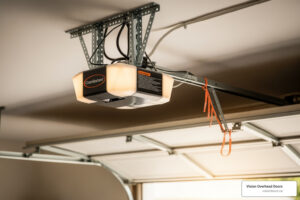
A typical garage door opener lasts between 10 and 15 years. While the motor itself is sturdy, the circuit boards and plastic gears inside eventually wear out. Technology also moves fast; openers made before 1993 lack modern safety sensors and should be replaced for safety reasons alone.
Common signs your opener is nearing the end include:
- Intermittent operation or “ghost” openings.
- Increased noise or vibration.
- The door moving slower than it used to.
Whether you need a new unit from our selection of Garage Door Openers or a quick Garage Door Opener Repair, keeping the motor healthy is key to the door’s overall lifespan.
Hardware and track endurance
The “skeleton” of your door—the rollers, hinges, cables, and tracks—usually lasts about 10 to 15 years. Rollers with ball bearings tend to last longer and run quieter than plain plastic ones. If your tracks become misaligned due to house settling or a minor accidental “bump” with the car, it creates friction. This friction acts like sandpaper on your entire system, grinding down the components. Regular Garage Door Repair and alignment checks can prevent this.
Factors That Influence and Extend System Life
We’ve established that how long does a garage door last depends on the parts, but the most controllable factor is you. Usage frequency is the biggest “silent killer” of garage doors. A door used twice a day for commuting will naturally last years longer than a door used ten times a day for kids’ bikes, trash runs, and pet access.
Installation precision is equally important. If a door is even slightly out of balance, the weight distribution is wrong. This puts thousands of pounds of unnecessary pressure on the cables and the opener motor.
The role of preventative maintenance
Think of your garage door like your car—you wouldn’t drive 100,000 kilometers without an oil change. Preventative maintenance can extend a door’s life by 5 to 10 years.
- Lubrication: Use a silicone-based spray on hinges, rollers, and springs every six months.
- Balance Test: Disconnect the opener and lift the door halfway. If it stays put, it’s balanced. If it falls or snaps up, the springs need professional adjustment.
- Weatherstripping: Replace cracked seals to keep moisture out of the garage, protecting the door’s internal hardware from rust.
- Tightening: Garage doors vibrate. Over time, bolts loosen. A quick turn of a wrench can prevent a panel from falling out of its hinge.
Scheduling an annual Garage Door Service Vernon BC is the easiest way to ensure these tasks are done right.
Repair vs. replacement considerations
Eventually, every homeowner faces the “repair or replace” dilemma.
- Repair if: The door is under 15 years old, the damage is cosmetic (like a single dented panel), or a specific part like a spring or cable has failed.
- Replace if: The door is over 20 years old, has structural sagging, requires frequent expensive repairs, or lacks modern insulation and safety features.
A new Garage Door Installation isn’t just a repair; it’s an investment in curb appeal and energy efficiency, which is especially important with the rising heating costs in the Okanagan. If you find yourself needing Emergency Garage Door Services more than once a year, it’s time to consider a fresh start.
Frequently Asked Questions about Garage Door Longevity
Can a garage door last longer than 30 years?
Yes, it is possible! We frequently see high-quality steel or aluminum doors that have reached the 35 or even 40-year mark. This almost always happens in homes where the door is protected from direct afternoon sun, used infrequently, and serviced professionally every single year.
How many cycles are standard for residential springs?
The industry standard for residential torsion springs is 10,000 cycles. For a busy family opening the door 4 times a day, that equals about 2,500 cycles a year, meaning the springs will likely last 4 to 6 years before needing replacement. High-cycle springs are a great upgrade for high-traffic households.
Should I replace my opener when I get a new door?
It’s highly recommended. While you can reuse an old opener, a new door is the perfect time to upgrade to a motor that matches the door’s weight perfectly. Modern openers also offer Wi-Fi connectivity and better safety features that your 15-year-old motor simply won’t have.
Conclusion
At Vision Overhead Doors, we know that your garage door is a vital part of your daily routine. Whether you are in Sorrento, Armstrong, or Kelowna, our mission is to ensure your door operates safely and reliably for decades. By choosing high-quality Garage Doors, prioritizing professional installation, and keeping up with maintenance, you can ensure your garage door remains a beautiful, functional part of your home for 30 years or more.
With our Red Seal expertise and commitment to same-day service across the Okanagan Valley, we are here to help you maximize your investment. If your door is sounding a bit “tired” or you’re ready for a modern upgrade, give us a call—we’ll make sure your garage door is ready for whatever the Okanagan weather throws at it.