How Long Do Garage Door Springs Last? Here’s What Okanagan Homeowners Need to Know
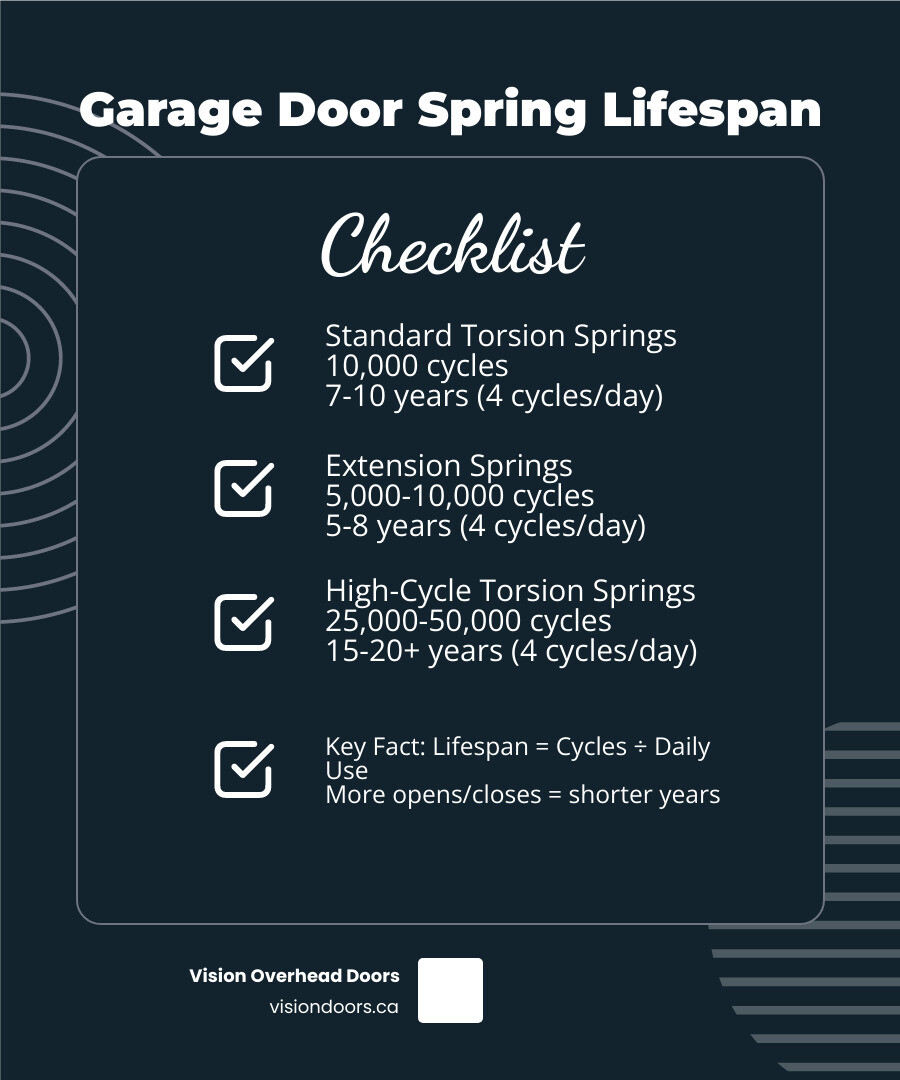
How long do garage door springs last depends on how often you use your door, but here’s the short answer:
| Spring Type | Cycle Rating | Typical Lifespan |
|---|---|---|
| Standard torsion springs | 10,000 cycles | 7-10 years (at 4 cycles/day) |
| Extension springs | 5,000-10,000 cycles | 5-8 years (at 4 cycles/day) |
| High-cycle torsion springs | 25,000-50,000 cycles | 15-20 years |
Use your garage door more than four times a day? Your springs will wear out faster. Use it twice a day or less? They could last considerably longer. The key point: springs are rated in cycles, not years — and your daily habits determine everything.
Most homeowners never give their garage door springs a second thought — until the door refuses to open at the worst possible moment. That loud bang you sometimes hear from inside the garage? That’s a spring giving out under thousands of pounds of stored tension. It happens without warning, and when it does, your door isn’t going anywhere. Understanding what drives spring wear — and what you can do to get ahead of it — can save you from a stressful, inconvenient, and potentially unsafe situation.
I’m Daryl Rands, owner of Vision Overhead Doors and a garage door specialist with 26 years of experience serving the Okanagan Valley, and I’ve seen how climate, usage habits, and spring quality all shape how long do garage door springs last in this region specifically. Let’s break it all down so you know exactly where you stand.
Understanding the Cycle: How Long Do Garage Door Springs Last?
When we talk about the lifespan of your garage door hardware, we have to talk about “cycles.” In the garage door world, one cycle equals the door opening once and closing once. It doesn’t matter if the door stays open for five minutes or five hours; the mechanical stress occurs during the movement.
Most standard builder-grade torsion springs are manufactured to handle approximately 10,000 cycles. While that sounds like a massive number, it disappears faster than you’d think. If your family uses the garage as the main “front door” of the house—heading out for work, school, grocery runs, and letting the dog out—those cycles add up.
How long do garage door springs last based on your daily routine? Let’s look at the math:
| Daily Cycles | Annual Cycles | Estimated Lifespan (10,000 Cycle Spring) |
|---|---|---|
| 2 Cycles | 730 | 13–14 Years |
| 4 Cycles | 1,460 | 6–7 Years |
| 6 Cycles | 2,190 | 4.5 Years |
| 8+ Cycles | 2,920+ | 3 Years or less |
Every time the door moves, the steel in the spring flexes. Over time, this creates “metal fatigue.” Think of it like bending a paperclip back and forth; eventually, the metal weakens to the point where it simply snaps. If you find yourself needing a Garage Door Spring Repair, it’s usually because the metal has reached its physical limit.
Torsion vs. Extension: Which Spring Type Wins the Longevity Race?
Not all springs are created equal, and the type of system installed in your garage plays a massive role in durability.
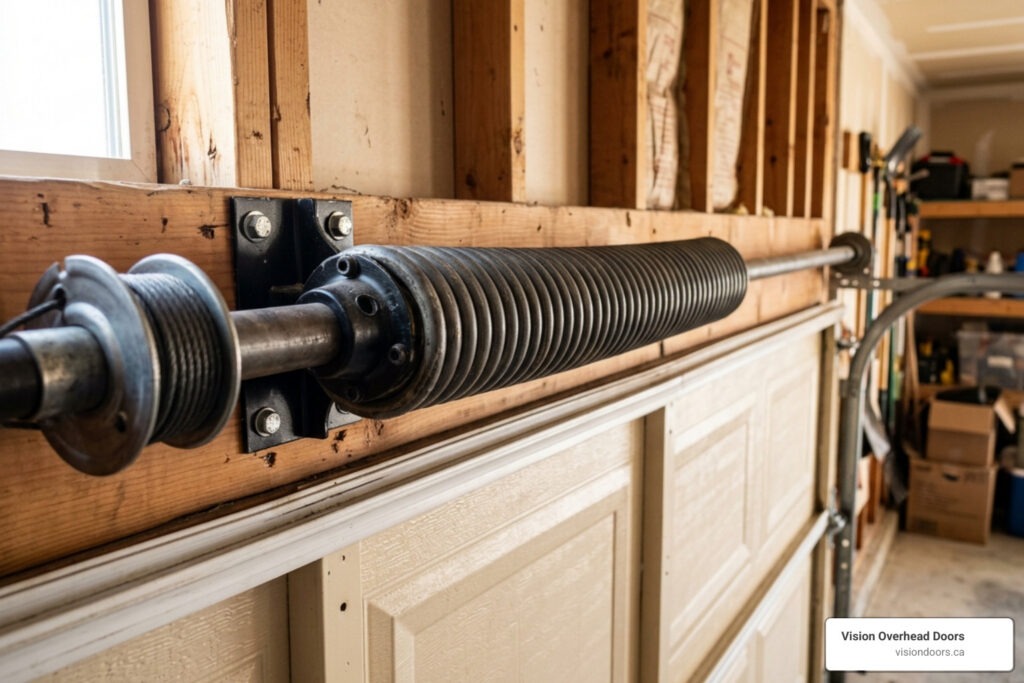
Torsion Springs: These are the modern industry standard. They are mounted on a metal shaft directly above the door opening. When the door closes, cables attached to the bottom corners pull on drums, which winds the springs. This stores massive torque force. Torsion springs are generally safer and last longer (10,000 to 15,000 cycles) because they distribute the door’s weight more evenly across the entire shaft.
Extension Springs: You’ll typically see these on older or smaller doors. They run horizontally along the upper tracks on both sides. Instead of twisting, they stretch (extend) as the door closes. Because they rely on a pulling motion that puts intense localized stress on the metal, they typically have a shorter lifespan, often capped at 5,000 to 10,000 cycles. They also require safety cables running through the center; without them, a snapping extension spring becomes a dangerous projectile.
For businesses in the area, the stakes are even higher. High-traffic bays require heavy-duty solutions, which is why we specialize in Commercial Garage Door Spring Repair in Vernon BC. If you are a homeowner in the surrounding area, our Garage Door Spring Repair Guide Armstrong BC can help you identify which system you currently have.
How Climate Impacts How Long Do Garage Door Springs Last in BC
In the Okanagan, our weather is a major factor in spring health. We experience significant temperature swings—from the scorching heat of July in Kelowna to the freezing winters in Silverstar.
Steel expands and contracts with these temperature changes. Extreme cold, in particular, makes steel more brittle. This is why many springs snap on the first truly cold morning of the year. Furthermore, humidity and moisture can lead to surface rust. Rust creates friction between the coils and acts like sandpaper, eating away at the metal and significantly shortening the cycle life. If you live in a damp or high-elevation area, our Garage Spring Repair Guide Vernon BC offers specific advice for managing these environmental stressors.
High-Cycle Upgrades and How Long Do Garage Door Springs Last
If you have a busy household and don’t want to deal with a broken door every few years, we often recommend “high-cycle” springs. These are made from thicker wire or specialized oil-tempered steel.
While a standard spring handles 10,000 cycles, high-cycle upgrades can be rated for 25,000, 50,000, or even 100,000 cycles. For a modest increase in initial investment, you can effectively double or triple the time between repairs. This is the single best way to ensure long-term value, especially for heavy insulated doors or families with multiple drivers. For those in the northern part of our service area, check out the Garage Door Spring Repair Enderby Guide for more on high-durability options.
Factors That Shorten the Lifespan of Your Garage Door Springs
Beyond simple usage, several “stealth” factors can kill your springs prematurely:
- Door Weight: Adding insulation panels or a fresh, heavy coat of paint to a wooden door increases the load. If the springs weren’t recalibrated for that extra weight, they are working harder than they were designed for. Adding just 10 pounds to a door can reduce spring life by up to 30%.
- Lack of Lubrication: This is the #1 cause of early failure. When coils rub against each other without lubricant, the friction creates heat and wear.
- Track Misalignment: If your tracks are bent or out of plumb, the door doesn’t move smoothly. This causes the springs to pull unevenly, putting “side-load” stress on the coils.
- Glass Panels: Modern “full-view” glass doors are beautiful, but they are incredibly heavy. These require specific high-torque springs to manage the weight.
If you find yourself in a bind, we provide Emergency Garage Door Spring Repair in Armstrong BC to get your life back on track. For those looking for the most reliable local technicians, Armstrong BC’s Top Picks Expert Garage Door Spring Repair You Can Trust highlights our commitment to quality service.
Warning Signs and Maintenance: Extending the Life of Your Springs
You don’t have to wait for a “bang” to know your springs are failing. Keep an ear and eye out for these red flags:
- The “Heavy Door” Test: Pull the red emergency release cord while the door is closed. Try to lift the door manually. It should feel light enough to lift with one hand. If it feels like you’re lifting a dead weight, the springs have lost their tension.
- Visible Gaps: If you see a 2-inch gap in the coils of your torsion spring, it’s already broken.
- Unusual Noises: Squeaking, grinding, or a loud “popping” sound during operation indicates the coils are binding or the metal is fatigued.
- Slow Movement: If the opener seems to be straining or the door moves slower than usual, the springs are no longer doing their share of the work.
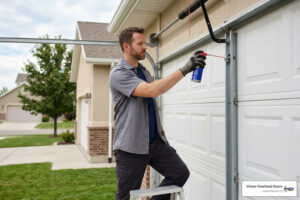
To extend the life of your springs, we recommend applying a silicone-based lubricant or white lithium grease to the coils every six months. Avoid WD-40, as it is a degreaser, not a long-term lubricant.
For more professional maintenance tips, see The Essential Guide to Commercial Garage Door Spring Repair in Armstrong BC or consult the Best Garage Door Spring Repair in Vernon BC.
Calculating the Remaining Life of Your Garage Door Springs
To estimate how much life your springs have left, try to recall the installation date. If you’ve lived in your home for seven years and use the door four times a day, you are likely in the “red zone” for a failure. Proactive replacement is almost always cheaper and less stressful than an emergency call on a Monday morning when you’re late for work. If that happens, though, you might find yourself asking: My Garage Door Spring Broke Who Offers Same Day Repair in Salmon Arm? (Spoiler: We do).
Why Professional Replacement is Non-Negotiable
We love a good DIY project as much as anyone, but garage door springs are the exception. These springs are under enough tension to lift a 400-pound door. If a winding bar slips or a bolt shears during a DIY attempt, the force released can cause severe injury or even death.
Professional replacement ensures:
- Correct Sizing: We use specialized scales to weigh your door and ensure the new springs have the exact wire gauge and length required.
- System Balance: We don’t just “swap” the part; we calibrate the entire system so the door stays perfectly level.
- Safety: We use professional-grade winding bars and safety equipment to manage the tension safely.
- Dual-Spring Strategy: If one spring breaks, the other has endured the exact same number of cycles and is likely days or weeks away from failing. We always replace them in pairs to save you a second service call and keep the door balanced.
Frequently Asked Questions about Garage Door Springs
Should I replace both springs if only one breaks?
Yes, absolutely. Springs are like tires—they wear out at the same rate. If one has snapped, the other has reached its fatigue limit as well. Replacing both ensures the door remains balanced and prevents the second spring from snapping shortly after the first is fixed, which would cost you another service fee.
Can I open my garage door with a broken spring?
We strongly advise against it. While a powerful opener might be able to “force” the door up, you are putting immense strain on the motor and the plastic gears inside. Furthermore, if the cables slip, the door can slam down with hundreds of pounds of force, potentially crushing anything (or anyone) underneath.
Does cold weather cause springs to snap?
Cold weather doesn’t “cause” the break, but it acts as the catalyst. Cold makes the steel more brittle. If a spring is already near the end of its cycle life, the added stress of a freezing Okanagan morning is often the final straw that causes the metal to fail.
Conclusion
At Vision Overhead Doors, we understand that a broken garage door is more than just a minor inconvenience—it’s a disruption to your safety and your schedule. Whether you are in Salmon Arm, Vernon, Kelowna, or anywhere in the Okanagan Valley, our team is dedicated to providing local expertise and premium craftsmanship. We pride ourselves on same-day service and competitive pricing, ensuring that your home remains secure and your daily routine stays on track.
Don’t wait for your springs to give out. If you suspect your door is getting “heavy” or you’ve passed that seven-year mark, give us a call. We’ll help you find the right high-cycle solution to keep your door running smoothly for years to come.