Waking Up to a Frozen Garage Door: What Should You Do?
Have you ever pressed your remote on a frigid morning, only to hear the motor groan in protest while the heavy panels refuse to budge? If you are looking to get common homeowner questions answered about winter maintenance, a frozen garage door usually tops the list for our team at Vision Overhead Doors. Waking up to find your garage door frozen solid to the concrete pad is an incredibly stressful start to the day. You are suddenly faced with an immediate decision: do you try to force the door open, dump chemical de-icers on the driveway, or find a safe way to break the ice without ruining your equipment?
For homeowners planning a new garage door installation or needing immediate garage door opener repair, understanding how ice affects your system is the most important step in preventing catastrophic damage. In our experience servicing Enderby BC, attempting to force the door upward with the motor is the number one way to turn a smooth, quiet garage door opener into a severely damaged, noisy machine. The sharp winter temperature drops we experience cause rapid freezing overnight, locking the rubber seal directly to the porous concrete of your driveway.
Understanding exactly why this happens is the first step to preventing long-term damage to your entire garage system. When you know the physical mechanics at play during a deep freeze, you can take the right preventative measures. Throughout the North Okanagan winter freeze-thaw cycle, our technicians see this scenario play out repeatedly, catching unprepared homeowners off guard and leading to expensive, avoidable mechanical failures.
The Science Behind the Freeze: Why Bottom Seals Stick to Concrete
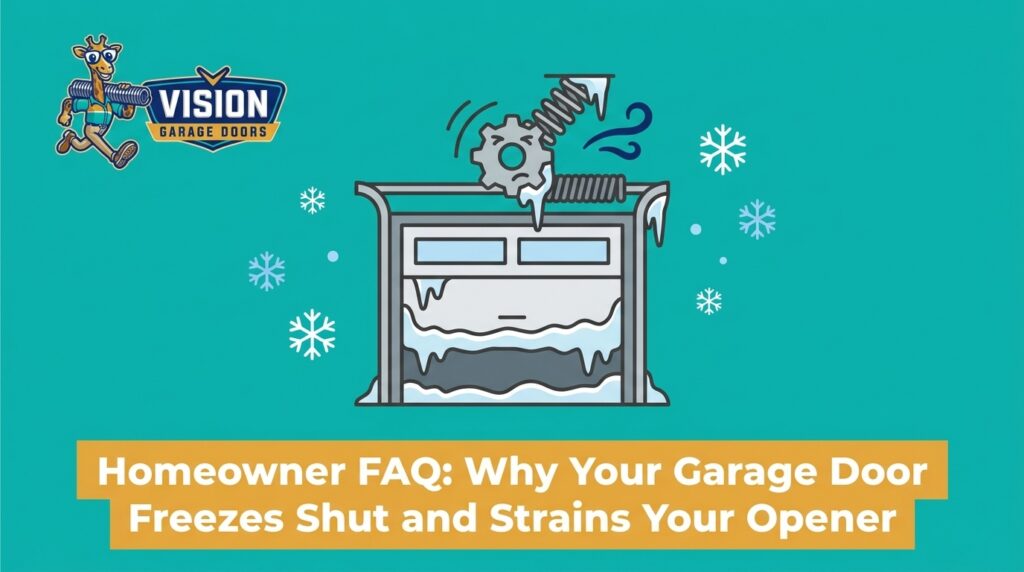
The bond between a frozen garage door seal and a concrete pad is deceptively strong. To understand why your door gets trapped, we have to look at the physical mechanics of regional weather shifts. Water expands by approximately 9% when freezing. As the water freezes, it expands into the microscopic pores of the concrete and grips the rubber or PVC weather stripping, creating a powerful, glue-like bond that easily resists the lifting force of a standard opener.
The North Okanagan winter freeze-thaw cycle exacerbates this problem significantly. During the day, sunlight or slightly elevated temperatures cause snowmelt. Water drips off your vehicle, runs down the face of the garage door, and pools right at the threshold. As evening approaches and temperatures plummet, this pooled water rapidly refreezes. This creates the perfect conditions for threshold ice buildup, trapping the weather stripping completely.
The Impact on Your Weather Stripping
When standard weather stripping freezes to the ground, the lifting force of the automatic opener pulls upward while the ice holds the bottom edge firmly in place. This tug-of-war causes the material to stretch, warp, and eventually tear. Thermal contraction also plays a role; as temperatures drop, standard materials shrink and stiffen, making them even more susceptible to cracking under pressure.
Capillary action draws standing water slightly upward under the seal before it freezes, ensuring the ice bond is as thick and pervasive as possible. By the time you wake up and hit the remote, that thin layer of water has transformed into a solid anchor. If the door does manage to break free, our repair crews often find chunks of the bottom seal permanently frozen to the concrete, destroying your defense against drafts and pests for the rest of the year.
Safe Steps to Open a Frozen Garage Door (Without Causing Damage)
When you are trapped inside or outside your garage, panic often leads to poor decisions. It is critical to take safe, immediate actions to free the door while strictly avoiding dangerous DIY methods that could cause severe injury or property damage.
What to Do Immediately
- Disconnect the automatic opener: Always pull the red emergency release cord before attempting to free the door. This disconnects the trolley from the motor, preventing motor burnout if someone accidentally hits the wall button while the door is frozen solid.
- Apply gentle heat: Use warm water or a heat gun on its lowest setting to gently melt the ice bond along the bottom edge. If you use warm water, be prepared to dry the area quickly afterward so you do not create a dangerous slipping hazard that will just refreeze later.
- Clear the threshold: Carefully chip away excess ice from the concrete pad using a plastic scraper. Work inches away from the door to avoid accidental contact with the rubber seal, which is highly brittle in sub-zero temperatures and easily sliced.
- Lift manually: Once the ice bond is broken, lift the door manually using the lift handles. It should move smoothly. If it still feels locked in place, stop immediately—the tracks or rollers may also be frozen.
What to Avoid at All Costs
Never attempt to adjust bottom brackets, cables, or springs yourself to force the door upward. These components are under extreme tension, holding the entire weight of the door. Tampering with them requires a licensed professional. Additionally, never use an open flame, such as a blowtorch, near the bottom seal, as it will instantly melt the weather stripping and potentially damage the door panels.
For many Enderby rural and residential properties we visit, dealing with a frozen door is a seasonal reality, but handling it correctly ensures you do not turn a minor inconvenience into a major mechanical disaster.

How a Frozen Seal Destroys Your Quiet Garage Door Opener
The visible problem is the ice on the ground, but the hidden danger lies above your head in the opener motor. A frozen door acts as a massive dead weight against the motor when the automatic lift is engaged. Garage door openers are designed to guide a perfectly balanced door, not to deadlift hundreds of pounds of wood or steel that are anchored to the concrete.
When you press the remote and the door is frozen, the motor immediately exerts maximum force. Forcing the door open against an ice bond strips the internal nylon gears and burns out the motor’s drive system. The nylon gears are designed to strip as a fail-safe to prevent the motor from catching fire or tearing the door off the tracks, but replacing them is an intensive repair. If the gears do not strip, we frequently see the strain transfer to the J-arm and the trolley, bending metal components out of alignment.
The Progression of Winter Strain
What starts as a premium, silent system quickly becomes a rattling, struggling machine due to this excess vibration and strain. You might notice the motor humming loudly without the door moving, or the chain sagging dramatically when the opener engages. Over time, this repeated winter strain often leads to premature failure, requiring complete replacement of the opener unit long before its expected lifespan is reached.
If you have recently invested in one of the quietest garage door openers on the market, subjecting it to a frozen bottom seal is the fastest way to ruin its smooth operation. The North Okanagan winter freeze-thaw cycle forces the motor to work overtime, fighting against friction and ice adhesion day after day.
Builder-Grade PVC vs. Cold-Weather Rubber Seals
Not all weather seals are created equal. The material sitting at the bottom of your garage door dictates how well it will perform when the temperature plummets. Standard PVC weather seals, which are incredibly common on new builds and track homes in our area, become brittle, stiffen, and crack at freezing temperatures. Because builders prioritize cost-efficiency, PVC is the default choice, but we find it is wholly inadequate for harsh winters.
Many Enderby rural and residential properties are particularly vulnerable to builder-grade failures due to their open exposure to the elements, strong wind chills, and heavy snow drifts. When a PVC seal stiffens, it can no longer compress against the uneven surface of the concrete, leaving gaps for cold air, water, and mice to enter.
Comparing Bottom Seal Materials
| Feature | Builder-Grade PVC Seals | Cold-Weather EPDM Rubber |
|---|---|---|
| Flexibility in Cold | Stiffens and becomes rigid below freezing. | Remains highly flexible in sub-zero temperatures. |
| Ice Adhesion | High risk of freezing directly to wet concrete. | Resists water bonding, lowering the risk of freezing. |
| Durability | Prone to cracking, tearing, and splitting over time. | Highly durable, resisting compression set and tearing. |
| Sealing Ability | Leaves gaps when rigid, allowing drafts and water in. | Compresses fully, conforming to uneven concrete pads. |
| Long-Term Value | Requires frequent replacement after harsh winters. | Acts as a multi-year preventative measure. |
EPDM (Ethylene Propylene Diene Monomer) rubber seals are designed specifically for extreme cold. We always recommend upgrading to a cold-weather seal as a preventative measure, stopping water ingress and reducing the chance of ice bonding in the first place. Because it stays pliable, it creates a proper barrier even in the worst sub-zero conditions.
Why Upgrading Your Weather Seal Requires Professional Calibration
Swapping out a torn, frozen PVC seal for a thick, heavy-duty EPDM rubber seal sounds like a straightforward weekend project, but it is actually a mechanical alteration to your garage door system. Installing heavy-duty cold-weather seals changes the door’s seating thickness and overall balance. The new seal is often thicker and more resilient, meaning the door physically sits higher off the concrete when fully closed than it did with the flattened PVC seal.
If the opener’s travel limits and force settings are not recalibrated to account for this new thickness, the motor will continue to push the door down, straining against the concrete. The opener will think the door has hit an obstruction, causing it to automatically reverse and open back up, leaving your garage exposed to the winter night. Alternatively, it may crush the new seal prematurely.
The Importance of System Balance
Professional calibration ensures the entire system is perfectly balanced, eliminating the rattling and vibrations common in DIY setups. Our team at Vision Overhead Doors provides professional calibration during installation, ensuring the opener system is perfectly balanced to eliminate rattling and unnecessary motor fatigue. A technician will adjust the down-travel limits precisely so the EPDM rubber compresses just enough to seal out the weather without fighting the motor.
A properly calibrated system protects your investment and ensures the opener runs smoothly and quietly all winter long. If you suspect your door is out of balance or your current seal is failing, scheduling professional garage door repair before the deep freeze hits is the smartest move you can make for your home’s exterior.
Frequently Asked Questions About Winter Garage Door Issues
Winter weather introduces a host of unique challenges for mechanical systems. The North Okanagan winter freeze-thaw cycle is notoriously tough on exterior hardware. Here are detailed answers to the most common winter operational questions we see from homeowners.
How do I unfreeze my garage door safely?
Disconnect the opener first to protect the motor from accidental engagement. Use warm water to melt the ice bond at the threshold, working slowly from one side to the other. Do not pry the door with sharp metal tools, as this will slice the rubber weather stripping and scratch the paint on your bottom panel. Once the ice is melted, lift the door manually and clear the remaining slush from the concrete to prevent refreezing.
Can a frozen door damage my garage door opener?
Yes, it causes severe motor strain the moment the automatic cycle begins. It can strip internal nylon gears, bend the trolley arm, and burn out the drive system entirely. This hidden mechanical stress is the leading cause of noisy, failing openers we replace in winter. If the opener hums but the door does not move, stop pressing the button immediately to limit the damage.
What type of garage door seal is best for freezing weather?
EPDM rubber seals are superior for climates that experience harsh freezes. They remain flexible in cold temperatures unlike standard builder-grade PVC, which turns rigid and brittle. This flexibility prevents the brittle cracking that leads to drafts, water pooling, and pest intrusions. EPDM also conforms better to the natural imperfections in your concrete driveway.
Will salt damage my garage door seal or concrete pad?
Yes, rock salt can accelerate concrete degradation, leading to pitting and spalling right where your door needs a smooth surface to seal. It can also dry out and damage rubber seals over time, causing them to crack prematurely. Use calcium chloride or sand as a safer alternative near the threshold, and always sweep away the residue once the ice has melted.
Why does my garage door opener struggle in winter?
Metal components contract and standard lubricants thicken in the cold, increasing the natural friction within the tracks and hinges. Added weight from frozen seals or accumulated snow forces the motor to work harder to lift the panels. Furthermore, a lack of winter calibration leads to imbalances, meaning the opener is lifting dead weight rather than guiding a balanced system.
How do I prevent my garage door from freezing to the ground in the future?
Keep the concrete pad clear of snow and standing water, especially during the warmer daytime hours when snowmelt runs toward the garage. Upgrade to a cold-weather EPDM bottom seal that resists ice adhesion. Finally, have a professional check the door’s balance and opener limits before winter arrives to ensure the system isn’t pressing the seal too hard into the wet concrete.
Protect Your Home and Opener Before the Next Deep Freeze
Don’t wait until you’re trapped by a frozen door on a freezing morning, frantically boiling water while you are late for work. Dealing with a malfunctioning overhead door in the middle of a cold snap is frustrating and entirely preventable. A professional cold-weather seal upgrade is the most effective long-term solution for homes facing the North Okanagan winter freeze-thaw cycle.
By upgrading your hardware and having your travel limits properly calibrated, you safeguard your opener motor from hidden strain and keep your system running quietly for years to come. Take action now to protect your property and ensure smooth operation regardless of what the weather does. Reach out to our local experts at Vision Overhead Doors for garage door opener repair and maintenance to ensure your garage is fully prepared for the season.