Waking Up to a Frozen Garage Door
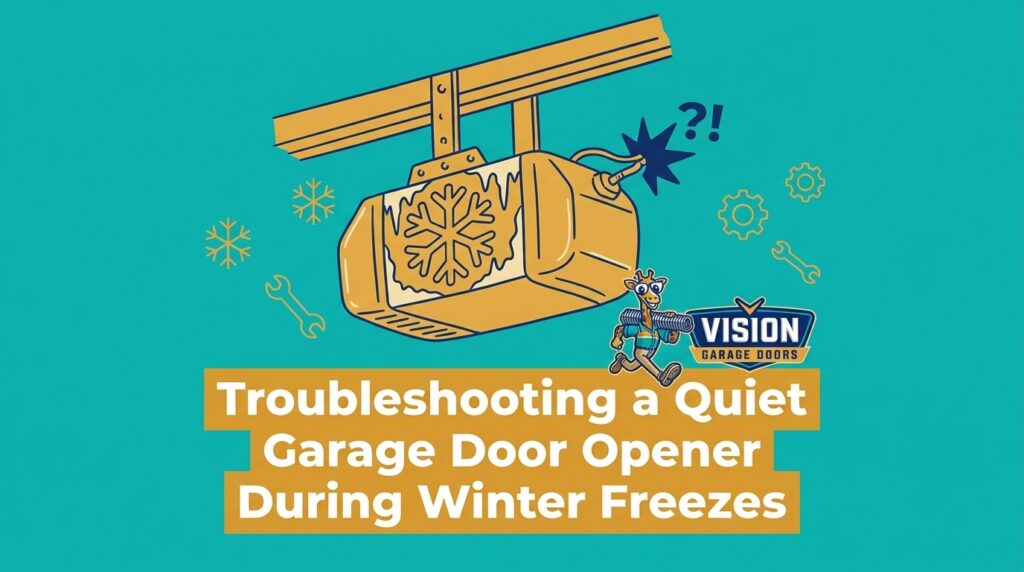
Mastering basic home maintenance tips and troubleshooting is never more critical than when you wake up to a garage door frozen solid to the concrete pad. Your vehicle is packed, your breath is visible in the bitter morning air, and you press the wall button—but nothing happens. Instead of the smooth, silent operation you expect, you hear a deep hum, a sudden clunk, and the door remains firmly anchored to the ground. This is a scenario that plays out across the region every winter, turning a routine departure into an immediate, high-stress problem.
The North Okanagan winter freeze-thaw cycles are notorious for creating these sudden ice traps overnight. Snow melts during the slightly warmer afternoon hours, pools at the base of your driveway, and rapidly freezes into a solid block of ice as evening temperatures plummet. The immediate instinct for most homeowners is to simply press the opener button again, hoping the motor will eventually power through and break the ice free. However, doing so is one of the fastest ways to severely strain your equipment and cause lasting mechanical failure.
Before you risk causing expensive damage to your system, you need to diagnose whether you are dealing with a severe mechanical breakdown or simply a stubborn weather seal locked in ice. Knowing how to approach this problem safely is the key to protecting your home’s access points. If you suspect your motor has already taken a hit from forcing a frozen door, scheduling professional garage door opener repair is your safest next step. But if you just need to safely break the ice bond without destroying your equipment, understanding the mechanics of cold-weather operation is your first line of defense.
How Extreme Cold Impacts Your Garage Door System
To effectively troubleshoot a frozen door, you first need to understand exactly what extreme winter weather does to the moving parts of your system. Enderby’s sharp winter temperature drops create the perfect conditions for material cracking, metal contraction, and severe ice adhesion. When the temperature falls below freezing, every component of your garage door system reacts, often working against the motor that is trying to lift it.
First, consider the metal components. Cold weather causes steel tracks, hinges, and rollers to physically contract. This microscopic shrinkage tightens the tolerances between moving parts, drastically increasing the friction required to move the door. Lubricants that operate perfectly in July can thicken into a sticky sludge in January if they are not rated for sub-zero temperatures. This increased resistance is exactly why a normally silent operation suddenly sounds significantly louder and more strained during a cold snap.
Second, standard weatherstripping is highly vulnerable to freezing temperatures. The bottom seal of your door is designed to keep drafts out, but standard PVC seals harden and lose their flexibility when exposed to extreme cold. Once hardened, they easily freeze to the concrete pad. If you are considering a full system upgrade to combat these issues, investing in professional garage door installation ensures you get a door equipped with winter-ready seals and insulated panels right from the start.
Comparing Bottom Seals in Winter Conditions
| Seal Material | Cold Weather Flexibility | Ice Adhesion Risk | Best Application |
|---|---|---|---|
| Standard PVC / Vinyl | Becomes rigid and brittle below freezing. | High. Easily freezes to wet concrete pads. | Mild climates with rare freezing temperatures. |
| Rubber (EPDM) | Retains moderate flexibility in the cold. | Medium. Better resistance to pooling water. | Moderate climates with occasional snow. |
| Arctic-Grade Silicone | Remains fully flexible in sub-zero drops. | Low. Naturally repels water and resists freezing. | Enderby rural and residential properties. |
Understanding these material limitations explains why your door behaves differently in the winter. Cold-weather reliability requires specialized lubrication, resilient seals, and a clear understanding of when your system is reaching its physical limits.
Safe Steps to Thaw a Frozen Garage Door
When you are faced with a door firmly frozen to the ground, patience is your best tool. Attempting to rush the process can lead to torn weatherstripping, dented bottom panels, or a burned-out motor. Following a safe, methodical process is essential to protecting your investment during the unpredictable North Okanagan winter freeze-thaw cycles.
Here is the safest way to unfreeze your door without violating your equipment warranties or risking electrical components:
- Keep the opener disengaged: Never use the motor to force a frozen door open. Your very first step should be to pull the red emergency release cord hanging from the trolley. This physically disconnects the door from the automated opener, ensuring that no accidental button presses can engage the motor while the door is stuck.
- Clear the exterior ice: Use a plastic scraper to carefully chip away any visible ice buildup along the exterior threshold. Never use a metal shovel or ice pick near the door, as one slip can easily slice through the bottom seal or dent the steel panels.
- Melt the remaining bond: Pour warm (never boiling) water along the bottom edge where the seal meets the concrete. Boiling water can crack cold concrete and instantly warp hardened rubber seals. Alternatively, a heat gun or hair dryer set to its lowest setting can be swept back and forth across the threshold to gently weaken the ice bond.
- Apply gentle manual leverage: Once the ice begins to melt, do not yank the door violently. Use the manual lift handles to apply steady, upward pressure. If the door does not yield easily, stop and apply more warm water. You want the ice to break, not the rubber seal.
- Dry the concrete pad thoroughly: Once the door is open, your job is not finished. Use an old towel or a push broom to completely dry the concrete pad and the bottom of the weatherstripping. If you leave the area wet, the door will simply freeze shut again the moment you close it.
- Avoid DIY mechanical work: If the door still feels incredibly heavy after the ice is cleared, or if it refuses to stay open manually, you likely have a spring issue. Never attempt to adjust torsion springs, cables, or gears yourself, as these components are under extreme tension and require a licensed professional.

What Happens When You Force a Frozen Door?
It is easy to underestimate the sheer power generated by modern garage door openers, but that power is exactly what causes catastrophic damage when the door is immobilized by ice. Across Enderby rural and residential properties, one of the most common winter service calls involves a motor that has torn itself apart trying to lift a frozen door.
The Vulnerability of DC Motors
Most modern, high-quality openers utilize Direct Current (DC) motors. These motors are prized because they offer smooth starts and stops, which significantly reduces noise and wear on the door. However, they also feature highly sensitive electronic force settings. When you hit the button and the door is frozen to the ground, the motor immediately detects massive resistance. In a properly functioning system, this resistance triggers a safety reversal, shutting the motor down to prevent damage or injury.
But if a homeowner repeatedly hits the button, forcing the motor to bypass its safety limits, the internal components take the brunt of the force. To protect the expensive motor core from burning out, manufacturers design the internal drive gears out of nylon. These nylon gears are meant to be the weak link—they will strip and shred into white plastic shavings before the motor itself catches fire or melts.
Drive Systems Under Extreme Strain
The type of drive system you have also dictates how it handles winter strain. If you are researching the quietest garage door openers, you will likely encounter belt-drive systems. While steel-reinforced rubber belts are incredibly quiet and durable, forcing them against a frozen door can cause the belt to slip off the sprocket or stretch beyond its functional limits. Chain-drive systems might not stretch, but the immense tension can snap the chain connector or bend the J-arm bracket that attaches the trolley to the door.
Ultimately, the direct mechanical link between a frozen bottom seal and your motor means that ice always wins the tug-of-war. If you hear a humming sound but the chain or belt isn’t moving, or if you find white plastic shavings on the floor beneath the motor casing, the internal gears have stripped. Replacing a stripped gear is not a DIY project; it requires a licensed professional to safely dismantle the motor housing, replace the gear assembly, and recalibrate the electronic travel limits.
The Role of Proper Door Balance in Winter
While clearing ice and upgrading weatherstripping are critical steps, the ultimate defense against winter motor strain is something you cannot easily see: proper door balance. A perfectly calibrated door is the secret to achieving truly quiet operation and extending the lifespan of your motor, especially during the harsh North Okanagan winter freeze-thaw cycles.
What does it mean for a garage door to be balanced? A garage door is incredibly heavy, often weighing between 150 and 300 pounds. The motor on your ceiling is not actually designed to lift that dead weight. Instead, the heavy lifting is done by the high-tension torsion springs mounted above the door. When the springs are perfectly tensioned, they counterbalance the exact weight of the door panels. The motor’s only job is to provide a slight push or pull to get the door moving along the tracks.
“A perfectly balanced garage door should feel almost weightless when operated by hand. If it feels heavy to you, it feels heavy to your motor—and winter weather will only multiply that strain.”
When a door is unbalanced—usually because the springs have weakened over time or were not calibrated correctly upon installation—the motor is forced to lift the excess weight. In the summer, a strong motor might power through this imbalance unnoticed. But in the winter, when the metal tracks contract and the rollers stiffen, that excess weight becomes too much to handle. The motor overheats, the gears grind, and the system fails.
This is why local Okanagan expertise is so vital. Ensuring opener installations are perfectly calibrated and balanced requires precise calculations of door weight, track radius, and spring wire gauge. You can safely test your own door’s balance by pulling the emergency release cord and manually lifting the door halfway open. If the door stays in place, it is balanced. If it slams to the ground or shoots upward, the springs require immediate professional calibration before the next freeze hits.
When to Replace Your Bottom Weatherstripping
If you find yourself frequently battling a frozen door, the root cause is likely failing weatherstripping. The bottom seal is your first line of defense against the elements, but it is also a wear-and-tear item that degrades over time. Across Enderby rural and residential properties, replacing an old, hardened seal with a modern, arctic-grade alternative is one of the most effective ways to winterize a garage.
Knowing when your seal has reached the end of its functional life can save you from daily thawing routines and potential motor damage. Look for these clear indicators that it is time for a replacement:
- Visible daylight: Stand inside your garage during the day with the door closed and the lights off. If you can see sunlight creeping in under the bottom panel, the seal is no longer making flush contact with the concrete, allowing freezing air and moisture to enter.
- Deep cracking and brittleness: Run your hand along the rubber seal. If it feels stiff, crumbly, or has deep visible cracks, it has lost its elasticity. Brittle seals cannot compress properly to form a watertight barrier.
- Pooling water: If you notice puddles forming just inside the garage door after snowmelts or rain, the seal is failing to push water away from the threshold. This pooling water is exactly what freezes overnight and locks the door to the pad.
- Torn or missing sections: If previous attempts to pry the door from the ice resulted in ripped chunks of rubber, the seal’s integrity is permanently compromised.
While sliding a new rubber insert into the bottom retainer might seem simple, the process often reveals underlying issues with the track alignment or the concrete pad itself. A fresh seal will only prevent freezing if the door closes evenly across the entire threshold. If your tracks are slightly misaligned, one side of the seal will compress too much while the other side leaves a gap. Calling a professional for comprehensive garage door repair ensures that the new weatherstripping is installed correctly, the tracks are perfectly aligned, and the door seats flawlessly against the concrete, keeping the winter weather exactly where it belongs—outside.
Frequently Asked Questions About Winter Garage Door Care
How do I safely unfreeze my garage door?
Use warm water or a heat gun on the lowest setting to melt the ice bond gently. Always pull the emergency release cord first to disconnect the motor, ensuring no one accidentally engages the opener while you are working. Never use boiling water, as the extreme temperature shock can crack your concrete pad and permanently warp the rubber weatherstripping. Once the ice softens, lift the door manually and thoroughly dry the area to prevent it from freezing shut again during the North Okanagan winter freeze-thaw cycles.
Can a frozen door damage my garage door opener motor?
Yes, forcing it can strip the gears or burn out the motor entirely. When the door is immobilized by ice, the motor continues to push with immense force. Because the internal drive gears are often made of nylon to protect the core electrical components, this resistance will quickly shred the gears into plastic shavings, rendering the opener useless until a professional replaces the internal assembly.
Why is my quiet garage door opener suddenly loud?
Cold weather stiffens metal parts and thickens improper lubricants, increasing friction. As temperatures drop, the steel tracks and rollers contract slightly, tightening the tolerances of the moving parts. If standard summer-grade lubricants were used on the hinges and rollers, they can turn into a thick, sticky sludge in freezing temperatures, causing the system to groan and strain as it operates.
Will cold weather break my garage door opener?
Not on its own, but operating an unbalanced or frozen door during cold weather will cause damage. Modern garage door openers are designed to withstand freezing ambient temperatures. However, the secondary effects of the cold—such as contracted metal, hardened weatherstripping, and ice buildup—create massive physical resistance. It is this mechanical strain, rather than the cold air itself, that breaks the equipment.
What type of lubricant is best for winter?
A low-temperature lithium-based grease is recommended to prevent gumming up in freezing temperatures. Unlike standard WD-40, which is a solvent that strips away existing grease, or heavy mechanic’s grease that hardens in the cold, a high-quality lithium spray maintains its viscosity. Applying this to your hinges, rollers, and springs before winter hits ensures smooth, quiet operation regardless of the temperature drop.
Protect Your Equipment Before the Next Freeze
Navigating winter weather requires a proactive approach to protect your home’s heaviest moving entry point. While understanding safe DIY thawing methods is essential for those unexpected freezing mornings, the best strategy is to prevent the ice bond from forming in the first place. By upgrading to arctic-grade weatherstripping, ensuring your tracks are free of debris, and maintaining the perfect torsion balance, you can protect your quiet motor from catastrophic winter strain.
When it comes to home maintenance tips and troubleshooting, knowing your limits is just as important as knowing the solutions. If you are constantly battling a frozen threshold, hearing grinding noises from your motor housing, or suspect your door is lifting dead weight, it is time to seek expert help. Taking action across Enderby rural and residential properties before the harshest weather hits ensures your system remains reliable, safe, and whisper-quiet all season long.