When Autumn Chills the Okanagan: The Annual Pest Invasion
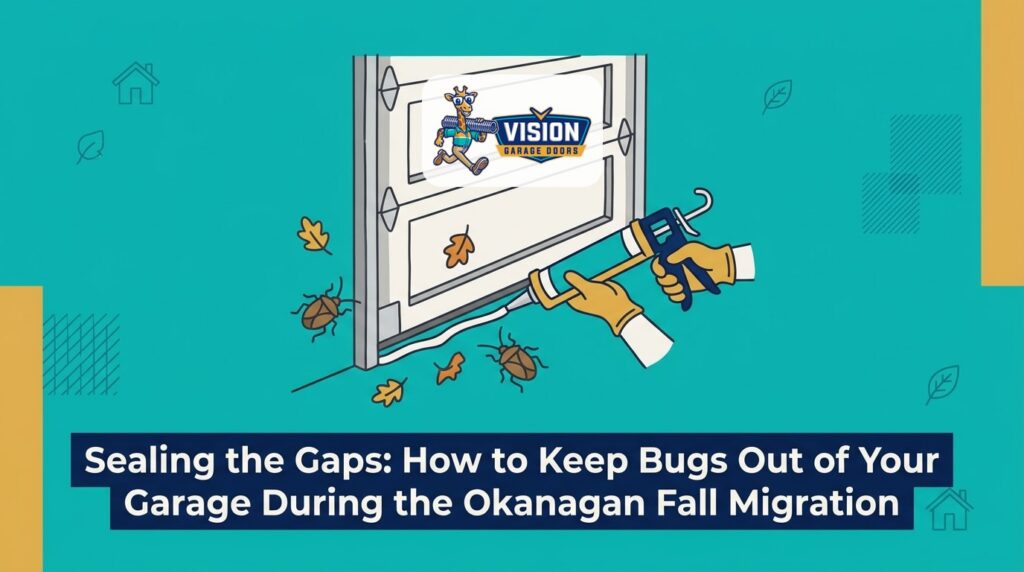
When late September brings crisp, near-freezing nights to the Valley, Sealing the Gaps: Preventing Okanagan Stink Bugs from Breaching Your Garage becomes an immediate priority for local homeowners. Here at Vision Overhead Doors, our team typically sees a huge influx of service calls as this rapid temperature drop acts as a biological alarm clock for cold-blooded insects, sending them scrambling for warmth. If you find yourself wondering exactly how to keep bugs out of garage spaces during this seasonal transition, you are certainly not alone. Every year, we help homeowners across the Okanagan region and Enderby BC stop their largest storage space from turning into a winter shelter for migrating pests.
The true cost of a porous garage isn’t just the annoyance of sweeping up webs or dealing with unpleasant odors. It is the persistent frustration of finding spiders and stink bugs creeping into your vehicles, your stored belongings, and eventually, the main living areas of your home. While many homeowners try to manage this influx with temporary fixes, we always remind our customers that the peace of mind you deserve only comes from proper structural weatherproofing. Establishing a permanent physical barrier is the only reliable way to stop the invasion before it takes hold.
For comprehensive solutions, exploring professional garage door services ensures your home’s envelope is fully protected. If your system is already showing signs of wear and tear, scheduling garage door repair in Enderby can secure those vulnerable entry points before the deep freeze arrives.
Understanding the Urgency of the Fall Stink Bug Migration
To effectively protect your home, it helps to understand exactly what you are up against. In our years of serving the community, we’ve seen that the fall stink bug migration is not a random occurrence; it is a highly predictable biological imperative. The Brown Marmorated Stink Bug (BMSB), a notorious nuisance in our region, exhibits strong overwintering behavior. As the outdoor foliage dies back and the frost sets in, these insects actively seek out human-made structures to survive the winter.
The progression of this seasonal invasion typically unfolds in a few distinct phases:
- The Scouting Phase: As temperatures first begin to dip in early autumn, adult stink bugs gather on the sun-warmed exterior panels of your garage door during the day.
- The Breach: When the sun goes down and the metal cools, they follow drafts of warm air escaping from the tiny gaps around the perimeter of the closed door.
- The Secondary Invasion: Spiders, recognizing a concentrated food source, actively follow their prey indoors, compounding your pest issue and leaving webs across your tracks and sensors.
- The Overwintering: Once inside, these pests enter a state of diapause (hibernation) in the dark corners of your garage, only to emerge in massive numbers when spring arrives.
Your garage door is typically the largest single entry point in your residential building envelope. Because it moves constantly, the seals degrading around it provide the path of least resistance for these determined insects. Acting early in the season is the only way to prevent a few stragglers from becoming a full-blown winter infestation. For a broader look at securing this space, keeping bugs and pests out of your garage requires understanding these specific seasonal patterns.
Chemical Sprays vs. Physical Barriers: Choosing a Permanent Solution
When faced with a sudden influx of insects, the immediate reaction for many homeowners in the Okanagan region is to reach for a bottle of perimeter insect spray. While chemical treatments have their place in pest management, they are fundamentally a temporary bandage applied to a structural problem. To truly secure your home against the fall stink bug migration, you need to address the physical gaps allowing them inside.
The concept of the “garage door envelope” refers to the continuous seal that should exist between the door panels, the side jambs, and the concrete floor. When this envelope is tight, it acts as an impenetrable shield. When it fails, no amount of pesticide will keep nature out.
| Feature | Chemical Bug Sprays | Physical Structural Barriers |
|---|---|---|
| Longevity | Washes away with autumn rain; requires constant reapplication. | Provides years of continuous protection without maintenance. |
| Health & Safety | Introduces pesticides into areas where pets and children play. | 100% safe, non-toxic, and environmentally friendly. |
| Effectiveness | Only kills bugs after they have already approached or entered the space. | Physically blocks pests from ever crossing the threshold. |
| Secondary Benefits | None. Only addresses living pests. | Stops dirt, blowing leaves, drafts, and moisture simultaneously. |
Choosing a physical barrier over chemical sprays offers significant environmental and health benefits, reducing the toxins used around your family spaces. Furthermore, a properly sealed garage door envelope does much more than stop insects. The same tight seal that blocks a crawling stink bug will also block the dirt, debris, and cold drafts that plague unsealed garages throughout the year.
Identifying Your Garage’s Most Vulnerable Entry Points
Before you can fortify your garage against the fall stink bug migration, you have to know exactly where the breaches are located. Pests do not need a large opening; a gap the width of a pencil is a massive open door for a spider or a stink bug. Conducting a thorough inspection of your garage door envelope takes only a few minutes but reveals exactly why pests are finding their way inside.
Here is what you need to look for during your assessment:
- The Daylight Test: Close your garage door during the middle of the day and turn off the interior lights. Stand inside and let your eyes adjust. If you see daylight creeping in around the edges, bottom, or top of the door, you have active entry points that pests are already using.
- Degraded Bottom Seals: Inspect the rubber strip running along the bottom of the door. Over time, extreme temperature fluctuations cause this material to shrink, crack, and lose its flexibility. A worn bottom seal fails to compress against the floor, leaving a clear path for tiny insects.
- Failing Side Weatherstripping: Pay close attention to the side-seals running vertically along the tracks. These are often overlooked, but if the vinyl flap is stiff, torn, or pulling away from the door face, bugs can easily bypass the tracks and enter the garage.
- Uneven Concrete Floors: Look at where the door meets the ground. Concrete settling can create natural dips and funnels. Even a brand-new rubber seal cannot fill a deep crack or a severely sloped threshold, allowing pests to crawl right under the closed door.
Addressing these vulnerabilities promptly is essential. Upgrading your fall garage door weatherstripping is the most direct way to close these gaps before the migration peaks.

The Critical Role of Professional Threshold Leveling
One thing our technicians see often in the Okanagan region and Enderby BC is homeowners repeatedly replacing their bottom rubber seal, only to find pests still marching inside. The hard truth is that even the highest-quality rubber seal cannot compensate for a significantly sloped, cracked, or sunken concrete floor. When the ground itself drops away from the door, you are left with a permanent entry funnel.
What threshold leveling achieves is the restoration of a perfectly flat, flush surface for the garage door to meet. By precisely correcting the ground level beneath the door’s footprint, a tight, uniform compression is achieved across the entire width of the opening. This creates an impenetrable physical block that stops ground-level pests dead in their tracks.
As a local family business at Vision Overhead Doors, we understand the specific concrete settling patterns unique to our region’s soil and freeze-thaw cycles. We know that creating a custom leveling solution requires precision. We strongly warn against DIY leveling attempts; improperly altering the floor height can severely interfere with your door’s tracking alignment and trigger the automatic safety reversal sensors, leaving your door unable to close at all. Professional threshold leveling provides a lifetime barrier against pests while ensuring your heavy equipment operates safely and smoothly.
Why Generic DIY Weatherstripping Kits Fail Against Persistent Pests
When the fall stink bug migration begins, hardware stores quickly sell out of generic, roll-up weatherstripping kits. While these DIY options seem like a quick fix, they consistently fail to keep persistent pests out of your garage. Understanding why they fail highlights the vast difference between store-bought materials and professional-grade solutions.
The Problem: One-Size-Fits-All Materials
Hardware store weatherstripping is designed to be “good enough” for the average home, but it is rarely an exact fit. These kits frequently leave micro-gaps at the crucial bottom corners where the vertical side-seals meet the horizontal floor seal. To a stink bug or a hunting spider, a micro-gap is a massive, welcoming entrance.
The Cause: Inferior Adhesives and Temperature Swings
Most DIY kits rely on cheap adhesive backing to stick to the door frame. Under the constant friction of the door moving up and down, combined with the rapid temperature swings of an Okanagan autumn, these adhesives fail quickly. The strips begin to peel away, creating the very gaps they were meant to close.
The Solution: Professional-Grade Custom Fit
Emphasizing professional-grade, custom-fitted seals over generic kits is a core part of how our team protects homes. Precise, custom-measured side-seals are mechanically fastened, not just glued, ensuring they stay perfectly aligned regardless of the weather or door usage. A perfectly calibrated, professionally installed seal physically blocks even the smallest spiders and stink bugs, providing a robust defense that cheap foam tape simply cannot match.
Bridging the Gap: From Pest Control to Winter Draft Protection
The transition from crisp autumn pest migrations to the harsh, freezing Okanagan winter happens rapidly. The same gaps that are letting in stink bugs today will be funneling freezing air into your home next month. Securing your garage door envelope is a dual-purpose investment that pays dividends across multiple seasons.
Upgrading your seals now does more than stop the immediate pest threat; it actively prepares your garage for snow, ice, and sub-zero temperatures. When cold wind bypasses a failing seal, it drastically lowers the temperature of your garage, forcing the adjoining walls of your home to lose heat faster. This makes your primary heating system work much harder than necessary.
By installing high-quality bottom seals for Okanagan winters, you create a thermal break. Investing in a tight structural envelope pays off year-round in enhanced comfort, reduced drafts, and a significantly cleaner space. The effort you put into locking out autumn pests directly translates into locking out winter’s worst weather.
Frequently Asked Questions About Garage Pest Prevention
How do I keep bugs out of my garage?
Establish a permanent physical barrier by installing high-quality bottom seals and precise side-seals along the tracks. When you eliminate the tiny gaps around the perimeter of the door, insects simply cannot get inside. Ensure your threshold is perfectly level so the bottom rubber compresses evenly across the entire concrete floor. This structural approach is far more effective than relying on temporary chemical sprays.
Why are there so many bugs in my garage?
Garages offer a warm, sheltered microclimate that is highly attractive to cold-blooded insects. As outside temperatures drop, pests seek out these spaces to survive the coming winter. Worn weatherstripping, cracked rubber seals, and uneven floors provide easy, inviting access points for these insects to migrate indoors.
What can I spray around my garage door to keep bugs out?
While perimeter insect sprays offer temporary relief by knocking down active bugs, they quickly wash away with rain and degrade in sunlight. Structural sealing is the recommended long-term alternative to repeated chemical use. By physically blocking the gaps, you permanently eliminate the need to constantly spray pesticides around your home and family.
How do you seal a garage door from bugs?
Inspect and replace degraded vinyl or rubber bottom seals that no longer touch the floor. Install custom-measured side weatherstripping to close off the vertical tracks where insects often bypass the door. Finally, have a professional level any uneven concrete at the threshold to ensure the door creates a flawless, tight seal against the ground.
Why are stink bugs in my garage specifically during the fall?
Brown Marmorated Stink Bugs exhibit strong overwintering behavior, meaning they actively migrate indoors to survive the coming winter freeze. The sudden drop in autumn nighttime temperatures acts as a biological trigger, sending them searching for the warmth radiating from your garage. They will squeeze through the tiniest gaps in your door’s envelope to find a safe place to hibernate.
Can uneven concrete cause pest infestations in my garage?
Yes, concrete settling creates dips and slopes where the garage door cannot sit flush against the ground. Even a brand-new rubber bottom seal cannot stretch to fill a deep concrete depression. These resulting gaps leave permanent entry funnels for ground-dwelling pests to march right under your closed door.
Secure Your Garage Before the Winter Freeze Sets In
Dealing with the fall stink bug migration does not have to be an annual headache for homeowners in the Okanagan region and Enderby BC. By shifting your focus from temporary sprays to permanent physical barriers, you can reclaim your space. The peace of mind that comes from a clean, pest-free garage is well worth the investment in your home’s structural envelope.
If you are still figuring out how to keep bugs out of garage spaces effectively, do not wait until the frost forces them all inside. We encourage you to explore local, professional weatherproofing options before the weather turns severe. Reach out to our friendly team at Vision Overhead Doors today to assess your garage door envelope, and let us help you lock out the pests for good.