Is Your Garage Door Ready for Spring? Here’s What to Do First
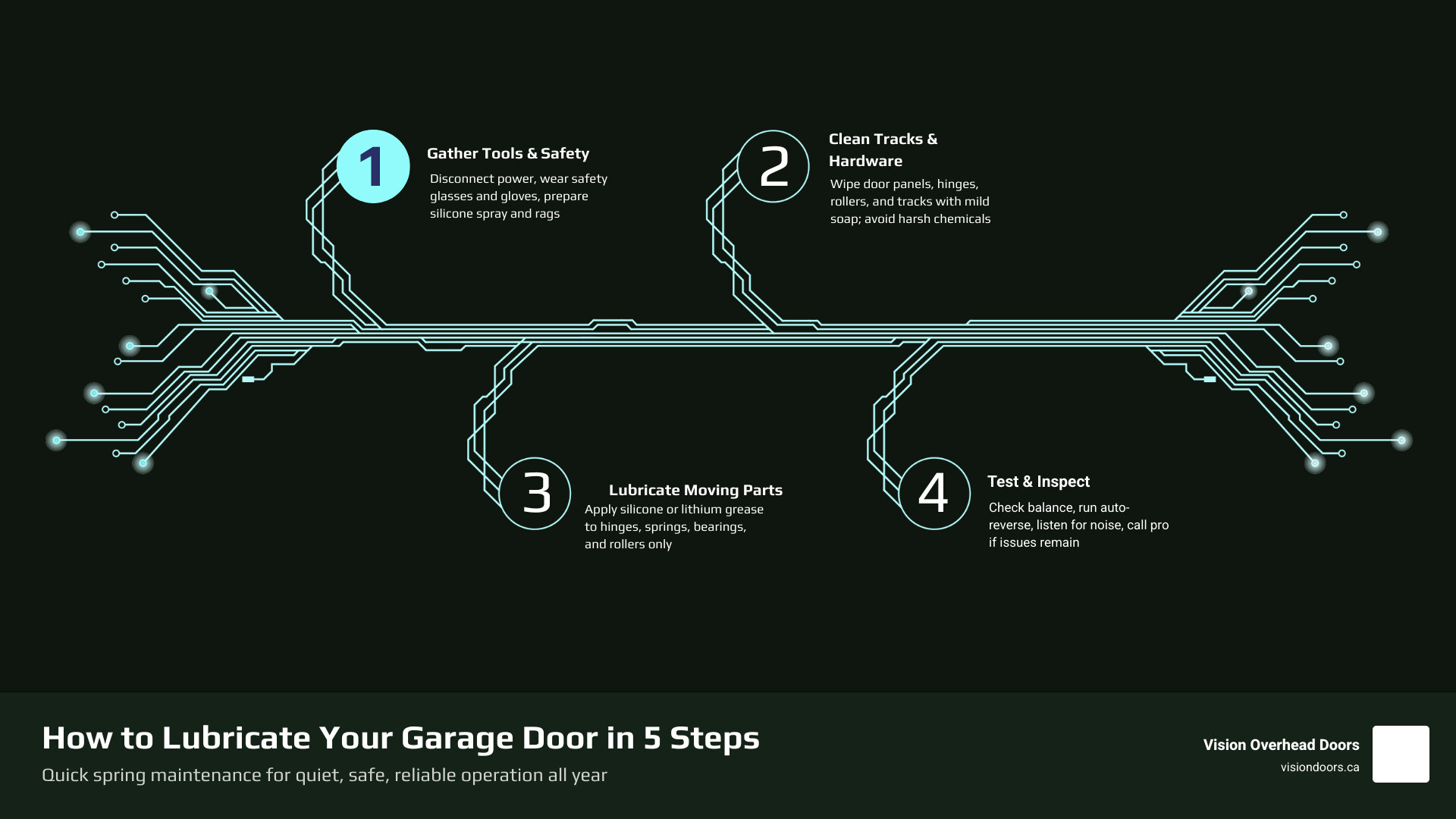
Spring cleaning and lubricating your garage door is one of the simplest and most effective ways to keep it running quietly, safely, and reliably all year long. Here’s a quick overview of what the process involves:
How to lubricate your garage door in 5 steps:
- Gather tools and follow safety precautions – disconnect power, put on safety glasses and gloves
- Clean the door surface, tracks, and hardware – mild soap, soft cloth, no harsh chemicals
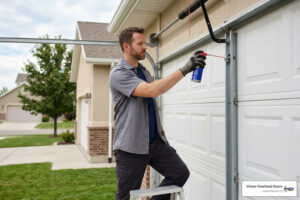
- Lubricate all key moving parts – hinges, roller bearings, springs, and bearing plates using silicone spray or white lithium grease
- Test for smooth operation and balance – disconnect the opener, lift the door halfway, and check that it stays in place
- Know when to call a professional – broken springs, frayed cables, and off-track doors need expert attention
Most garage doors need lubrication twice a year — spring and fall are the ideal times. The whole process takes about 15 to 20 minutes and can extend the life of your springs and rollers by years.
Think about how often your garage door actually moves. Most families use it more than their front door — that’s thousands of cycles every year, through summer heat, winter cold, and everything in between. All that movement creates friction, and friction causes wear. When moving parts go dry, you start to notice it: a squeak here, a grinding sound there, a door that feels heavier than it used to. Left unchecked, those small signs can turn into a broken spring or a worn-out opener motor — problems that are far more disruptive and costly than a simple tune-up.
The good news is that a little preventive care goes a long way. A can of the right lubricant, 20 minutes of your time, and a basic safety check twice a year is genuinely all it takes to keep most garage doors in great shape. Spring is the perfect moment to do it — the harsh winter weather has passed, and you have the chance to clear out whatever the cold season left behind before it causes real damage.
I’m Daryl Rands, owner of Vision Overhead Doors and a garage door professional with 26 years of experience serving the Okanagan Valley — and spring cleaning and lubricating your garage door is one of the most common and preventable issues I see homeowners overlook. In this guide, I’ll walk you through exactly what to do, step by step, so you can get it done right the first time.
Why Spring Is the Best Time for Spring Cleaning and Lubricating Your Garage Door
As we move into May 2026, many homeowners in the Okanagan Valley are busy with their seasonal checklists. While you’re power-washing the driveway in Kelowna or tidying up the garden in Salmon Arm, don’t forget the largest moving object in your home. Spring isn’t just a traditional time for cleaning; it’s a mechanical necessity for your garage door.
What winter leaves behind on garage door parts
Winter is incredibly hard on garage door hardware. In our region, the combination of freezing temperatures and moisture creates a perfect storm for wear and tear.
- Road Salt and Grime: If you drive your car into the garage, you’re bringing in road salt and slush. As this evaporates, it leaves behind a corrosive residue that can eat away at the galvanized coating on your springs and tracks.
- Dust and Cobwebs: During the winter, we tend to keep the garage closed tight. This allows dust and cobwebs to settle into the grease on your hinges and rollers, creating a “sticky sludge” that increases friction.
- Condensation and Rust: Temperature swings cause condensation on metal parts. Without a protective layer of lubricant, this moisture leads to surface rust, which can seize up rollers and weaken spring coils.
Why spring maintenance helps prevent breakdowns later
Performing spring cleaning and lubricating your garage door now is all about “preventive care.” By addressing the grit and dryness early, we reduce the strain on your garage door opener. When a door is well-lubricated, the motor doesn’t have to work nearly as hard to pull it up.
Regular lubrication every 6 months can extend the life of your components by 2 to 3 years. Considering that a standard torsion spring is only rated for about 10,000 cycles (which is roughly 7 years for an average family), those extra years of life are a significant saving. If you want to dive deeper into seasonal tasks, check out these 10 Tasks to Save Your Garage Door This Spring.
Step 1: Gather the Right Tools and Follow Safety Precautions First
Before we start spraying, we need to set the stage for safety. Garage doors are heavy—often weighing between 150 and 400 lbs—and they operate under extreme spring tension.
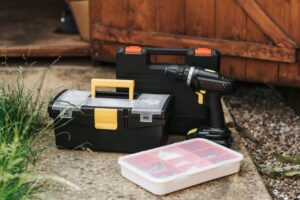
Your Tool Checklist:
- Safety Glasses and Gloves: To protect against lubricant overspray and sharp metal edges.
- Sturdy Stepladder: Never overreach; stay stable when working on the upper tracks or springs.
- Clean Rags: For wiping away old grease and excess lubricant.
- Mild Dish Soap and Water: For cleaning the door surface and tracks.
- The Right Lubricant: A high-quality silicone-based spray or white lithium grease.
Safety checks to do before spring cleaning and lubricating your garage door
Safety is our top priority at Vision Overhead Doors. Before you begin:
- Close the Door: Always perform maintenance with the door in the fully closed position. This ensures the springs are under tension but the door isn’t going anywhere.
- Disconnect the Power: Unplug the garage door opener from the ceiling outlet. This prevents anyone from accidentally activating the door while your fingers are near the moving parts.
- Pull the Emergency Release: Pull the red cord to disconnect the door from the opener carriage. This allows you to move the door manually to reach different pivot points.
- Clear the Area: Ensure children and pets are safely inside the house.
For more detailed safety advice, read about how to Keep Your Family Safe With These Garage Door Tips.
Lubricants to use and common products to avoid
This is where many DIYers go wrong. Never use WD-40 as a lubricant for your garage door. While WD-40 is a fantastic cleaner and degreaser, it is a solvent. It will actually strip away any existing lubrication and evaporate quickly, leaving your metal parts unprotected and attracting even more dust.
| Lubricant Type | Best Use Case | Benefits |
|---|---|---|
| Silicone Spray | Rollers, hinges, and springs | Resists moisture, works in extreme temperatures (-40°C to 200°C), doesn’t attract dust. |
| White Lithium Grease | Screw drives and metal-to-metal joints | Thicker consistency, stays in place, excellent for heavy-duty friction reduction. |
| WD-40 / Household Oil | AVOID | Attracts dirt, dries out quickly, and can damage plastic or nylon parts. |
Step 2: Clean the Door Surface, Tracks, and Hardware the Right Way
You wouldn’t wax a dirty car, and you shouldn’t lubricate a dirty garage door. Applying fresh oil over a layer of grit just creates an abrasive paste that wears down your hardware faster.
What to clean before applying any lubricant
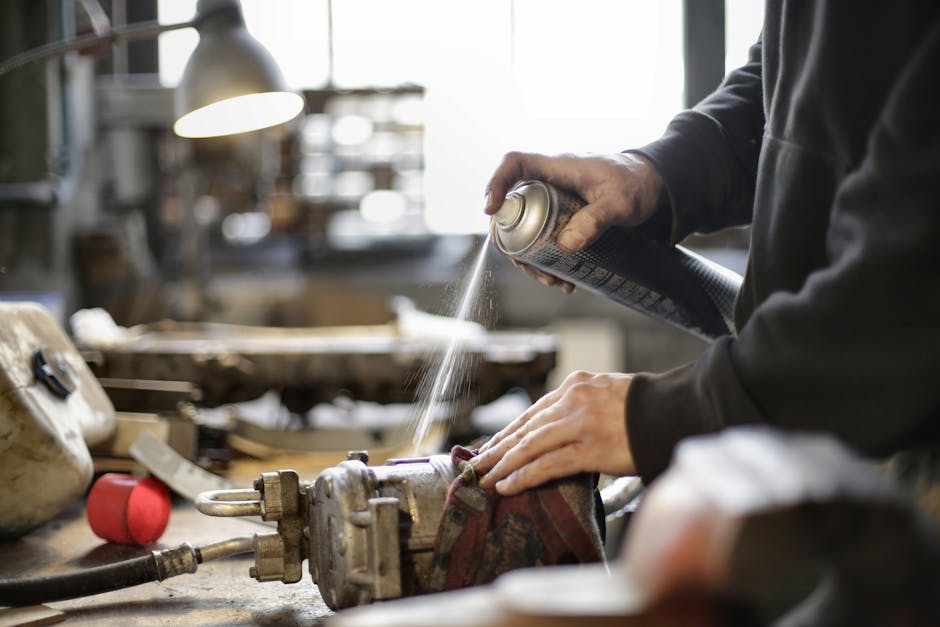
Start by using a soft cloth and a mild soap solution (like dish soap) to wipe down the following:
- The Door Panels: Clean both the interior and exterior. In places like Vernon or Lake Country, pollen and dust can build up quickly on the exterior finish.
- The Hinges and Roller Stems: Wipe away the old, blackened grease.
- The Springs: Use a dry rag to remove dust and cobwebs from the coils of the torsion spring (the large spring located above the door).
Why you should clean tracks but not fully lubricate them
One of the most common mistakes is “greasing the tracks.” Do not lubricate the inside of the garage door tracks. Your rollers are designed to roll, not slide. If you put grease inside the tracks, it will trap hair, dust, and debris, eventually creating a “sticky sludge” that can cause the door to stutter or even jump off the tracks.
Instead, simply wipe the tracks clean with a damp rag. If there is stubborn grime, use a little bit of brake cleaner or a degreaser on a cloth, but ensure the track is dry afterward. The only exception is the very top curved section of the track; a tiny drop of silicone spray there can help the rollers transition smoothly, but keep the vertical sections dry. Learn more about How to Maintain Your Garage Door Between Professional Service Visits.
Step 3: Lubricate the Most Important Moving Parts in the Correct Order
Now that everything is clean, it’s time for the main event. The goal is to apply a light, even coating. “More” is not “better” here—excess lubricant will just drip onto your car or the garage floor.
Where to apply lubricant on springs, rollers, hinges, and bearings
- Hinges: Apply a small amount of silicone spray to the pivot points where the hinge bends. If you have plastic hinges (rare but possible), do not lubricate them.
- Rollers:
- Steel Rollers: Spray the lubricant directly into the center ball bearings.
- Nylon Rollers (with exposed bearings): Lubricate the bearings in the center, but do not get lubricant on the nylon wheel itself. Lubricant can cause nylon to degrade or slip.
- Sealed Bearings: If you have premium sealed rollers, they don’t require lubrication!
- Torsion Springs: Spray the entire length of the torsion spring. You don’t need to soak it; just enough to coat the coils. This prevents rust and reduces the friction between the coils as they expand and contract. This is a critical step to Don’t Let Your Springs Snap Early Maintenance Tips.
- Bearing Plates: These are the circular plates at either end of the torsion spring bar. A quick spray on the bearings here ensures the bar rotates freely.
- Lock Mechanism: If you have a manual lock bar, a little spray will keep the “key” and “sliding” parts moving easily.
What not to lubricate on a garage door
- The Tracks: As mentioned, keep these clean and dry.
- The Opener Belt: If you have a belt-drive opener, never lubricate the belt. It needs friction to grip the pulley.
- Nylon Wheel Surfaces: Keep the outer part of the roller clean.
- Photo-Eye Sensors: Lubricant on the lenses will block the beam and prevent the door from closing.
How often to lubricate garage door parts for best results
For most homes in the Okanagan, we recommend this routine every 6 months. However, if you live in a particularly dusty area or use your door more than 6 times a day, you might want to do a quick “lube-up” every 3 to 4 months. If your door starts making a “screeching” or “grinding” noise, that’s your signal that it’s time for a touch-up.
Step 4: Test the Door for Smooth Operation, Balance, and Safety
Once the lubrication is complete, reconnect the door to the opener by snapping the emergency release back into place (or simply running the opener until it clicks back in). Run the door through two or three complete cycles to distribute the lubricant.
How to check if your garage door is properly balanced after lubrication
A well-lubricated door should be easy to move, but it must also be “balanced.”
- Disconnect the opener again.
- Lift the door manually until it is about halfway open (waist height).
- Let go.
- Balanced: The door should stay in place or move only slightly.
- Unbalanced: If the door slams shut, the springs have lost tension. If it shoots upward, the springs are over-tensioned.
A balanced door should feel like it weighs only 8 to 10 pounds. If it feels like you’re doing a heavy gym workout just to open it, your springs need professional adjustment.
Quick safety tests every homeowner should perform
Approximately half of the garage doors we see during inspections fail to auto-reverse correctly. This is a major safety hazard for children and pets.
- The 2×4 Test: Place a piece of 2×4 wood flat on the ground under the door path. Close the door. It should hit the wood and immediately reverse.
- Photo-Eye Test: While the door is closing, wave a broomstick in front of the sensors at the bottom of the tracks. The door should stop and reverse instantly.
Performing these monthly checks is vital. For more info, see our guide on how to Keep Your Family Safe With These Garage Door Tips.
Step 5: Know When DIY Maintenance Ends and a Professional Should Take Over
While spring cleaning and lubricating your garage door is a great DIY project, some things are simply too dangerous for homeowners to handle.
Signs spring cleaning and lubricating your garage door will not fix
If you notice any of the following, stop what you are doing and call us:
- Frayed Cables: If the steel cables on the sides of the door look “fuzzy” or have broken strands, they could snap at any moment.
- A Visible Gap in the Spring: This means the spring has already broken. Do not attempt to open the door with the motor.
- The “Loud Bang”: If you heard a sound like a gunshot in your garage recently, that was likely a spring snapping.
- Off-Track Door: If the door is hanging crooked or rollers have come out of the track.
- Bent Tracks or Structural Damage: Lubricant won’t fix a track that has been hit by a car.
Why regular lubrication extends garage door life
By keeping up with this simple 20-minute task, you are protecting the most expensive parts of your system. You’re preventing rust on the springs, reducing wear on the roller bearings, and ensuring the opener motor doesn’t burn out prematurely. Think of it like an oil change for your car—it’s a small investment that prevents a massive repair bill down the road.
If you’re unsure about the state of your hardware, it’s always worth asking: All About Annual Garage Door Maintenance Is It Worth It.
Frequently Asked Questions About Spring Cleaning and Lubricating Your Garage Door
Can you use WD-40 on a garage door?
We get asked this in almost every service call from Armstrong to Kelowna! The answer is a firm no. Standard WD-40 is a solvent. It’s great for cleaning off rust or gunk, but it doesn’t provide the long-term “slickness” required for heavy moving parts. It will dry out in a matter of days, leaving your door noisier than before. Always stick to silicone or lithium-based lubricants.
Should weather stripping be cleaned or lubricated too?
Yes! Your bottom seal and the weather stripping around the sides of the door are made of rubber or vinyl. Over time, they can become brittle and crack. During your spring cleaning, wipe them down with an all-purpose cleaner. Then, apply a light coat of silicone spray to the rubber. This keeps the material flexible and prevents it from sticking to the driveway on frosty mornings. If you see gaps or cracks, it’s time to replace them to keep pests and drafts out.
What if the garage door still squeaks after lubrication?
If you’ve lubricated everything and the door still sounds like a haunted house, the problem is likely deeper. It could be worn-out bearings inside the rollers, a misaligned track that is rubbing against the door, or a problem with the internal gears of the opener itself. At this point, a professional “tune-up” is the best course of action to diagnose the noise before it leads to a total failure.
Conclusion
Taking the time for spring cleaning and lubricating your garage door is one of the best things you can do for your home this season. It ensures your door operates smoothly, stays quiet, and remains safe for your family. Whether you are in Sorrento, Enderby, or right here in Kelowna, a little bit of maintenance today prevents a lot of headaches tomorrow.
If you’ve gone through these steps and noticed something that doesn’t look quite right—like a frayed cable or a door that won’t stay balanced—don’t take the risk. At Vision Overhead Doors, we’re here to help with expert repairs and maintenance across the Okanagan Valley.
For professional assistance or a comprehensive safety check, visit our page on Garage Door Spring Repair and let us ensure your door is ready for the year ahead!