
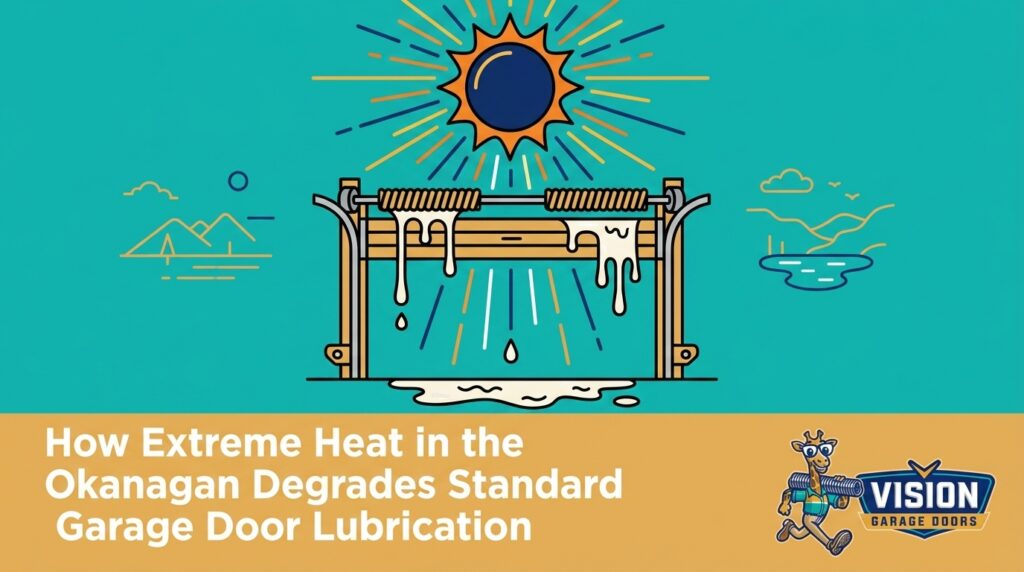
The Hidden Summer Threat to Your Garage Door Rollers
Summer in the valley is fast approaching, and as the afternoon sun beats down on your home, you might notice your system starting to groan, pop, or shudder. Understanding exactly how extreme heat in the Okanagan degrades standard garage door lubrication is the first step to preventing a sudden, frustrating breakdown. Most homeowners assume any heavy white grease from the local hardware store will keep their rollers moving smoothly. However, those standard products are formulated for moderate, predictable climates. When exposed to the intense Okanagan extreme summer heat, especially inside an uninsulated metal door that acts like a giant oven, that heavy grease rapidly breaks down.
Recognizing this chemical failure before it causes permanent damage to your tracks, rollers, or motor is the key to preventing a costly replacement. Proper, climate-appropriate lubrication forms the absolute foundation of a reliable system. If you need professional garage door services to maintain your system, or if you require immediate garage door repair to fix a dragging, noisy door, our team is ready to help.
As temperatures climb throughout July and August, the ambient heat inside a closed garage can easily exceed outdoor temperatures by twenty degrees or more. Your steel or aluminum garage door absorbs that solar radiation, transferring the heat directly into the hinges, tracks, and roller bearings. This bakes whatever lubricant is currently sitting on your hardware. If that lubricant is a standard petroleum-based product, you are unknowingly setting the stage for a mechanical failure.
The Chemistry of High Temperatures and Hardware Store Lubricants
To understand why your door starts complaining in July, you have to look at the physical properties of the products most people spray on their tracks. The most common DIY garage door lubricant is white lithium grease. This product is essentially a mixture of base oils suspended in a soap thickener. In a mild climate, the soap matrix holds the oil in place, allowing it to slowly release over time and keep metal-on-metal parts moving freely.
The problem begins when this standard formula encounters the extreme temperatures common in Enderby BC and surrounding Okanagan Valley. Every grease has a specific “dropping point”—the temperature at which the soap matrix breaks down and the oil separates from the thickener. While the dropping point of high-end industrial grease is quite high, the cheap aerosol cans sold at big-box hardware stores often begin to soften and separate at much lower thresholds.
The Phase Change Problem:
- Softening: As the metal tracks heat up, the thick grease loses its viscosity. It transforms from a solid, clinging paste into a soft, semi-liquid sludge.
- Separation: The base oils detach from the lithium soap thickener. You might notice a watery, oily residue forming around the hinges.
- Migration: Because the grease has liquefied, gravity takes over. The lubricant drips off the roller bearings and down the vertical tracks, leaving the actual friction points completely unprotected.
This physical breakdown happens invisibly. You will not know the grease has melted away from the internal roller bearings until the door starts making noise. The metal stems of your rollers begin to scrape directly against the metal barrels of the hinges. The ball bearings inside the rollers grind against their unlubricated casings. By the time you hear the squeaking and popping, the protective barrier is already gone, and the hardware is sustaining active wear and tear.
The Dust Factor: Creating an Abrasive Paste in Your Tracks
Heat alone is only half of the equation. What makes the Okanagan extreme summer heat particularly destructive to standard garage door grease is the semi-arid nature of the local climate. Our region is known for dry conditions, high winds, and a significant amount of environmental dust, agricultural dirt, and seasonal pollen.
When the standard lithium grease on your tracks melts and becomes sticky, it acts like a giant strip of flypaper. Every time a summer breeze blows through your open garage, dry dust and dirt particles settle onto the wet tracks and hinges. Over a few weeks, this creates a disastrous chemical reaction. The dirt binds with the sticky, degraded grease, transforming it from a smooth lubricant into a thick, black, highly abrasive grinding paste.
How the Paste Damages Your System:
- Roller Drag: Instead of spinning freely, the rollers are forced to drag through this thick mud. This creates flat spots on nylon rollers and grinds down steel rollers.
- Track Gouging: The abrasive nature of the dirt-filled paste acts like liquid sandpaper, slowly wearing away the galvanized coating on your vertical and horizontal tracks.
- Hinge Binding: As the paste works its way into the hinge barrels, it hardens as temperatures cool down at night, causing the hinges to lock up and pop violently when the door opens the next morning.
This compounding problem highlights exactly how summer heat affects your garage door opener and the entire lifting mechanism. It is the specific combination of the intense heat melting the grease and the dry summer dust binding to it that creates this unique regional issue. Applying more white lithium grease over the top of this dirty paste only makes the problem worse, adding another sticky layer to trap even more environmental debris.

The Chain Reaction: Straining Your Springs and Opener
A garage door might seem like a simple mechanism, but it is actually a finely balanced system of counterweights and tension. A standard residential double garage door can weigh anywhere from 150 to over 300 pounds. When everything is perfectly balanced and properly lubricated, you should be able to lift that massive door with one hand. When the rollers are dragging through a thick, abrasive paste, that delicate balance is destroyed.
The friction created by degraded grease forces every other component in the system to work overtime. The door effectively becomes “heavier” because it resists movement. This places an immense amount of extra tension on your torsion springs. The springs have to torque harder to pull the door up through the sticky tracks, accelerating metal fatigue and significantly shortening the lifespan of the spring steel. If a spring snaps under this added pressure, it is a catastrophic failure that traps your vehicles inside.
Strict Safety Warning: Never attempt DIY adjustments to your garage door springs or bottom bracket cables. These components hold massive amounts of lethal tension. If you suspect your springs have been compromised by a dragging door, you must schedule professional garage door spring repair immediately.
When Friction Compromises the Motor
Your automatic opener is not designed to lift the dead weight of a dragging door; it is only designed to guide a balanced door along its path. When the rollers stick in the Enderby BC and surrounding Okanagan Valley heat, the opener motor is forced to pull with excessive force. You will start to hear the motor humming loudly, straining, or moving the door much slower than usual.
Inside the opener housing, plastic and nylon gears bear the brunt of this strain. Over time, the teeth on these gears will strip away completely, leaving the motor running but the door refusing to move. What initially seems like a need for complex garage door opener repair often traces its root cause back to a severe lubrication failure on the tracks and rollers.
Warning Signs Your Garage Door Lubrication Has Failed
You do not need to be a mechanical expert to tell when your standard grease has given up against the Okanagan extreme summer heat. Your garage door will communicate its distress clearly through sound, sight, and performance. Catching these symptoms early allows you to clean and re-lubricate the system before the friction destroys your motor gears or snaps a spring.
We recommend performing a visual and auditory inspection once a month during the summer. Do not touch the moving parts, adjust any hardware, or wipe down the tracks while the door is connected to power. Simply observe the system in motion and look for the following red flags.
The Failure Checklist:
- Auditory warning signs: Listen for grinding, metallic scraping, popping, or loud squeaking as the door travels up the track. A properly lubricated door should produce a smooth, consistent rolling sound, not sharp metal-on-metal screeches.
- Visual accumulation: Look closely at the inside of the vertical tracks and around the hinge barrels. If you see thick, black, sticky sludge accumulating, your grease has turned into an abrasive paste.
- Sluggish performance: Watch the door as it rises. If it moves slowly, shudders, hesitates halfway up, or if the opener reverses direction unexpectedly because it senses too much resistance, the rollers are binding.
- Drip marks: Inspect the floor directly beneath the ends of the tracks. If you see oily drip marks, the base oils in your lithium grease have separated and melted off the hardware.
| Symptom You Notice | What It Actually Means |
|---|---|
| Loud “popping” sounds as the door opens | Hinges are binding due to dried, sticky grease and releasing under tension. |
| Black streaks on the inside of the track | Standard grease has melted, trapped dirt, and is acting as liquid sandpaper. |
| Opener hums but struggles to lift the door | Friction from unlubricated rollers has made the door too heavy for the motor. |
| Rollers sliding instead of spinning | The bearings inside the roller are seized with hardened, dirty grease. |
The Professional Solution: Premium Silicone-Based Sprays
If standard hardware store grease cannot survive the local climate, what is the alternative? The answer lies in synthetic chemistry. Premium silicone-based sprays are structurally different from petroleum and lithium greases. They are specifically engineered to withstand massive temperature fluctuations without altering their physical state.
Silicone lubricants offer a much wider operational temperature range. Whether it is a freezing January morning or a sweltering August afternoon in the Enderby BC and surrounding Okanagan Valley, silicone maintains its viscosity. More importantly, high-quality silicone spray does not stay wet. Once applied, the carrier solvent evaporates quickly, leaving behind a slick, dry, non-tacky film on the metal components.
Because the silicone film dries cleanly, it does not act as a magnet for the dry environmental dust, pollen, and dirt that blows into your garage. The tracks stay clean, the rollers spin freely, and the abrasive grinding paste never has a chance to form. Vision Overhead Doors exclusively uses premium silicone-based sprays on all service calls because they are proven to withstand local temperature extremes without degrading.
However, you cannot simply spray premium silicone over the top of degraded lithium grease. A professional technician will thoroughly clean the tracks, wipe down the hinge barrels, and remove the old abrasive paste first. Applying the correct synthetic lubricant to a clean surface restores smooth operation, quiets the noisy hardware, and dramatically extends the lifespan of the springs and opener motor.
Frequently Asked Questions About Hot Weather Garage Door Maintenance
What is the best garage door lubricant for hot weather?
A premium silicone-based spray is the best choice for extreme hot weather. Unlike standard white lithium grease, which can melt and separate in high heat, silicone dries to a slick, non-tacky film. This dry barrier withstands the Okanagan extreme summer heat without softening, ensuring your rollers and hinges remain protected even when the metal tracks become incredibly hot.
Why is my garage door sticking in the summer?
Your garage door is likely sticking because the standard grease on the tracks has melted and mixed with environmental dust. This combination creates a thick, sticky paste that acts like glue, preventing the rollers from spinning freely. As the rollers drag through this sludge, the entire door binds up, forcing the opener motor to strain against the added friction.
Can I use white lithium grease on garage door rollers?
While white lithium grease is commonly sold for garage doors, it is not recommended for regions with extreme summer heat and high dust levels. The heavy petroleum base in lithium grease stays wet and sticky, trapping dirt and pollen over time. In a hot, semi-arid climate, it quickly degrades into an abrasive paste that accelerates wear on your rollers and hinges.
Does extreme heat affect garage door tracks?
Yes, extreme heat causes the metal tracks to expand slightly, but the primary issue is how the heat affects the lubrication inside those tracks. When the uninsulated metal bakes in the afternoon sun, it transfers that heat directly into the grease, causing it to liquefy and drip away from the high-friction areas where it is needed most.
How often should I lubricate my garage door in a dusty climate?
In a dusty environment, you should inspect and lubricate your moving parts at least twice a year—once in the spring before the heat arrives, and once in the fall. However, if you are using a dry silicone spray rather than a wet grease, you will attract far less dust, keeping the system cleaner and requiring less aggressive maintenance between seasonal changes.
Protect Your System Before the Next Heatwave
Ignoring a noisy, groaning garage door during the summer months is a guaranteed path to a larger mechanical failure. The friction caused by melted grease and trapped dirt does not just sound terrible; it actively destroys your roller bearings, grinds away at your tracks, and places dangerous amounts of strain on your torsion springs and opener motor.
By understanding why standard hardware store products fail in the Enderby BC and surrounding Okanagan Valley heat, you can make the smart switch to a synthetic solution. Upgrading to a premium silicone-based spray saves your entire lifting system from premature failure. If you hear loud popping, see black sludge in your tracks, or notice your door moving sluggishly, it is time to act. Schedule a comprehensive inspection and garage door repair to have your tracks professionally cleaned and properly lubricated before the next major heatwave hits.


