Why Is My Garage Door Spring Making a Loud Popping Sound?
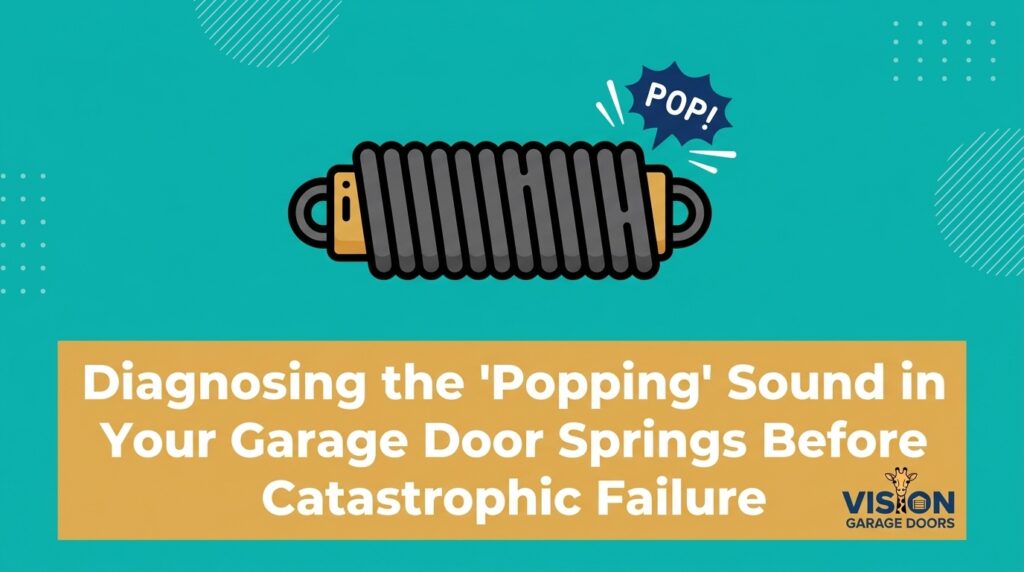
Are you standing in your driveway trying to figure out how to start diagnosing the ‘popping’ sound in your garage door springs before catastrophic failure ruins your day? That startling noise isn’t just an annoyance; it is a mechanical cry for help from a counterbalance system under extreme stress. When you hear a distinct popping or banging coming from above your garage door, your immediate instinct might be to ignore it, assuming it is just a quirk of an aging system. However, in our experience at Vision Overhead Doors, this sound represents a critical decision point for any homeowner. The noise is a direct symptom of torsion spring coils binding rather than sliding smoothly across one another. You must stop operating the door immediately to prevent a highly dangerous, sudden break.
If you are concerned about the safety of your system, exploring professional garage door services is the best way to protect your property. Taking a purely acoustic diagnostic approach allows you to catch invisible mechanical friction before it causes severe damage. The difference between a loud popping or banging versus standard squeaking is the difference between a routine maintenance task and an impending emergency. By learning to identify this specific acoustic warning, you can intervene before the steel coils reach their breaking point.
The Mechanics Behind the Noise: Understanding Torsion Spring Binding
To understand why your spring is making such a violent noise, you have to look at the immense physical forces at play. A standard residential garage door is incredibly heavy, often weighing anywhere from 150 to over 300 pounds. You are able to lift this massive wall of insulated steel with one hand—or with a small electric motor—because the torsion spring system acts as a perfect counterbalance. Mounted on a metal shaft above the door, these thick steel springs wind and unwind tightly with every cycle. When a spring is perfectly healthy and properly lubricated, the individual coils glide past each other silently as the tension shifts.
The popping sound occurs when that smooth gliding action breaks down. Over time, as factory lubrication dries out or dust and debris accumulate, the friction between the closely packed steel coils increases dramatically. Instead of sliding, the coils begin to catch on one another. Static friction builds up as the garage door opener forces the spring to wind or unwind. The tension mounts until the mechanical force overcomes the friction, causing the coils to violently slip and snap past each other. That sudden release of kinetic energy echoes through the hollow steel tube and the garage itself, producing the loud bang you hear.
How Extreme Tension Amplifies Friction
The relationship between the heavy weight of your door and the immense torque required from the spring means that any minor friction is instantly amplified. Because the spring is holding back hundreds of pounds of force, the coils are pressed together with intense pressure. A lack of lubrication doesn’t just cause a mild scrape; it causes the steel to aggressively grind. Addressing this invisible friction early with garage door spring repair prevents the coils from sustaining permanent, structural damage that compromises the entire system.
Acoustic Diagnostics: Differentiating a Pop from a Routine Squeak
Not all garage door noises are created equal. Validating your concern starts with understanding the distinct acoustic characteristics of different mechanical failures. Homeowners often hear noises and assume they all point to the same problem, but the difference between a loud popping or banging versus standard squeaking establishes a critical safety boundary.
A standard squeak is generally a high-pitched, continuous sound that occurs evenly as the door travels up or down the tracks. This noise usually indicates minor friction in the hinges, the rollers, or the metal tracks themselves. While it is annoying, a squeak simply means “maintain me.” It is a signal that your moving parts need a thorough cleaning and a fresh application of lithium grease or silicone spray.
A popping or banging sound, on the other hand, is sharp, violent, and intermittent. It does not happen continuously; instead, it occurs in sudden bursts as the tension builds and releases. This noise means “stop operating me immediately.”
| Acoustic Characteristic | Mechanical Cause | Urgency Level |
|---|---|---|
| High-pitched, continuous squeak | Dry rollers, hinges, or track friction | Low: Requires routine lubrication and basic maintenance. |
| Grinding or scraping sound | Frayed cables or misaligned tracks | Medium: Requires professional adjustment to prevent wear. |
| Sharp, violent popping or banging | Torsion spring coils binding under extreme tension | High: Stop operation immediately to prevent catastrophic snap. |
Establishing this acoustic threshold is vital for your safety. When you hear the violent pop of binding coils, you are listening to the final warning signs of a system that is actively tearing itself apart under pressure.

How Cold Weather and Temperature Swings Impact Steel Coils
The environment inside your garage plays a massive role in the health of your counterbalance system. To understand why popping sounds often suddenly appear during specific times of the year, you have to look at the thermal dynamics of steel. Metal naturally expands in warm temperatures and contracts in cold temperatures. When the weather drops significantly, the steel coils of your torsion spring contract, physically squeezing tighter together on the shaft.
With significant temperature fluctuations in the Okanagan region and Enderby, our team at Vision Overhead Doors frequently responds to service calls triggered by these dramatic shifts. We often see how a mild afternoon can quickly give way to a freezing night, causing the metal to expand and contract rapidly. This thermal stress makes the springs much more prone to binding. Furthermore, cold weather temperature drops exacerbating metal contraction and binding also severely impact whatever lubrication is left on the spring. In the local garages we service, we notice that standard lubricants can become sluggish, tacky, or even brittle in freezing temperatures, completely losing their ability to reduce friction.
The result of these seasonal shifts:
- Tighter coil spacing: Contraction forces the steel rings against each other with zero clearance.
- Lubricant failure: Grease thickens and fails to provide a protective barrier between the metal surfaces.
- Increased brittleness: Cold steel is inherently less flexible and more susceptible to micro-fractures when forced to bend.
These regional climate factors drastically increase spring friction. If your garage is uninsulated or highly exposed to the elements, your springs are fighting a constant battle against the weather, making proactive acoustic diagnostics even more essential.
The Path to Metal Fatigue and Catastrophic Failure
A garage door spring does not last forever. Standard residential torsion springs have a rated lifespan of approximately 10,000 cycles, with one cycle equaling a single opening and closing of the door. Under perfect conditions, a spring will slowly wear out over several years until it eventually gives way. However, when a spring begins to bind and pop, that timeline is aggressively accelerated.
The violent catching and releasing of binding coils causes severe micro-abrasions along the surface of the steel. Every time you hear that loud pop, the metal is suffering microscopic tears. This dramatically speeds up the onset of severe metal fatigue. The path from a healthy spring to a dangerous snap follows a predictable mechanical sequence:
- Lubrication Depletion: The protective barrier between the steel coils dries up or freezes due to cold weather temperature drops exacerbating metal contraction and binding.
- Static Friction Build-Up: The dry coils begin to catch on one another as the spring winds.
- Violent Release (The Pop): Mechanical force overcomes the friction, causing the coils to snap past each other audibly.
- Micro-Abrasions: The aggressive steel-on-steel contact creates microscopic gouges and stress fractures in the metal.
- Catastrophic Failure: The weakened steel can no longer hold the extreme torque, resulting in a sudden, explosive snap that releases all tension instantly.
Understanding this cycle is key to protecting your system, and you can learn more by reviewing maintenance tips to prevent early spring snapping. The popping sound is your final auditory warning before the cycle limit is prematurely reached.
Why You Must Stop Operating a Binding Garage Door
Ignoring a popping torsion spring is one of the most dangerous gambles a homeowner can make. When you hear the loud popping or banging versus standard squeaking, the only safe response is to cease operation immediately. The risks associated with a snapping spring extend far beyond a simple inconvenience.
First and foremost is the immediate physical danger. A torsion spring holds enough kinetic energy to lift 300 pounds of dead weight. If that spring snaps while a person, a pet, or a vehicle is nearby, the resulting release of energy can send sharp metal shrapnel flying across the garage. The heavy steel door, suddenly stripped of its counterbalance, can slam downward with crushing force, creating a severe drop hazard.
Beyond physical safety, there is the risk of massive secondary property damage. When a spring breaks mid-operation, the automatic opener motor often tries to continue pulling the dead weight of the door. This can strip the gears inside the opener, burn out the motor entirely, or rip the mounting brackets right off the ceiling. The door panels themselves can buckle, and the tracks can bend under the uneven weight distribution. What could have been a straightforward spring diagnostic suddenly turns into a total system replacement.
The Myth of the WD-40 Quick Fix
A common misconception is that a quick spray of standard WD-40 will solve a violently popping spring. This is a dangerous myth. Standard WD-40 is a solvent designed to displace water and cut through rust; it is not a heavy-duty mechanical lubricant. Spraying it on a binding spring will actually strip away whatever residual grease is left, leaving the steel completely unprotected once the solvent evaporates. Furthermore, standing directly under a highly stressed, popping spring to apply a spray puts you in the direct line of fire if it snaps. Instead of risking injury, relying on professional garage door repair ensures the tension is handled safely and correctly.
Immediate Next Steps When You Hear the Warning Pop
When your garage door issues that mechanical cry for help, taking swift, deliberate action will keep your home safe and prevent costly secondary damage. If you have just heard the distinct popping or banging versus standard squeaking, follow this clear, actionable protocol:
- Step 1: Disconnect the automatic opener. While the door is in the fully closed position, pull the red emergency release cord. This disconnects the door from the motorized trolley, ensuring that no one can accidentally trigger the opener from a wall switch or a vehicle remote.
- Step 2: Leave the door in the closed position. Never attempt to disconnect the opener while the door is open or partially open. An open door with a failing spring is a severe drop hazard. If the spring snaps while the door is up, it will crash down with hundreds of pounds of unrestrained force.
- Step 3: Keep family members and pets away. Establish the garage as a temporary no-go zone. Make sure children and pets are kept clear of the area until the mechanical tension has been safely resolved.
- Step 4: Contact a licensed professional immediately. Torsion springs require specialized winding bars, exact tension calculations, and extensive safety training to handle. Our technicians at Vision Overhead Doors provide rapid, proactive spring diagnostics to help local homeowners fix binding springs before they snap and leave them stranded.
By following these steps, you neutralize the immediate threat and set the stage for a safe, professional resolution.
Frequently Asked Questions About Garage Door Spring Noises
Why is my garage door spring popping?
A popping noise occurs when the steel coils of a torsion spring dry out and bind against one another under extreme tension. As the door operates, static friction builds up until the coils violently slip past each other, creating a loud acoustic bang. This is a sign of severe mechanical friction, not just normal wear and tear.
Is it safe to use a garage door that makes a popping noise?
No, it is highly unsafe to continue operating the door. The popping sound indicates that the spring is suffering from micro-abrasions and accelerated metal fatigue. Continuing to force the door up and down drastically increases the risk of a sudden, catastrophic spring snap.
What does a binding torsion spring sound like?
A binding torsion spring produces a sharp, intermittent popping, banging, or clanking noise. Unlike a continuous, high-pitched squeak that comes from dry rollers or hinges, the pop happens in sudden bursts as the intense mechanical tension violently overcomes the friction between the steel coils.
Can I spray WD-40 on my garage door springs to stop the noise?
You should never use standard WD-40 on garage door springs. It is a solvent that will strip away existing lubrication and leave the metal bare, increasing friction in the long run. Moreover, attempting to lubricate a spring that is already violently popping puts you in physical danger if the fatigued metal snaps while you are standing near it.
What are the signs a garage door spring is about to break?
The most prominent warning signs include loud popping or banging noises, a door that feels incredibly heavy to lift manually, or a door that struggles to open evenly. You may also notice visible gaps in the spring coils or excessive rust. If you observe any of these symptoms, disconnect the opener and call a professional immediately.
Protect Your Home from Unexpected Spring Snaps
A loud popping sound echoing through your garage is a clear, mechanical cry for help from binding steel coils. Diagnosing the ‘popping’ sound in your garage door springs before catastrophic failure is the absolute best way to protect your property from sudden drop hazards and expensive secondary damage to your tracks, panels, and opener motor. By learning to differentiate between a loud popping or banging versus standard squeaking, you empower yourself to make the right safety call at the exact right moment.
From what we’ve seen on the job throughout Enderby, catching this symptom early prevents the massive inconvenience of being stranded with a heavy, unopenable door. When your counterbalance system starts sending these aggressive auditory warnings, do not wait for the inevitable snap. Leave the door closed, disconnect the power, and let our team provide the professional diagnostics needed to safely resolve the dangerous tension hovering above your garage floor.