The Hidden Dangers of the Spring Thaw for Your Garage
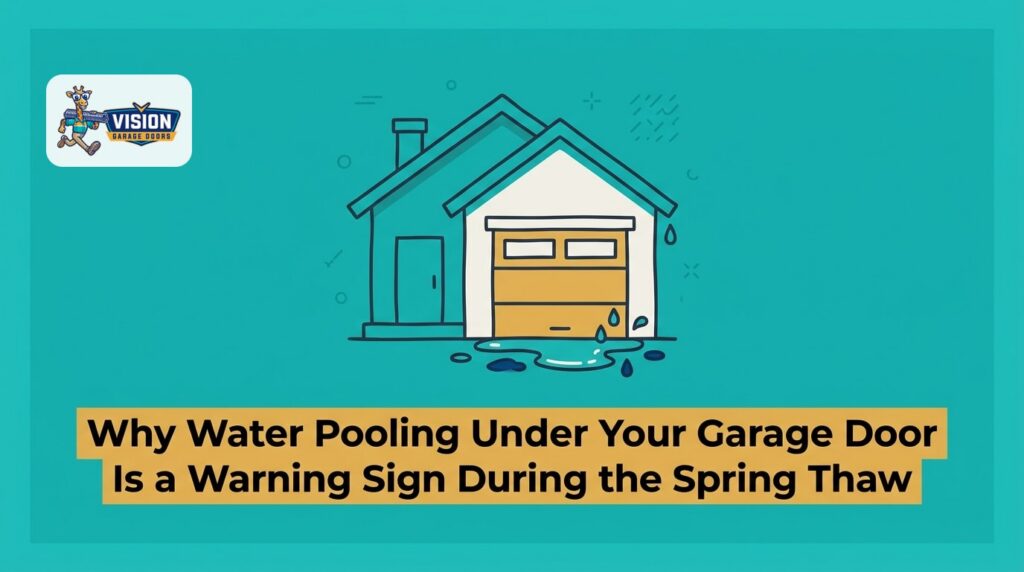
Spring in Enderby BC is only weeks away, and here at Vision Overhead Doors, we know that while warmer days are a welcome relief, they also reveal a messy reality: water pooling under garage door thresholds as the heavy snowpack begins to melt. You might step into your garage to find a growing puddle spreading across the concrete floor. Most homeowners assume this is just a minor nuisance—a temporary side effect of the changing seasons. However, ignoring that standing water can lead to severe structural and mechanical issues for your largest moving door.
As the Spring Thaw accelerates, rapid temperature shifts create an overwhelming amount of excess snowmelt runoff. This continuous cycle of melting and refreezing targets the weakest points of your home’s exterior. When water constantly sits against the base of your door, it begins to degrade the rubber weather seals and attacks the galvanized steel bottom tracks. What starts as a small damp spot can quickly escalate into a compromised barrier that lets in pests, drafts, and even more moisture.
The core decision you will face this season is determining the true source and severity of the leak. Is that puddle simply the result of worn-out weatherstripping that needs a quick replacement, or is it an early warning sign of failing bottom tracks that require professional intervention? Understanding how Okanagan weather affects your garage door is the first step in diagnosing the problem. By catching the early signs of water ingress, you can protect your property from long-term rust and expensive structural repairs.
Why Snowmelt Targets Your Garage Door
To stop the puddles, you first have to understand the mechanics of water ingress. Driveways are massive, impermeable surfaces that collect a tremendous amount of snow over the winter. When the temperature rises, that snow has to go somewhere. Unfortunately, residential architecture and local topography often conspire to funnel that daytime thaw directly toward your garage.
- Gravity and grading: Most driveways are poured with a slight slope away from the house, but over time, concrete settling can alter that grade, creating a subtle funnel effect toward the garage threshold.
- Compacted snow dams: The snowplow leaves a dense, compacted berm at the end of your driveway. This ice dam traps melting water, forcing it to back up toward the house.
- Uneven interior concrete: Garage floors often develop hairline cracks or slight dips where the concrete has settled, creating low spots that actively pull water inward under the door.
- Overwhelmed generic seals: The standard, thin vinyl weatherstripping installed on many builder-grade doors simply lacks the density and profile to hold back large volumes of standing water.
Heavy snowmelt runoff in the Okanagan can pool rapidly during the day due to our specific local topography and weather patterns. In our years of serving Enderby BC, our team has seen time and again how the sheer volume of water generated during peak sunlight hours is often too much for a basic seal to handle.
The Role of Driveway Grading
Your driveway’s slope is your primary defense against water ingress. Even a subtle shift in the concrete apron—the section of driveway immediately meeting the garage floor—can push water against the threshold instead of away from it. Over the years, the freeze-thaw cycle can heave the concrete, reversing the intended drainage angle. When this happens, the water follows the path of least resistance, which is usually right under the flexible rubber seal of your closed door.
Daytime Thaw Dynamics
The volume of water generated during peak sunlight hours is staggering. A thick layer of driveway snow can produce dozens of gallons of runoff in a single afternoon. When this water encounters a closed garage door, it sits against the seal, probing for microscopic gaps. Standard weatherstripping is designed to block wind and light rain, not to act as a watertight dam against inches of standing runoff. Once the water finds a tiny gap caused by uneven concrete, capillary action pulls it inside, creating those frustrating indoor puddles.
The Damage Caused by Overnight Freeze-Thaw Cycles
The real destruction doesn’t happen when the water is flowing; it happens when the sun goes down. The Spring Thaw is characterized by warm afternoons followed by freezing nights. This extreme temperature swing turns innocent daytime puddles into destructive overnight ice blocks, initiating a cycle of mechanical and physical damage that slowly tears your garage door system apart.
The Freeze-Thaw Timeline:
- Daytime (The Melt): Sunlight warms the driveway, melting the snowpack. Runoff flows down the grade and pools against the bottom weather seal, seeping into the microscopic pores of the concrete.
- Nighttime (The Freeze): Temperatures plummet below freezing. The pooled water turns to solid ice. As it freezes, the water expands by approximately 9%, exerting tremendous pressure on the concrete threshold, the bottom tracks, and the rubber seal itself.
- Morning (The Break): You press the remote to leave for work. The bottom seal is now firmly glued to the concrete by a thick layer of ice. The opener motor strains, groans, and eventually rips the door upward, tearing the frozen rubber and stressing the lifting cables.
- Long-term (The Compounding Damage): Repeated cycles of expansion, freezing, and tearing leave the bottom seal shredded and the concrete cracked, guaranteeing even more water ingress the next day.
Understanding the sheer force of expanding ice is critical for protecting your garage door from temperature extremes. Water doesn’t just rest against the door; it actively attacks it.
The 9% Expansion Rule
The physics of freezing water are undeniable. When water turns to ice, it expands by roughly 9% in volume. If that water is trapped between the rigid steel of your bottom track and the solid concrete of your floor, that 9% expansion has to go somewhere. It physically pushes against the metal tracks, slowly bending them out of alignment. Furthermore, as water seeps into hairline cracks in the concrete and freezes, it acts like a wedge, widening those cracks night after night until the floor itself becomes uneven.
Stress on the Opener Mechanism
Your garage door opener is designed to lift a specific amount of weight, assuming the door is moving freely on its tracks. It is not designed to break a solid ice bond. When the bottom seal freezes to the floor, forcing the door to open can strip the plastic gears inside the opener motor, snap the lifting cables, or bend the J-arm connecting the door to the trolley. Always manually check the bottom of the door for ice buildup before engaging the motor on a freezing morning.

Assessing Your Bottom Seal After the Ice Melts
Once the immediate threat of freezing has passed, it is vital to inspect your garage door’s bottom weather seal for damage. The seal, often called an astragal, is your primary defense against moisture, drafts, and pests. However, the brutal freeze-thaw cycles of Enderby BC can drastically shorten the lifespan of standard materials.
Your Bottom Seal Inspection Checklist:
- Check for jagged edges: Run your hand along the bottom of the rubber. If you feel rough, torn, or jagged sections, the ice has ripped the material away from the retainer.
- Test for flexibility: Press your thumb into the seal. It should feel soft and pliable, springing back immediately. If it feels hard, brittle, or crunches under pressure, the rubber has degraded and lost its ability to form a watertight barrier.
- Look for daylight: Close the door on a bright afternoon and turn off the garage lights. If you see sunlight peeking through beneath the door, water can—and will—find its way in.
- Inspect the retainer track: The aluminum or plastic channel holding the rubber seal can become bent or corroded by expanding ice, preventing the seal from sitting flush.
As a local family business, Vision Overhead Doors brings years of hands-on expertise in weatherproofing against BC’s specific climate extremes. Our repair crews consistently see that generic big-box store seals simply fail under our local conditions. They lack the necessary thickness and UV resistance to survive the transition from deep winter to a wet spring.
Visual Signs of Tearing
Tearing usually occurs at the very corners of the door or exactly in the middle where water tends to pool the deepest. When the door is forced open while frozen to the ground, the rubber stretches until it snaps. Even a tear of just one or two inches is enough to let gallons of runoff into your garage over the course of a wet week. If you spot these jagged tears, upgrading to heavy-duty rubber bottom seals is the most effective immediate solution.
The Impact of Uneven Concrete
Settling concrete creates permanent gaps that even brand-new, standard weatherstripping struggles to cover. If the center of your garage floor has sunken by a half-inch, a standard U-shaped vinyl seal will hover right over the gap, allowing water to flow freely underneath. Specialized, heavy-duty seals with deeper profiles or extra internal tubing are required to properly compress against uneven floors and restore a watertight barrier.
How Pooling Water Accelerates Bottom Track Rust
While a torn rubber seal is frustrating, the most severe consequence of pooling water is structural damage to the garage door tracks themselves. Your door glides on a system of vertical and horizontal tracks made from galvanized steel. While galvanization provides a protective layer against occasional moisture, continuous exposure to standing water during the Spring Thaw will eventually break down that defense.
Continuous moisture and fluctuating temperatures accelerate the oxidation process. The bottom few inches of the vertical tracks sit directly on the concrete floor, right in the splash zone of the melting snow. When water pools around the base of the track, it begins to eat away at the metal, turning a smooth, safe track into a jagged, binding hazard.
The progression of track rust:
- Surface discoloration: A light, powdery orange film appears on the metal. This is early-stage oxidation and can often be cleaned and treated.
- Pitting and flaking: The rust begins to eat into the steel, creating rough pits and causing the protective zinc coating to flake off in chunks.
- Structural thinning: The metal at the base of the track becomes noticeably thinner and weaker, losing its ability to safely guide the heavy door rollers.
- Binding and failure: The rust creates so much friction that the rollers bind, causing the door to shudder, jerk, or get stuck halfway open.
If you notice the bottom of your tracks crumbling away, replacing rusted garage door hardware is not just a cosmetic upgrade; it is a critical safety requirement to prevent the door from derailing.
How Galvanized Steel Reacts to Moisture
Galvanized steel is coated in a layer of zinc, which acts as a sacrificial anode. When exposed to water, the zinc corrodes first, protecting the steel underneath. However, this protection is finite. When standing water is allowed to pool at the base of the track day after day, the zinc coating is rapidly depleted. Once the zinc is gone, the raw steel is exposed to the oxygen and moisture, and aggressive rusting begins immediately.
Identifying Structural Compromise
It is crucial to distinguish between harmless surface rust and dangerous structural compromise. If you can wipe the rust away with a rag and some penetrating oil, the track is likely still sound. However, if the metal feels rough, flakes away when you touch it, or if you hear a distinct grinding noise when the bottom rollers pass over the lower section of the track, the structural integrity has been compromised. A rusted-out bottom track can bend outward under the weight of the door, causing a catastrophic derailment.
Weatherstripping Fixes vs. Professional Track Replacement
When our technicians are called out to address water pooling under your garage door in Enderby BC, the first step is deciding if the situation calls for a simple maintenance upgrade or a professional structural repair. Misdiagnosing the problem can lead to wasted money on weatherstripping that won’t fix a rusted track, or worse, a dangerous DIY attempt at replacing track hardware.
| Symptom | Likely Cause | Recommended Action |
|---|---|---|
| Water seeping in directly under the center of the door; tracks look clean. | Worn, flattened, or torn bottom weather seal. | Seal Upgrade: Replace the old vinyl with a heavy-duty rubber astragal. |
| Water entering at the corners; bottom 3 inches of the vertical track are severely rusted and flaking. | Long-term moisture exposure breaking down galvanized steel. | Professional Track Repair: The lower track sections must be replaced by a technician. |
| Door freezes to the floor overnight; no visible rust yet. | Poor driveway drainage allowing daytime melt to pool at the threshold. | Seal Upgrade & Drainage Check: Install a thicker seal and clear ice dams from the driveway apron. |
| Door shudders, grinds, or catches violently when opening from the floor. | Rollers binding on heavily corroded, structurally compromised bottom tracks. | Professional Track Repair: Immediate professional replacement required for safety. |
When a Seal Upgrade is Enough
If your vertical tracks are clean, silver, and free of deep rust, and the water ingress is minimal and isolated strictly to the threshold, a simple bottom seal upgrade is usually sufficient. Replacing a brittle, torn seal with a high-quality, cold-weather rubber profile will restore the barrier and keep the spring runoff outside where it belongs.
Signs You Need Professional Track Repair
If the tracks are visibly corroded at the base, thinning out, or causing the door to bind and shudder when opening, it is time to call a professional. Never attempt DIY track replacement or spring adjustments. The garage door system operates under extreme, lethal tension. Removing or loosening track bolts without properly securing the torsion springs can result in severe injury or property damage. Always rely on a local expert to safely assess and replace compromised structural hardware.
Frequently Asked Questions About Garage Door Water Ingress
How do I stop water from coming under my garage door?
The most effective way to stop water is by upgrading your bottom weather seal to a heavy-duty rubber profile designed for uneven floors. If the gap is severe, you may also need to address the driveway grading or install a rubber threshold seal directly onto the concrete. Ensuring your gutters and downspouts are directing water away from the garage apron is also a crucial preventative step.
Why is water pooling in front of my garage?
Water pools in front of your garage primarily due to poor driveway grading, natural concrete settling, or compacted snow creating an ice dam during the Spring Thaw. When the concrete slopes toward the house instead of the street, gravity forces the daytime snowmelt directly against your garage door threshold, where it waits to seep inside.
Does a garage door threshold seal work against snowmelt?
Yes, a threshold seal can be highly effective against snowmelt when installed correctly. Unlike the bottom seal that attaches to the door, a threshold seal is glued directly to the concrete floor, creating a physical speed bump that prevents standing water from flowing inward. However, it must be used in conjunction with a healthy bottom door seal for maximum protection.
Can pooling water damage my garage door tracks permanently?
Absolutely. Continuous exposure to pooling water accelerates the oxidation process on galvanized steel tracks. Over time, this moisture eats away the protective zinc coating, leading to deep structural rust that weakens the metal, causes the rollers to bind, and eventually requires professional track replacement to keep the door operating safely.
How do you fix an uneven garage floor under a door?
For minor unevenness, installing a specialized, oversized rubber bottom seal with a larger compression tube can often bridge the gaps. For more severe settling, you may need to install a heavy-duty floor threshold seal to create a level resting surface, or in extreme cases, consult a concrete leveling professional to lift the sunken sections of the slab.
Protect Your Garage Before the Next Melt
Understanding exactly why water is getting in during the Spring Thaw and knowing how to spot the early signs of track rust can save you from a massive headache down the road. Don’t wait until the overnight freeze-thaw cycle completely shreds your weatherstripping or rusts out your bottom tracks. Catching these issues early means the difference between a simple weatherproofing upgrade and a major structural repair.
If you are tired of mopping up puddles or are concerned about the growing rust on your tracks, it is time to get a professional assessment. Reach out for expert garage door repair in Enderby to ensure your system is properly sealed, safely aligned, and fully protected against whatever the BC weather brings next.