Why Winter Is the Hardest Season for Your Garage Door
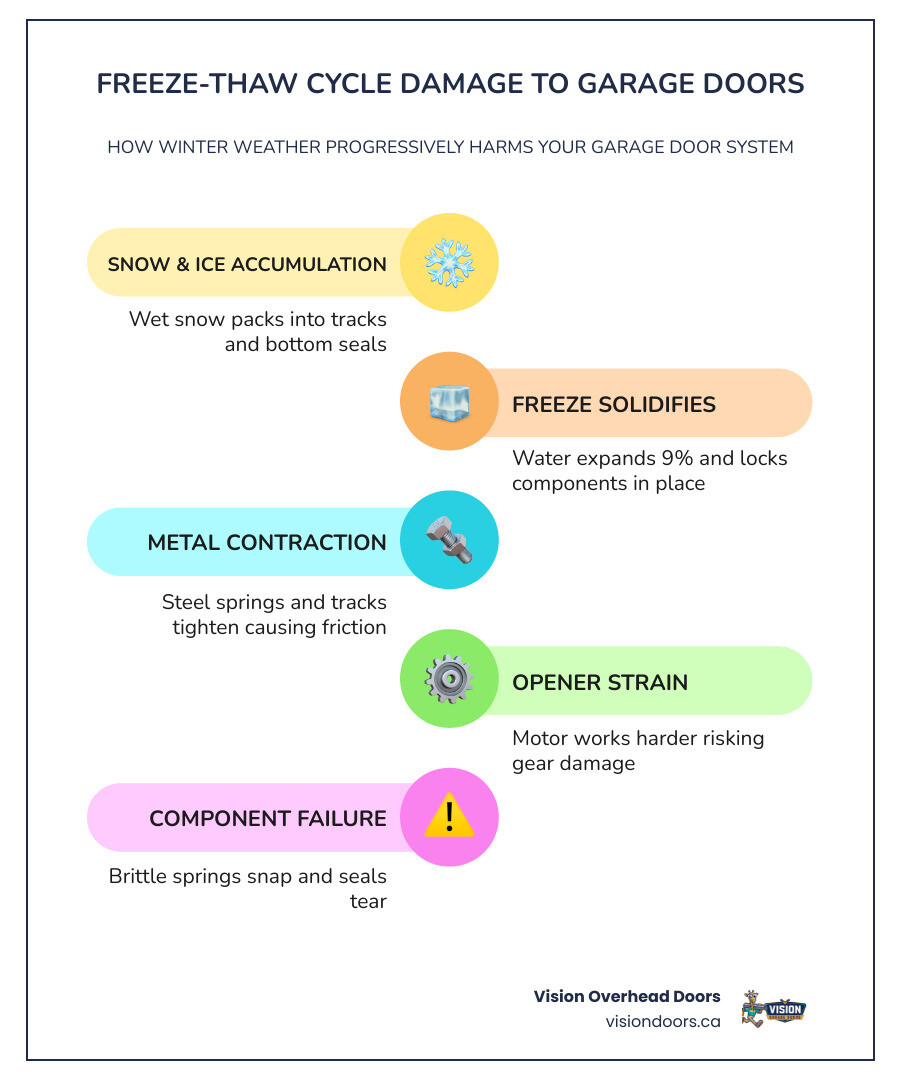
Understanding how snow and ice damage garage door systems could save you from a frustrating — and expensive — situation this winter. Here is a quick breakdown of the most common ways winter weather attacks your garage door:
- Frozen bottom seals — meltwater refreezes overnight, bonding the rubber seal to the concrete and preventing the door from opening
- Ice in the tracks — snow and slush pack into the track channels, freeze solid, and block rollers from moving
- Metal contraction — cold temperatures cause steel components like springs, hinges, and rollers to contract, increasing friction and wear
- Thickened lubricants — standard grease stiffens in freezing temperatures, adding resistance and straining the opener motor
- Brittle springs — low temperatures make already-tensioned springs more likely to crack or snap
- Blocked safety sensors — snow buildup or condensation near the photo-eye sensors can stop the door mid-cycle or prevent it from closing
- Opener motor strain — when the door is frozen or sluggish, the motor works harder than it was designed to, risking gear damage or burnout
These problems can appear gradually through repeated freeze-thaw cycles, or they can show up all at once on the coldest morning of the year — often when you need your garage door most.
Winters in the Okanagan Valley may not match the extremes of eastern Canada, but the region’s freeze-thaw cycles, overnight temperature drops, and wet snow create the exact conditions that wear down garage door components season after season. Many homeowners do not notice the damage building up until something stops working entirely.
I’m Daryl Rands, owner of Vision Overhead Doors, and after 26 years working on garage doors across the Okanagan Valley, I’ve seen how snow and ice damage garage door systems in ways that most homeowners never anticipate until it’s too late. In this guide, I’ll walk you through exactly what’s happening to your door in winter and what you can do about it.
How Snow and Ice Damage Garage Door Systems: The Physical Toll of Winter
When winter arrives in the Okanagan, bringing freezing temperatures and heavy snow to areas like Vernon, Salmon Arm, and Lake Country, your garage door system faces a series of relentless physical stresses. The most destructive force during this time is the freeze-thaw cycle.
During a typical winter afternoon, snow on your roof or driveway melts, running down the face of your garage door and collecting at the threshold. As night falls and temperatures plunge below freezing, this pooled water expands as it turns to solid ice.
The physics of freezing water are incredibly powerful. As water freezes, it expands by approximately 9% in volume, exerting immense pressure on whatever contains it. If this water has seeped into micro-cracks in your garage floor, under your weatherstripping, or between your door panels, the resulting expansion can widen those gaps, split rubber seals, and even crack concrete.
Over time, this repeated expansion and contraction compromises the structural integrity of your entire system. Understanding these dynamics is The Easiest Way to Extend the Life of Your Garage Door and avoid sudden mechanical failures when the snow piles up.
How Snow and Ice Damage Garage Door Systems via Metal Contraction
Your garage door is a complex machine consisting of numerous moving metal parts, including steel tracks, steel or nylon rollers, hinges, brackets, and heavy torsion or extension springs. Basic physics dictates that metals contract when exposed to cold temperatures.
As the temperature drops in places like Kelowna or Sorrento, the steel components of your garage door system shrink slightly. While this contraction might seem microscopic, it is more than enough to disrupt the precise alignment required for smooth operation.
When tracks contract, the clearance for the rollers narrows. This creates localized binding points where rollers must squeeze through tightened spaces.
Additionally, cold metal loses some of its natural elasticity, which increases surface-to-surface friction. If your tracks are already slightly out of alignment, cold-induced contraction will exacerbate the issue, causing the door to bind, shudder, or stop entirely during its cycle.
How Snow and Ice Damage Garage Door Systems by Overworking the Opener
A common misconception among homeowners is that the garage door opener does all the heavy lifting. In reality, a properly balanced garage door should feel almost weightless, with the springs doing 95% of the work. The opener motor is only rated to lift a small fraction of the door’s actual weight—typically between 10 to 20 pounds.
When snow and ice accumulate on the exterior panels of your door, they add substantial dead weight. Wet, heavy snow can easily add 50 pounds or more to the load.
Furthermore, if the tracks are restricted by contracted metal or frozen lubricants, the resistance increases exponentially.
When you activate the opener under these conditions, the motor must work far beyond its engineered capacity. This extreme strain can strip the internal nylon gears, stretch drive chains or belts, loosen mounting brackets, and trigger the motor’s thermal overload protection, leaving your door stuck halfway open.
Frozen Bottom Seals and Damaged Weatherstripping
The rubber or vinyl bottom seal of your garage door serves as the front-line defense against the elements, keeping wind, water, and pests out of your home. However, it is also highly vulnerable to freezing temperatures.
When meltwater pools at the base of the door and freezes, it bonds the rubber bottom seal directly to the concrete floor. If you attempt to open the door while it is frozen shut, the upward force of the opener will often rip the weatherstripping away from the bottom retainer.
Once the weatherstripping is torn or flattened, a gap is created. This gap allows cold air, driving snow, and road salt to blow directly into your garage, which accelerates the cooling of the space and allows even more moisture to enter and freeze during the next cycle.
Knowing How to Maintain Your Garage Door Between Professional Service Visits is essential to keeping these seals pliable and preventing them from bonding to the concrete threshold.

Common Winter Garage Door Problems Homeowners Experience
Winter weather brings a predictable set of headaches for homeowners across the Okanagan Valley, from Scotch Creek down to Peachland. When temperatures drop, we receive a surge of calls from residents experiencing the same handful of frustrating issues.
Understanding what these common symptoms mean can help you identify a problem before it turns into a complete system failure.
| Winter Garage Door Issue | Primary Cause | Impact on System |
|---|---|---|
| Sluggish or Slow Operation | Thickened track grease & metal contraction | Strains opener motor; increases wear on rollers |
| Loud Popping or Grinding | Frozen rollers, dry hinges, or brittle springs | Can lead to snapped cables or broken springs |
| Door Reversing Unexpectedly | Blocked safety sensors or frozen bottom track | Prevents door from closing; compromises security |
| Door Won’t Budge (Stuck) | Bottom seal frozen to concrete threshold | Can burn out opener motor or tear the weatherstripping |
| Uneven or Crooked Hanging | Frozen track obstruction or slipped cable | Derails the door; requires immediate professional repair |
Recognizing these warning signs early is crucial. Investing time in seasonal care helps you determine whether a quick DIY fix will suffice or if it is time to call in the professionals. For a deeper dive into whether proactive care is worth the effort, check out our guide on All About Annual Garage Door Maintenance Is It Worth It?.
Sluggish Openers and Thickened Lubricants
If your garage door seems to move in slow motion when the temperature dips below zero, the culprit is likely the lubricant inside your tracks and bearings. Many standard household greases and oils are not rated for sub-zero temperatures.
As the cold sets in, these lubricants undergo a physical change, thickening into a sticky, gummy paste that acts more like glue than a lubricant.
This hardened grease dramatically increases rolling resistance within the tracks. Instead of rolling smoothly, the rollers slide and scrape, forcing the opener to exert maximum force.
Over several weeks of winter operation, this added friction wears down the motor’s drive gear and shortens the lifespan of your opener.
Misaligned Safety Sensors and Snow Obstructions
The photo-eye safety sensors located at the base of your garage door tracks are highly sensitive safety devices. They project an invisible infrared beam across the opening; if that beam is broken, the door will refuse to close and will reverse automatically.
In the winter, these sensors face multiple challenges:
- Physical Obstructions: Snow shovelled or blown near the garage opening can easily block the sensors.
- Condensation and Frost: Rapid temperature swings between the cold outdoors and a warmer garage interior can cause condensation or frost to form directly over the sensor lenses, scattering the infrared beam.
- Bracket Misalignment: Cold temperatures can cause the metal mounting brackets to contract and shift slightly, pulling the sensors out of alignment.
If your door starts to close and then suddenly reverses while the opener lights flash, check your sensors for snow, ice, or moisture before attempting to cycle the door again.
Brittle Springs and Snapped Cables
Garage door springs—whether torsion springs mounted above the door or extension springs on the sides—are under an immense amount of tension. These springs are rated for a specific number of cycles (typically around 10,000 cycles).
Extreme cold makes steel brittle. When you combine sub-zero temperatures with the physical strain of lifting a heavy, cold-stiffened door, the risk of spring failure rises dramatically.
It is incredibly common for aging springs to snap during the first severe cold snap of the season. When a spring breaks, it often makes a sound like a gunshot.
If this happens, do not attempt to open the door, as the weight of the door without the spring’s counterbalance can snap cables, damage the track, or cause severe injury.
Practical Steps to Protect Your Garage Door from Winter Weather
While winter weather is inevitable in the Okanagan, severe garage door damage is not. By taking a proactive approach to winterization, you can keep your door operating safely and smoothly all season long.
A few simple maintenance tasks performed in the late autumn or early winter can save you from a stressful morning breakdown. If you want to plan your seasonal maintenance year-round, you can also review these 10 Tasks to Save Your Garage Door This Spring to stay ahead of the weather.
Regular Threshold Clearing and Track Maintenance
The simplest and most effective way to prevent your door from freezing shut is to keep the threshold clear of snow, slush, and standing water.
- Sweep and Shovel: Make it a habit to sweep snow away from the base of the door after every snowfall.
- Clear the Tracks: Inspect the bottom of your tracks for packed snow or ice. If ice builds up in the bottom curve of the track, it will block the rollers and prevent the door from sealing properly.
- Check Track Drainage: Ensure that any drainage holes near your garage opening are clear of debris so meltwater can escape instead of pooling and freezing.
- Wash Away Salt: Road salt brought in by your car can corrode the bottom fixtures of your door and degrade the rubber seals. Periodically wipe down the bottom panel and seals with warm, soapy water to remove salt residue.
Applying Cold-Weather Lubricants
To combat the gumming effect of freezing temperatures, you must use the right lubricant on your door’s moving parts.
- Avoid Thick Grease and WD-40: Standard grease will harden in the cold, and WD-40 is a degreaser rather than a long-term lubricant; it will strip away existing lubrication and attract dirt.
- Use Silicone or Lithium-Based Sprays: Choose a high-quality, winter-grade silicone spray or white lithium grease rated for low temperatures. Silicone remains fluid well below freezing and repels moisture, making it ideal for rubber seals and rollers.
- Apply Strategically: Lightly spray the rollers (especially the bearings), hinges, springs, and lock hardware. Wipe away any excess to prevent drips and keep the tracks clean—do not lubricate the inside of the tracks themselves, as this will only trap dirt and debris.
Testing Door Balance and Spring Tension
A balanced door is critical for reducing strain on your opener during the cold months. You should test your door’s balance at least once before winter sets in.
To test your door’s balance:
- Close the door completely.
- Disconnect the opener by pulling the red emergency release cord.
- Lift the door manually halfway up and let go.
If the door is properly balanced, it should stay in place or drift only slightly. If the door slams shut or shoots upward, your springs are out of balance and require professional adjustment.
Never attempt to adjust torsion springs yourself, as they are under high tension and can cause severe injury. Keeping your door balanced is a year-round job; you can learn more about managing your door during warmer months with these Summer Garage Door Tips to Keep Your Home Happy.
Frequently Asked Questions About Winter Garage Door Care
To help you keep your garage door running smoothly, here are answers to the most common questions Okanagan homeowners ask about winter garage door maintenance.
How do I keep my garage door from freezing shut?
To prevent your garage door from bonding to the concrete threshold overnight, keep the area clear of snow, slush, and standing water. Wipe down the bottom rubber seal with a thin coat of silicone-based lubricant or petroleum jelly. This creates a hydrophobic barrier that prevents water from sticking to the rubber and freezing it to the floor. If your bottom seal is worn, cracked, or hardened, replace it before the freezing weather arrives.
What type of lubricant works best in cold weather?
You should always use a silicone-based or white lithium-based spray lubricant specifically rated for garage doors and low-temperature performance. Avoid general-purpose oils, thick greases, or WD-40. Silicone spray is excellent because it repels moisture and remains highly fluid in sub-zero temperatures, ensuring your rollers and hinges move freely without attracting abrasive dust and grime.
Is it safe to use my opener if the door is frozen?
No, it is not safe. If your garage door is frozen to the ground or the tracks are blocked by ice, activating the opener can cause severe damage. The motor will strain against the solid ice, which can strip internal gears, break the drive chain, bend the tracks, or tear the bottom weatherstripping off the door. Always disconnect the opener manually first, gently clear the ice from the bottom seal, and ensure the door can be lifted by hand before reconnecting and using the automatic opener.
Conclusion
Winter in the Okanagan Valley brings beautiful snowy landscapes, but it also presents a serious mechanical challenge to your home’s garage door. From metal contraction and gummed-up lubricants to frozen bottom seals and brittle springs, understanding how snow and ice damage garage door systems is the first step toward protecting your investment and ensuring your daily routine isn’t disrupted by a sudden breakdown.
Taking a few minutes to clear your threshold, apply the correct cold-weather lubricant, and monitor your door’s balance can prevent costly emergency repairs.
If you find yourself facing a frozen door, a broken spring, or an opener that simply refuses to cooperate in the cold, we are here to help. Vision Overhead Doors offers comprehensive maintenance and repair services throughout the Okanagan Valley—including Kelowna, Vernon, Salmon Arm, Lake Country, and surrounding communities.
With our same-day service, deep local expertise, competitive pricing, and commitment to delivering a personal experience for every customer, we will ensure your garage door is ready to stand up to whatever winter throws its way.
Don’t wait for the next major snowstorm to catch you off guard. Contact us today to schedule your winter tune-up or request prompt assistance through our Okanagan Garage Door Repair Services.