Is an Insulated Garage Door Worth the Extra Cost? Here’s the Short Answer
Is an insulated garage door worth the extra cost for most homeowners? Yes — especially if your garage is attached to your home, shares a wall with a living space, or you use it for more than just parking. The energy savings, improved comfort, quieter operation, and longer door lifespan all add up to a return that typically outpaces the upfront premium within a few years.
Here’s a quick snapshot to help you decide:
| Your Situation | Is Insulation Worth It? |
|---|---|
| Attached garage sharing a wall with living space | Strongly yes |
| Room located directly above the garage | Strongly yes |
| Garage used as a workshop, gym, or hobby space | Yes |
| Detached garage used only for storage, no heating planned | Probably not |
| Cold climate with harsh winters (like the Okanagan) | Yes |
| Mild climate, detached, unheated storage only | Likely no |
The core benefits at a glance:
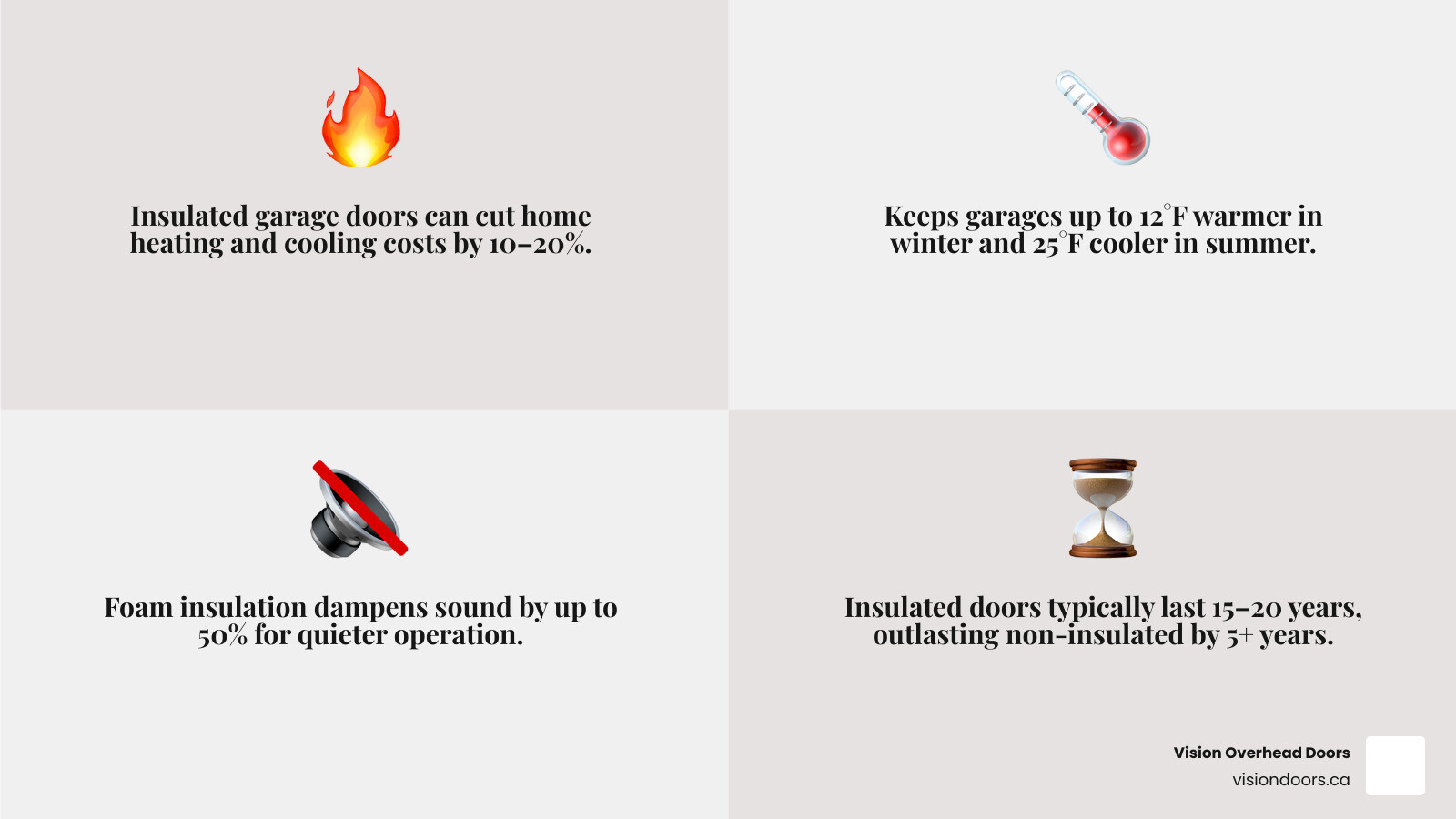
- Energy savings — Insulated doors can reduce home heating and cooling costs by 10–20%
- Temperature stability — Up to 12°F warmer in winter and 25°F cooler in summer compared to a non-insulated door
- Noise reduction — Foam insulation can dampen sound by up to 50%
- Longer lifespan — Insulated doors typically last 15–20 years, outlasting non-insulated options by 5 or more years
- Resale value — Real estate professionals estimate a 1–4% increase in home value
Your garage door is the largest single opening in your home. When it’s uninsulated, it acts more like a thermal sieve than a barrier — letting heat escape in winter and pour in during summer. That affects not just the garage itself, but any room connected to it.
Of course, the right answer depends on your specific setup. A detached storage garage in a mild climate is a very different situation from an attached double garage with a bedroom above it in Vernon or Kelowna. This guide walks through the real numbers, the performance differences, and the scenarios where insulation pays off — and the ones where it doesn’t.
I’m Daryl Rands, owner of Vision Overhead Doors and a Red Seal Carpenter with 26 years of garage door experience serving the Okanagan Valley — and the question of is an insulated garage door worth the extra cost is one I hear from homeowners almost every week. In this guide, I’ll share what the data shows and what I’ve seen firsthand, so you can make a confident decision for your home.
Understanding Garage Door Insulation: Polystyrene vs. Polyurethane
To understand whether an insulated garage door is worth the extra investment, we first need to look at what actually goes inside these doors. A standard, non-insulated garage door is essentially a single, thin sheet of steel. It provides security and keeps out the rain, but it offers virtually zero thermal resistance.
Insulated doors, on the other hand, incorporate a core of specialized foam. The two primary materials used for this core are polystyrene and polyurethane. While they might sound similar, they perform very differently.
Polystyrene vs. Polyurethane Performance
Polystyrene is the classic, budget-friendly insulation material. It consists of rigid, pre-cut foam panels that are inserted into the steel cavities of the garage door during manufacturing. Because these panels are pre-cut, they do not fill every single nook and cranny. Small air gaps remain around the edges of the panels, which can allow a minor amount of heat transfer.
Polyurethane is the high-performance champion of garage door insulation. Instead of using pre-cut boards, manufacturers inject polyurethane as a liquid foam directly into the door panels. This liquid expands rapidly, filling 100% of the internal cavity, including the tightest corners and joints. As it hardens, the polyurethane bonds directly to the steel skins, creating a solid, dense, composite structure. This process not only eliminates air gaps but also makes the door panel incredibly rigid and strong.
To understand the difference in thermal performance, we look at R-value (which measures thermal resistance) and U-factor (which measures thermal transmittance). A higher R-value means better insulation, while a lower U-factor indicates less heat loss.
While a basic polystyrene door might offer an R-value in the single digits, upgrading to a polyurethane core can easily double that rating, with some premium models reaching exceptional levels of thermal resistance. For a deep dive into how these ratings translate to real-world performance in our Canadian climate, read our guide on All About R-Value in Garage Doors for Vancouver Homes.
How Construction Affects the Upfront Premium
The way a garage door is built directly impacts both its performance and its upfront price. When shopping for a new door, you will typically choose between three construction styles:
- Single-Layer Construction: Just a single sheet of steel. It is lightweight, budget-friendly, and completely uninsulated.
- Double-Layer Construction: A steel exterior skin backed by a layer of polystyrene insulation, which is then finished with a vinyl backing to hold the foam in place.
- Triple-Layer Construction: The gold standard of garage doors. This design features a “steel-insulation-steel” sandwich. The insulation core (either polystyrene or injected polyurethane) is completely sealed between a heavy-duty steel exterior skin and a durable steel interior skin.
Triple-layer doors are highly durable, exceptionally quiet, and offer the best thermal performance. However, because they use twice as much steel and advanced manufacturing processes, they carry an upfront premium compared to single-layer models. To understand how these manufacturing choices translate to your final estimate, check out our resource on The Real Cost of a New Garage Door.
Is an Insulated Garage Door Worth the Extra Cost?
When deciding whether to make the upgrade, it helps to look at the decision through a financial lens. Is the upfront premium truly a wise investment, or is it just a luxury upgrade?
Evaluating the Financial ROI and Energy Savings
The primary financial benefit of an insulated garage door comes from reduced utility bills. Because your garage door represents the largest wall surface on an attached garage, an uninsulated door acts as a massive thermal bridge. In the winter, freezing outdoor air cools the garage, which in turn draws heat directly out of your home through the shared walls and ceiling.
An insulated door helps complete your home’s thermal envelope. By stabilizing the temperature inside the garage, you reduce the workload on your home’s heating, ventilation, and air conditioning (HVAC) system. Homeowners with attached garages often see a noticeable drop in their seasonal energy costs after upgrading.
Over a typical lifespan of 15 to 20 years, these monthly savings can easily offset the initial extra cost of the door, resulting in a clear financial payback. We break down these long-term operational savings further in our article on Why You Might Want to Pay More for an Insulated Door.
Home Resale Value and Curb Appeal Benefits
A new garage door is consistently ranked as one of the top home improvement projects for return on investment (ROI). Because the garage door can make up to 40% of your home’s front facade, upgrading to a high-quality, triple-layer insulated door instantly boosts your home’s curb appeal.
Real estate professionals note that homes with energy-efficient, insulated garage doors tend to attract more buyers and spend fewer days on the market. Buyers in 2026 highly value energy efficiency, and seeing a premium, steel-backed insulated door tells them the home has been well-maintained. The visual appeal of a modern, flush, or carriage-style insulated door can increase a home’s list price significantly. You can read more about how design, materials, and insulation levels impact value in The Price of Style: How Materials and Customization Impact Costs.
Rebates and Tax Credits in British Columbia
Depending on where you live and the specific door you choose, you may be eligible for financial incentives that help lower the net cost of your upgrade. In Canada and British Columbia, various municipal, provincial, and federal green-energy programs offer rebates for homeowners who improve their home’s airtightness and thermal boundary.
Additionally, high-performance doors that meet strict energy-efficiency standards may qualify for specific tax incentives. To see if your upcoming project qualifies for these cost-saving programs, explore our guide on Insulated Garage Doors: Do You Qualify for Rebates in BC?.
Key Performance Factors: Temperature, Noise, and Durability
Beyond the financial calculations, an insulated garage door fundamentally changes how your home feels and functions on a daily basis.
Temperature Stability in Winter and Summer
If you have ever stepped into your garage on a freezing January morning or a scorching July afternoon, you know how extreme the temperature swings can be. An insulated door acts as a barrier against these extremes.
In the winter, a high-quality insulated door can keep your garage significantly warmer than the outdoor temperature, preventing frozen pipes and protecting temperature-sensitive items like paints, tools, and car batteries. In the summer, it keeps the space cooler, preventing your garage from turning into an oven.
| Performance Metric | Single-Layer (Uninsulated) | Double-Layer (Polystyrene) | Triple-Layer (Polyurethane) |
|---|---|---|---|
| Average R-Value | Near R-0 | R-6 to R-9 | R-12 to R-18+ |
| Winter Temp. Difference | No change | 5°C to 8°C warmer | 10°C to 15°C warmer |
| Summer Temp. Difference | No change | 10°C cooler | Up to 15°C cooler |
| Noise Reduction | 0% (Vibrates loudly) | Up to 25% quieter | Up to 50% quieter |
| Structural Rigidity | Low (Prone to denting) | Moderate | High (Extremely dent-resistant) |
Noise Reduction and Operational Quietness
One of the most immediate, noticeable benefits of an insulated garage door is how quiet it is. Single-layer steel doors are essentially giant metal drums. Every time the wind blows, a car drives by, or the door opener runs, the metal panels vibrate and rattle, sending noise echoing through your garage and into your home.
The dense foam core of an insulated door acts as an excellent acoustic barrier. It absorbs sound waves, dampening external street noise, barking dogs, and whistling wind by up to 50%. Furthermore, because the foam is tightly bonded to the steel skins in a triple-layer door, the panels cannot vibrate against each other. This makes the physical operation of opening and closing the door incredibly smooth and whisper-quiet—a massive benefit if you have a bedroom located next to or above the garage.
Durability, Lifespan, and Maintenance Differences
Because a triple-layer insulated door features a solid core sandwiched between two sheets of steel, it is structurally far superior to a hollow, single-layer door. If a basketball hits a single-layer door, it will likely leave a permanent, unsightly dent. A triple-layer polyurethane door distributes the force of an impact across the entire panel, making it highly resistant to dents, dings, and wind damage.
This structural rigidity also prevents the door from warping, bowing, or sagging over time. When a door maintains its perfect shape, it places far less strain on its tracks, rollers, hinges, and torsion springs. Consequently, your entire garage door system experiences less wear and tear, reducing the frequency of maintenance calls and extending the lifespan of your springs. For a complete comparison of how different materials hold up over time, read our analysis on The Tough Truth About the Best Garage Door Materials.
When to Invest: Attached vs. Detached Garages
While insulation offers clear benefits, your specific garage layout plays a major role in determining if the extra cost is justified.
Deciding If an Insulated Garage Door Is Worth the Extra Cost for Attached Garages
If your garage is attached to your home, upgrading to an insulated door is highly recommended. Attached garages typically share one or two walls with your main living spaces—such as a living room, kitchen, or hallway. Even worse, many modern homes feature a master bedroom or bonus room located directly above the garage.

Without an insulated door, the freezing or hot air in your garage will constantly transfer through the shared drywall and floorboards. This creates uncomfortable cold drafts underfoot and forces your home’s thermostat to run constantly to maintain a comfortable temperature. By insulating the garage door, you create a buffer zone that protects your home’s thermal boundary, keeping your living spaces comfortable and your energy bills manageable.
Is an Insulated Garage Door Worth the Extra Cost in Mild Climates?
Here in the Okanagan Valley—from Salmon Arm and Enderby down to Vernon, Lake Country, and Kelowna—we experience beautiful, hot, dry summers and crisp, snowy winters. Our region has distinct seasonal shifts, which makes temperature control a priority for local homeowners.
An insulated garage door is incredibly valuable if you use your garage for anything other than parking your car. If you have a home workshop, a gym, a hobby space, or a laundry area in your garage, insulation makes the space usable year-round without relying on expensive, inefficient space heaters or portable air conditioners. Even if you only use the space for storage, keeping the temperature stable protects valuable items like electronics, sporting gear, and vehicles from extreme temperature fluctuations.
Frequently Asked Questions About Garage Door Insulation
Does an insulated garage door help in the summer?
Yes, absolutely. Many homeowners associate insulation only with keeping out the cold, but it is just as effective at keeping out the heat. In the summer, direct sunlight can bake an uninsulated steel garage door, turning it into a giant radiator that pumps heat into your garage. An insulated door blocks this heat transfer, keeping your garage up to 25°F cooler. This also helps protect your vehicle’s tires, fluids, and battery from heat-induced wear.
How long do insulated garage doors last compared to uninsulated ones?
On average, a high-quality insulated garage door will last 15 to 20 years, with many premium models easily surpassing the 20-year mark when properly maintained. Because of their rigid, multi-layer construction, they resist warping and impact damage far better than single-layer uninsulated doors, which typically last only 10 to 15 years before showing significant wear, dents, or alignment issues.
Can I insulate my existing garage door with a DIY kit?
While you can purchase aftermarket insulation kits at local home improvement stores, we generally advise against them. These kits use double-sided tape or plastic clips to attach vinyl-backed foam panels to the inside of your existing door.
Not only do these kits fail to provide the seamless thermal seal of a factory-insulated door, but they also add significant weight to the door panels. This extra weight can dangerously unbalance your garage door’s torsion springs, causing your opener to strain, stripping gears, or causing the door to fall unexpectedly. Additionally, installing a DIY kit on a new door will often void the manufacturer’s warranty.
Conclusion
So, is an insulated garage door worth the extra cost? For the vast majority of homeowners in the Okanagan Valley, the answer is a resounding yes. The upfront premium is quickly offset by lower monthly energy bills, quieter operation, enhanced durability, and improved comfort in your home. It turns a drafty, noisy utility space into a seamless, comfortable extension of your living area.
At Vision Overhead Doors, we specialize in helping homeowners across Scotch Creek, Sorrento, Blind Bay, Salmon Arm, Vernon, Lake Country, Kelowna, and the surrounding areas choose and install the perfect garage door for their needs. We offer same-day service, local expertise, and industry-leading products installed by experienced professionals who understand our unique local climate.
Ready to upgrade your home’s comfort, quietness, and curb appeal? Explore our wide selection of premium residential styles on our Vision Overhead Doors Garage Doors page, or contact our team today to schedule your free consultation!