What Are the Advantages and Disadvantages of Aluminum Garage Doors?
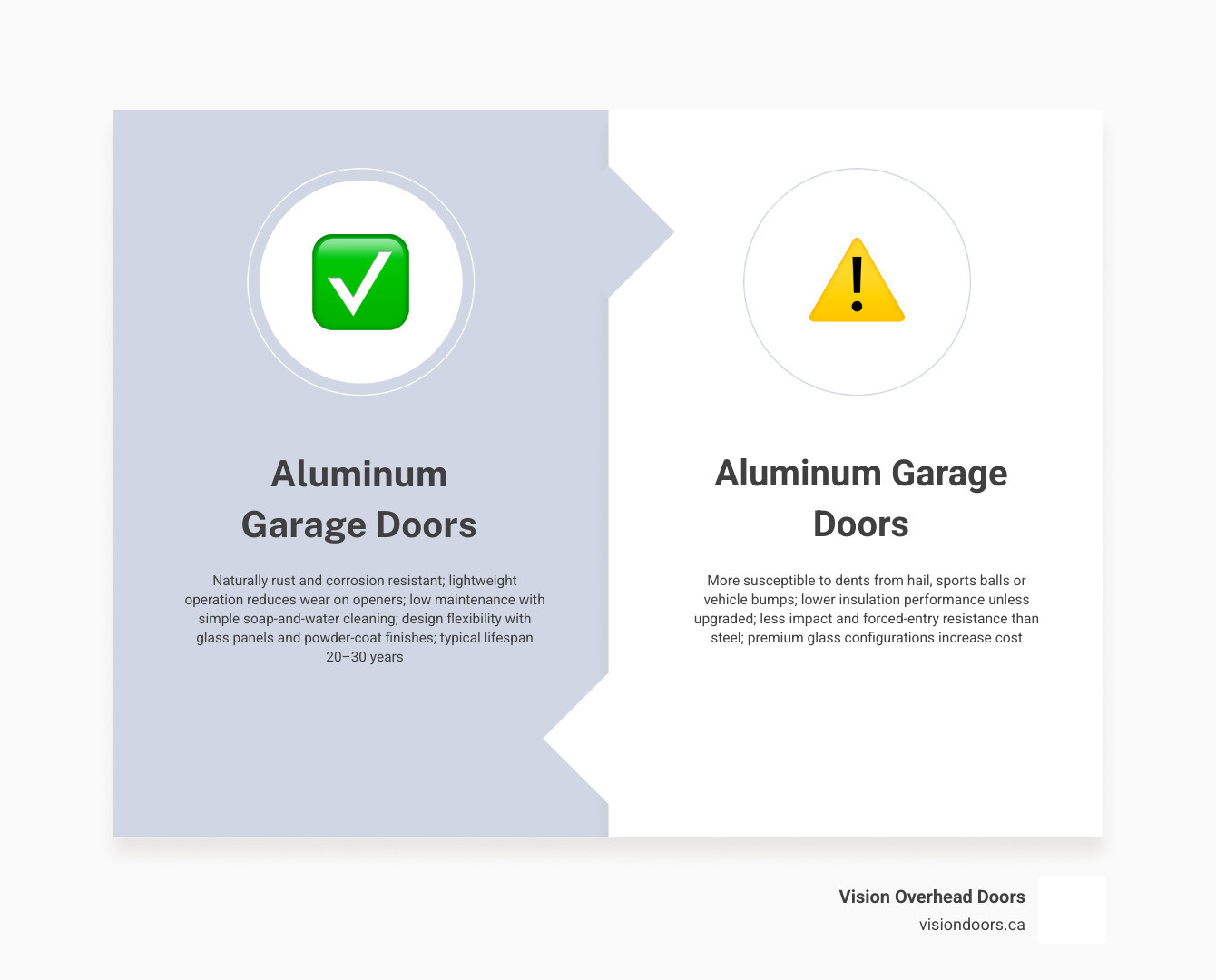
Understanding the aluminum garage door advantages and disadvantages is the fastest way to know whether this material is right for your home. Here’s a quick breakdown:
Advantages:
- Naturally rust and corrosion resistant — ideal for wet or coastal climates
- Lightweight, reducing wear on openers and hardware
- Low maintenance — a simple soap-and-water wash is usually enough
- Design flexibility with glass panels, powder-coat finishes, and modern styles
- Can last 20–30 years with minimal upkeep
Disadvantages:
- Dents more easily than steel from hail, basketballs, or vehicle bumps
- Lower natural insulation performance unless upgraded with a polyurethane core
- Less impact and forced-entry resistance compared to steel
- Premium glass panel configurations can push costs higher
Choosing a garage door is one of those decisions that looks simple on the surface but has real long-term consequences for your home’s functionality, curb appeal, and energy efficiency. Aluminum has grown in popularity — especially in regions with heavy rainfall or salt air — but it’s not the right fit for every situation. Whether you’re replacing an aging door or installing one for the first time, knowing exactly what aluminum delivers (and where it falls short) helps you make a confident, informed choice rather than one you’ll second-guess five years down the road.
I’m Daryl Rands, owner of Vision Garage Doors and a Red Seal Carpenter with 26 years of hands-on experience in the garage door industry across the Okanagan Valley — and I’ve helped countless homeowners work through the aluminum garage door advantages and disadvantages before making their final decision. In the sections below, I’ll walk you through everything you need to know so you can choose the door that genuinely fits your home, climate, and budget.
Key Aluminum Garage Door Advantages and Disadvantages
When evaluating aluminum garage door advantages and disadvantages, we must look closely at how the material behaves under daily stress, weather exposure, and long-term use. Aluminum is uniquely suited for specific architectural designs and regional climates, but it carries physical limitations that every homeowner should understand before signing a purchase order.
The standout benefit of aluminum is its natural corrosion resistance. Unlike steel, which relies on synthetic galvanized coatings that can scratch and rust, aluminum reacts with oxygen to form a tough, non-reactive microscopic surface layer. This natural shield prevents oxidation from eating into the metal. Furthermore, because aluminum is significantly lighter than steel or solid wood, it places far less structural strain on your garage door opener, torsion springs, and track hardware. This weight reduction often translates directly into a longer lifespan for your automatic opener system.
However, the primary drawback of aluminum is its structural softness. It has a lower yield strength than steel, making it susceptible to cosmetic denting. A stray basketball, a backed-up bicycle, or a severe hailstorm can leave permanent impressions on a standard aluminum panel. In addition, raw aluminum is a highly efficient thermal conductor, meaning it transfers outdoor temperatures directly into your garage unless it is engineered with a thermal break and high-density insulation.
To help you visualize how aluminum holds up against alternative options, we have compiled a performance comparison table below:
| Performance Metric | Aluminum Garage Doors | Steel Garage Doors | Natural Wood Garage Doors |
|---|---|---|---|
| Rust & Corrosion Resistance | Excellent (Naturally rust-proof) | Moderate (Prone to rust if scratched) | High (But highly prone to rot/decay) |
| Weight | Very Lightweight | Heavy | Extremely Heavy |
| Dent & Impact Resistance | Low (Dents easily) | High (Especially thicker gauges) | Excellent (Absorbs impacts well) |
| Natural Insulation | Poor (Requires insulation core) | Poor (Requires insulation core) | Moderate to High (Natural thermal barrier) |
| Maintenance Needs | Minimal (Soap and water wash) | Low (Needs prompt scratch touch-ups) | High (Requires staining/painting every 3-5 years) |
| Expected Lifespan | 20–30 Years | 20–30 Years | 20–50 Years (With rigorous care) |
Comparing Aluminum Garage Door Advantages and Disadvantages to Steel
When homeowners ask us to compare steel and aluminum, the conversation usually centers on the balance between durability and physical weight. Steel is the heavyweight champion of structural integrity. It is manufactured in various gauges (where a lower gauge number indicates a thicker, tougher sheet of metal). Because steel is highly rigid, it resists everyday impacts exceptionally well. It is incredibly difficult to puncture or warp, making it the preferred choice for households with active driveways and children.
However, steel’s strength comes with a major catch: weight. A heavy steel door requires more robust spring systems, heavy-duty tracks, and a stronger garage door opener. If a steel door’s protective zinc or powder-coated finish is chipped or scratched, exposure to moisture will trigger rust. Once rust sets in, it can spread beneath the paint, eventually compromising the door’s structural integrity.
Aluminum, on the other hand, is incredibly light and easy to operate manually if the power goes out. Because it places less strain on the entire mechanical system, you can expect fewer service calls for broken springs or burnt-out opener motors. While it does not offer the same dent resistance as heavy-gauge steel, it completely eliminates the risk of catastrophic rust. To explore our full range of material options and find the perfect fit for your property, take a look at our dedicated Garage Doors collection.
Analyzing Aluminum Garage Door Advantages and Disadvantages for Coastal Climates
If you live in a coastal or highly humid environment, the local climate plays a massive role in your material selection. In coastal communities across British Columbia, the air is constantly saturated with moisture and corrosive salt particles. This environment is notoriously hostile to steel. Even high-quality galvanized steel doors can begin to show signs of rust along the bottom panel seams, hardware hinge points, and track edges within a few short years of installation.
For these regions, the corrosion resistance of aluminum is a massive advantage. Aluminum handles salt air and persistent humidity without flinching. It does not rot, warp, or split when exposed to relentless rain, unlike natural wood.
The main consideration for coastal homeowners is wind load. Coastal storms can bring powerful wind gusts that put immense pressure on wide garage doors. Because aluminum is highly flexible, wide double-car aluminum doors may require additional horizontal reinforcement struts to prevent bowing under high wind loads.
Aluminum vs. Steel and Wood: Material Comparison
Every garage door material has a distinct personality, structural profile, and maintenance schedule. Choosing the right one requires looking past the initial aesthetic appeal to evaluate how the material will behave over decades of opening and closing.

Natural wood offers an organic beauty, rich grain patterns, and a classic aesthetic that metal simply cannot replicate. It also provides excellent natural soundproofing and decent thermal insulation. However, wood is incredibly heavy and highly sensitive to moisture. Without regular sanding, sealing, and painting every few years, wood doors will warp, crack, and rot.
Steel serves as the practical middle ground for the majority of residential installations, offering excellent structural strength, high security, and low maintenance at a balanced price point. However, it remains vulnerable to rust in wet coastal climates.
Aluminum stands out as the ultimate modern, architectural choice. It allows for ultra-sleek, clean lines, and is the only material that can seamlessly support massive glass panel configurations without becoming too heavy to operate. It is highly recyclable, making it an eco-friendly option for green building projects.
Durability and Maintenance of Aluminum Garage Doors
While aluminum does not rust, it is not completely immune to environmental effects. Over long periods, raw or poorly finished aluminum can undergo oxidation, which appears as a dull, chalky white residue on the surface. Fortunately, modern manufacturing techniques have virtually eliminated this issue. High-quality aluminum doors are treated with anodized finishes or durable powder coatings that seal the metal away from the elements.
Maintaining an aluminum garage door is incredibly simple compared to wood or steel. It does not require annual painting, staining, or rust-inhibiting treatments. To keep it looking brand new, we recommend a simple annual cleaning:
- Spray the door down with clean water to remove loose dirt and salt buildup.
- Wash the panels with a soft cloth or sponge using a mild, biodegradable soap mixed with warm water.
- Rinse the door thoroughly with a garden hose (avoid using high-pressure power washers, which can damage seals and force water into the garage).
- Inspect the rubber weatherstripping along the bottom and sides for wear, and lubricate the metal hinges and rollers with a high-quality silicone spray.
By keeping up with this simple routine, you can keep your door operating flawlessly for decades. If you are ready to upgrade your home’s exterior with a durable, professionally fitted system, read more about our Upgrade Your Home: Professional Residential Garage Door Installation in Vernon to see how we handle local installations with precision.
Customization and Aesthetics of Aluminum Garage Doors
One of the most exciting aspects of aluminum is its aesthetic versatility. It is highly valued by modern architects and design-conscious homeowners because it can be extruded into incredibly precise, sharp-edged profiles.
Anodizing is an electrochemical process that thickens the natural oxide layer on the metal, resulting in a beautiful, metallic finish (such as clear, bronze, or black anodized) that cannot peel or flake off. For those who want vibrant colors, powder coating offers a baked-on paint finish in virtually any hue imaginable, providing superior scratch resistance compared to standard liquid paint.
Furthermore, aluminum is the premier material for “full-view” glass garage doors. These doors feature a strong aluminum grid frame that holds large panels of glass, acrylic, or solid aluminum inserts. This design floods your garage with natural light during the day and turns your garage into a glowing architectural feature at night. To understand how these premium design choices and material selections influence your overall investment, check out our detailed guide on The Price of Style: How Materials and Customization Impact Costs.
Climate Performance, Energy Efficiency, and Security
A garage door is not just a decorative wall; it is a giant moving barrier that protects your home from the elements, manages your indoor climate, and secures your valuables. How aluminum performs in these areas depends heavily on how the door is constructed.
Climate Suitability and Weather Resistance
In regions with mild, consistent climates, a standard single-layer aluminum door performs beautifully. However, in areas that experience dramatic seasonal temperature swings — such as hot summers and freezing winters — aluminum’s high thermal conductivity becomes a major factor.
Because aluminum transfers heat so rapidly, an uninsulated aluminum door will act like a giant radiator in the summer, heating up your garage, and a massive ice pack in the winter, pulling heat out of your home. If your garage is attached to your living space, or if you use your garage as a workshop, gym, or home office, managing this thermal transfer is absolutely critical.
Insulation and Energy Efficiency Upgrades
The natural thermal conductivity of aluminum can be completely offset by choosing an insulated model. High-quality insulated aluminum doors feature a “sandwich” construction: an outer aluminum skin, a dense core of polyurethane or polystyrene insulation, and an inner backing material (often another sheet of aluminum or a durable vinyl layer).
Polyurethane is particularly effective because it is injected as a wet foam directly into the panel cavity, expanding to fill every nook and cranny. This bonding process not only provides an exceptional R-value (thermal resistance) but also significantly increases the overall rigidity of the door, making the panels much stronger and quieter during operation.
Additionally, premium doors utilize thermal breaks — non-conductive barriers placed between the interior and exterior metal skins — to stop heat from traveling through the frame. To learn why investing in these thermal upgrades is a smart move for your home’s energy bills, explore our article on Why You Might Want to Pay More for an Insulated Door.
Frequently Asked Questions about Aluminum Garage Doors
Do aluminum garage doors rust in coastal environments?
No, aluminum garage doors do not rust. Unlike steel, which contains iron and oxidizes into red rust when exposed to water and oxygen, aluminum is entirely iron-free. When aluminum is exposed to the atmosphere, it naturally forms a microscopic, highly stable layer of aluminum oxide. This layer acts as a physical barrier that prevents further corrosion, making aluminum the absolute best metal choice for coastal homes exposed to salty sea breezes and heavy rainfall.
How do I prevent dents on an aluminum garage door?
Because aluminum is a softer metal, preventing dents requires a combination of smart product selection and mindful usage:
- Choose a thicker gauge: If you are buying a solid panel aluminum door, ask for a thicker aluminum skin to improve impact resistance.
- Opt for insulated panels: Insulated doors with a polyurethane core are much harder to dent because the dense foam backing supports the metal skin from the inside, absorbing impacts that would easily dent a hollow, single-layer door.
- Mind the driveway activity: If your kids regularly play basketball, hockey, or soccer in the driveway, establish a safe play zone away from the garage door, or consider a steel door for those high-impact areas.
Can aluminum garage doors be insulated for better energy efficiency?
Absolutely. While a basic, single-layer aluminum door offers very little insulation, manufacturers produce outstanding multi-layer insulated models. By sandwiching a high-density polyurethane foam core between two metal skins and incorporating rubber thermal breaks, insulated aluminum doors can achieve excellent R-values. This keeps your garage comfortable year-round, dampens outdoor noise, and prevents conditioned air from escaping your home.
Conclusion
When it comes to selecting the perfect garage door, there is no single “perfect” material — only the material that is perfect for your specific home, climate, and lifestyle. Aluminum offers an unbeatable combination of lightweight operation, complete rust resistance, low maintenance, and ultra-modern style. While it is more susceptible to cosmetic denting and requires insulation upgrades for maximum energy efficiency, its benefits make it an incredibly compelling choice for modern architecture and coastal properties.
At Vision Doors & Windows, we are dedicated to helping you find the ideal architectural solutions for your home. We provide premium custom doors, windows, and professional installation services across British Columbia, including Vancouver, North Vancouver, West Vancouver, Burnaby, Richmond, Coquitlam, Port Coquitlam, Port Moody, Surrey, Langley, Delta, White Rock, Maple Ridge, Abbotsford, Chilliwack, Mission, Squamish, Whistler, and Kelowna.
Our expert team is here to guide you through every step of the process, ensuring your new door is perfectly suited to your home’s unique design and local weather conditions. Ready to elevate your home’s curb appeal with a premium, professionally installed garage door? Visit our Garage Door Installation page today to book your consultation and take the first step toward transforming your home’s exterior.