Your Garage Door Works Hard — Here’s How Often It Needs Attention
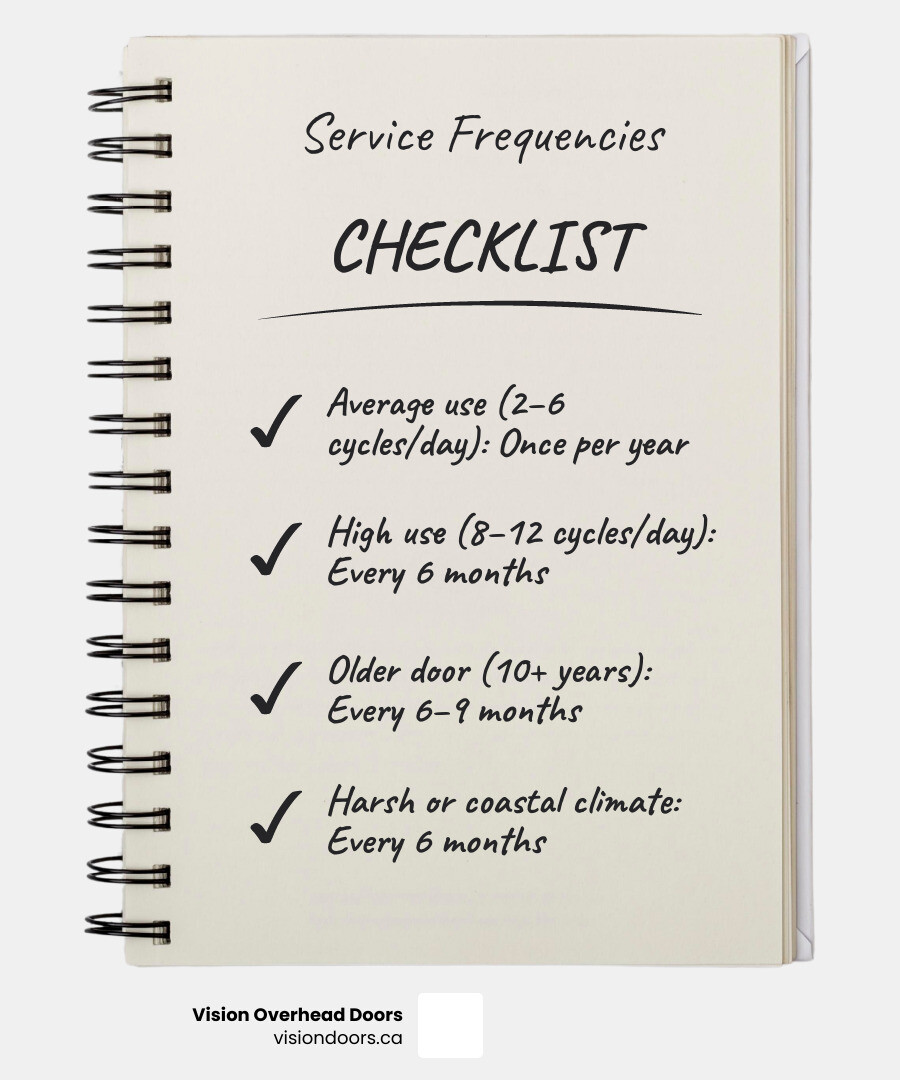
How often should you service your garage door? For most homes, the answer is once a year. Here’s a quick breakdown based on your situation:
| Household Type | Recommended Service Frequency |
|---|---|
| Average use (2–6 cycles/day) | Once per year |
| High use (8–12 cycles/day) | Every 6 months |
| Older door (10+ years) | Every 6–9 months |
| Harsh or coastal climate | Every 6 months |
| Infrequent use (storage only) | Every 1–2 years |
Most people don’t think about their garage door until something goes wrong. But here’s the reality: the average residential garage door opens and closes around 1,500 times a year. That’s 1,500 cycles of mechanical tension, moving parts, and stress on springs, cables, rollers, and tracks — all quietly adding up. And because garage doors are the largest moving system in most homes, a small issue left unchecked can turn into an expensive repair or, worse, a safety hazard.
The good news? A little routine attention goes a long way. Knowing when — and how often — to service your system means fewer surprises, a longer-lasting door, and peace of mind every time you hit that button.
I’m Daryl Rands, owner of Vision Overhead Doors and a garage door professional with 26 years of experience serving the Okanagan Valley — and one of the most common questions I get from homeowners is exactly this: how often should you service your garage door? In the sections below, I’ll walk you through everything you need to know to keep your system running safely and reliably year-round.
The Standard Schedule: How Often Should You Service Your Garage Door?
When we talk about the “standard” schedule, we are looking at the average Okanagan home where the door opens a few times in the morning and a few times in the evening. For these households, we recommend a professional Garage Door Service Vernon BC at least once per year.
Think of this like an oil change for your car. You wouldn’t drive 50,000 kilometers without changing the oil, right? Your garage door is no different. An annual inspection allows us to catch small issues—like a fraying cable or a slightly chipped roller—before they snap and leave your car trapped inside.
The best time to schedule this is during the shoulder seasons: Spring or Fall. In April 2026, as the frost leaves the ground, or in October before the first snow hits, the metal in your door expands and contracts. This shifting can loosen hardware and dry out lubricants. By performing preventative care annually, you significantly extend the lifespan of your components. For context, while standard torsion springs are rated for about 10,000 cycles (roughly seven years), a well-maintained system can often push past those averages, saving you money in the long run.
High-Use Households and Service Intervals
In many modern homes, the garage door has replaced the front door as the primary entrance. If you have a busy family with kids, multiple drivers, and frequent deliveries, you might be hitting 8 to 12 cycles every single day.
When your door is working that hard, the question of how often should you service your garage door changes. For high-use homes, we recommend a professional tune-up every 6 months. High frequency leads to faster wear patterns on the rollers and hinges. If a roller starts to bind and you don’t catch it for a year, it can actually start to bend the tracks or burn out the motor in your opener.
Maintenance for Older Systems and Harsh Climates
If your door is over 10 years old, it requires a bit more “TLC.” Older systems often have metal fatigue in the hinges and brackets. For these vintage setups, a check-up every 6 to 9 months is the sweet spot to ensure everything remains aligned and safe.
Climate also plays a huge role here in the Okanagan. While we don’t deal with coastal salt air (which eats metal for breakfast), we do deal with massive temperature swings. From the blistering heat of a Kelowna summer to the sub-zero winters in Silverstar or Armstrong, the grease on your tracks can thicken or dry out completely. These environmental factors mean that even if you don’t use your door often, the weather is still “using” it by stressing the materials.
Critical Factors Influencing Your Maintenance Needs
Several variables dictate your specific maintenance timeline. It isn’t just about how many times the door goes up and down; it’s about what the door is made of and how it was put together.
- Door Material: Steel doors are durable but can rust if the finish is compromised. Wood doors, while beautiful, are heavy and prone to warping or rotting if not sealed properly. A heavy wood door puts significantly more strain on the springs and opener than a lightweight aluminum or steel model.
- Installation Quality: A door that wasn’t perfectly balanced during installation will wear out twice as fast. If you suspect your door was a “DIY special” from a previous owner, you likely need Garage Door Repair sooner rather than later to correct the geometry.
- Environmental Exposure: Is your garage south-facing? Direct sun can bake the lubrication off the tracks and degrade the weatherstripping.
Professional Tune-Ups vs. Homeowner Maintenance
We love proactive homeowners! There is plenty you can do yourself to keep things running smoothly between our professional visits. However, it is vital to know where the DIY line is drawn.
What you can do:
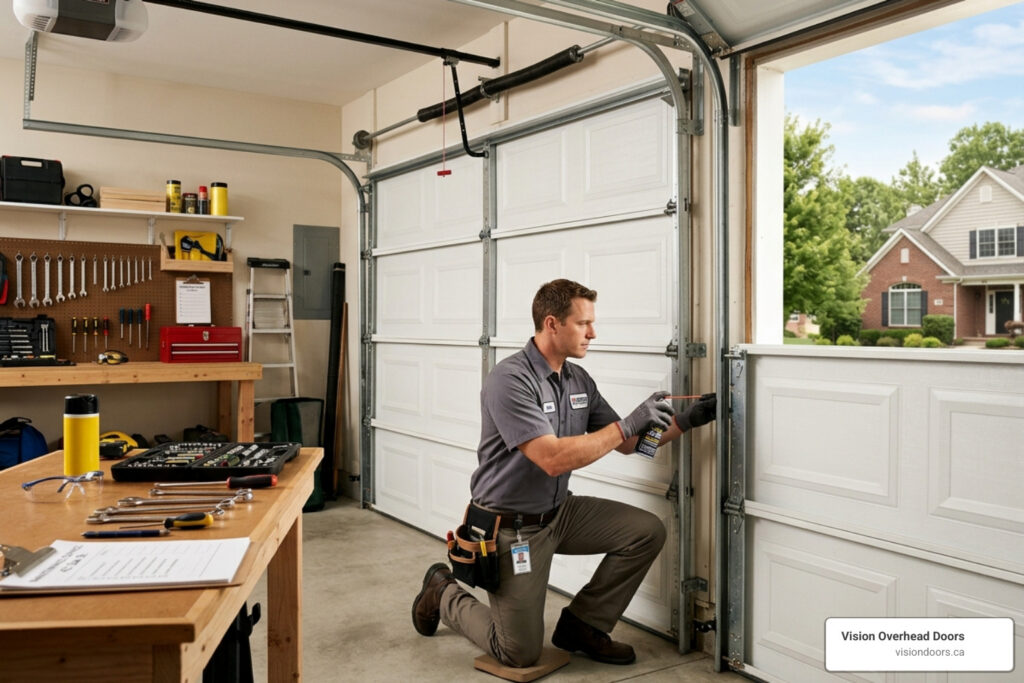
- Lubrication: Every 3 to 6 months, apply a high-quality silicone-based lubricant or white lithium grease to the hinges, rollers (if they have metal bearings), and springs.
- Hardware Tightening: Use a socket wrench to ensure the bolts on the tracks and hinges are snug. The vibration of the door moving 1,500 times a year naturally loosens these over time.
- Cleaning: Wipe out the tracks with a damp cloth to remove dust and debris.
What we should do: While you can handle the grease, you should never attempt Garage Door Spring Repair on your own. Those springs are under enough tension to cause serious injury or even death if they snap during a DIY adjustment. Similarly, Garage Door Opener Repair involving the logic board or motor gears is best left to our technicians to ensure your warranty remains intact. We also perform a professional balance test, which involves disconnecting the opener and checking if the door stays level at various heights—a critical check for system health.
Warning Signs You Need Service Sooner Than Scheduled
Sometimes, your door will tell you it’s in trouble before your annual service date arrives. If you notice any of these Five Signs You Need Garage Door Repair, give us a call immediately:
- Excessive Noise: Grinding, squeaking, or a loud “bang” (which usually indicates a broken spring).
- Slow Response Times: If the door hesitates for several seconds after you hit the remote.
- Uneven Movement: One side of the door rising faster than the other.
- Sagging Sections: Visible gaps when the door is closed.
- Frayed Cables: If you see “hair” sticking out of the lift cables, they are about to snap.
Safety First: Testing Critical Features Monthly
Safety is our number one priority. Garage doors are involved in tens of thousands of injuries every year, many of which are preventable. We recommend performing these three tests every single month:
- The Auto-Reverse Test: Place a 2×4 piece of wood or a solid object on the floor where the door closes. When the door hits the object, it should reverse instantly. If it keeps pushing, your “force settings” are too high, and the door is dangerous.
- Photo-Eye Sensor Check: While the door is closing, wave a broomstick in front of the two sensors at the bottom of the tracks. The door should stop and reverse. Ensure the lenses are clean and aligned (the lights on the sensors should be solid, not blinking).
- Manual Balance Test: With the door closed, pull the red emergency release cord. Lift the door halfway by hand. It should stay in place. If it slams shut or flies open, the springs are out of balance and need professional adjustment.
If your door fails any of these tests, you may need Emergency Garage Door Services to prevent an accident involving a family member or a vehicle.
Frequently Asked Questions about Garage Door Servicing
What lubricant is best for garage door parts?
Always use a dedicated garage door lubricant, typically a silicone spray or white lithium grease. Never use WD-40. While WD-40 is great for loosening a rusty bolt, it is a solvent, not a long-term lubricant. It actually strips away existing grease and attracts dust and hair, which creates a “grinding paste” that destroys your rollers over time.
How do I know if my garage door is unbalanced?
The easiest way is the manual lift test mentioned above. Another sign is if your opener sounds like it’s “struggling” or “groaning” when it lifts the door. An unbalanced door makes a 150-pound slab of steel feel like 400 pounds to the motor, which will lead to a premature motor burnout.
Can I replace my own garage door springs?
In a word: No. Torsion springs are under extreme mechanical tension. Replacing them requires specialized tools and knowledge of winding counts. One slip can result in broken bones or worse. It is one of the few home repairs that is truly “professional only.”
Conclusion
Your garage door is a complex system of springs, cables, and electronics that works hard to keep your home secure and accessible. By following the 2026 service guidelines—aiming for an annual tune-up for average use and semi-annual checks for high-use homes—you can avoid the stress of a mid-winter breakdown.
At Vision Overhead Doors, we pride ourselves on our local expertise across the Okanagan Valley. Whether you are in Vernon, Salmon Arm, Kelowna, or anywhere in between, we offer same-day service and competitive pricing to ensure your door stays in top shape. Don’t wait for the squeak to turn into a snap.
Schedule your professional garage door service in Vernon BC today and let us take the heavy lifting off your hands.