Your Garage Has a Pest Problem — Here’s How to Fix It
How to keep bugs and pests out of your garage starts with understanding why they get in and then systematically closing off every door you’ve left open to them — literally and figuratively.
Quick Answer: How to Keep Bugs and Pests Out of Your Garage
- Seal entry points — Use silicone caulk for cracks, steel wool for larger gaps, and replace worn weatherstripping and door bottom seals
- Eliminate food sources — Store pet food, birdseed, and trash in airtight, hard-sided containers
- Remove clutter — Replace cardboard boxes with sealed plastic bins and get storage off the floor
- Control moisture — Fix leaks, improve ventilation, and use a dehumidifier if needed
- Use natural repellents — Apply peppermint oil, diatomaceous earth, or place bug-deterring plants near entry points
- Maintain your garage door — Check seals seasonally, install a proper door sweep, and repair gaps in the door frame
- Inspect regularly — Do a monthly visual check and a deeper seasonal inspection to catch problems early
Your garage is designed to protect your car, your tools, and everything else you store there. But to pests — mice, spiders, silverfish, ants, and more — it looks like the perfect home. It’s dark, often warm, sometimes damp, and full of places to hide. Garages are also one of the most common entry points for pests making their way deeper into your home. And the damage they cause isn’t just a nuisance: termites alone are responsible for approximately $5 billion in property damage across the United States every year, with many infestations starting in garages and crawl spaces.
The good news is that most pest problems in garages are preventable. With the right habits, a few simple fixes, and a well-sealed garage door, you can make your garage a place pests genuinely don’t want to be.
I’m Daryl Rands, owner of Vision Overhead Doors and a Red Seal Carpenter with over 26 years of experience in the garage door industry serving the Okanagan Valley — and one of the most common things I see when visiting homes is how a poorly sealed or aging garage door quietly becomes the main reason homeowners struggle to keep bugs and pests out of their garage. In the sections below, I’ll walk you through exactly what to do about it, from identifying entry points to choosing the right door seals and long-term maintenance habits.
Why Pests Are Attracted to Your Garage
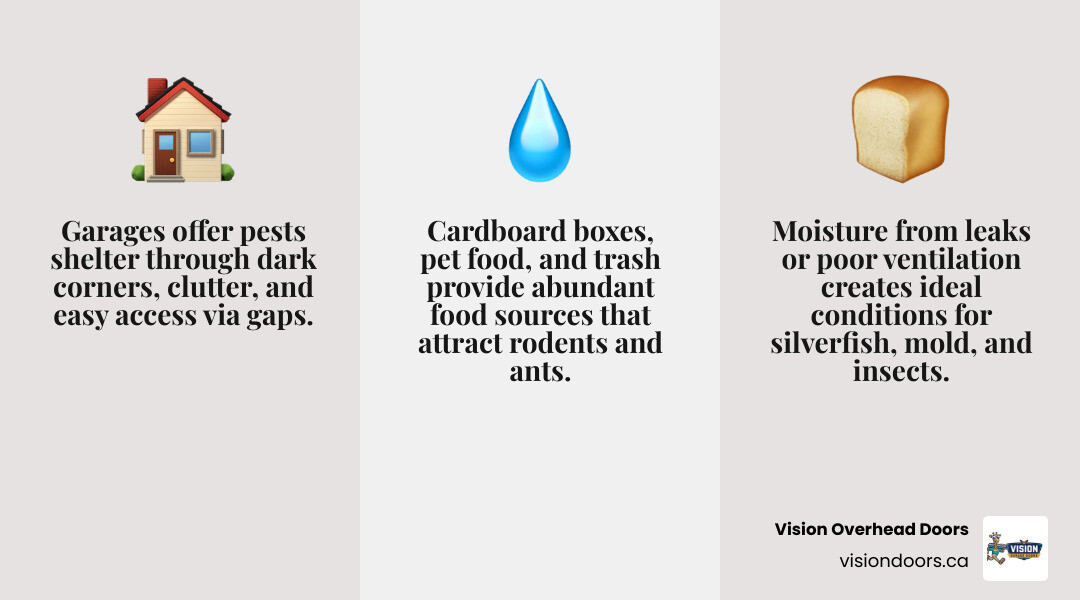
To win the battle against garage invaders, we first need to understand what makes our garages so appealing to them in the first place. Pests do not wander into your garage by accident; they are actively seeking three core elements: shelter, moisture, and food.
In the Okanagan Valley, our distinct seasonal shifts make garages prime real estate. When the blistering summer heat hits places like Kelowna and Vernon, or when the winter frost settles over Salmon Arm and Armstrong, pests seek shelter to escape the elements. Your garage offers a stable, protected climate that mimics their natural dark habitats.
Moisture is another major draw. High humidity, minor plumbing leaks, or condensation on concrete slabs attract a wide range of moisture-loving insects. Once inside, they find a goldmine of food sources. This doesn’t just mean leftover pantry items or pet food; many pests feed on cardboard boxes, glue, paper, and wood.
Clutter provides the final piece of the puzzle: endless hiding spots where pests can nest, breed, and multiply without being disturbed. A single female silverfish, for example, can lay up to three eggs every single day, quickly turning a few stray bugs into a full-blown infestation hidden behind your seasonal storage.
Common Garage Pests and Their Behaviors
Understanding who you are dealing with is half the battle. Here are the most common culprits we encounter in Okanagan garages:
- Spiders: Spiders migrate to garages because they are excellent hunting grounds. While cellar spiders tend to hang in loose webs near the ceiling, more hazardous species like black widows prefer low, dark, undisturbed corners under workbenches or behind storage bins.
- Mice: Deer mice and house mice are incredibly resourceful. They can squeeze through holes as small as a dime (or a pencil) and will readily chew through drywall, wood, and insulation to build nests. They also love to climb into car engines for warmth during chilly Okanagan autumn nights.
- Crickets: Camel crickets and field crickets love dark, damp environments. In hot, dry weather, they flock to garages seeking cool relief.
- Sowbugs: These are actually land-dwelling crustaceans. Because they lack a closing mechanism for their respiratory systems, they are highly dependent on moisture to survive. If you have sowbugs, you have a moisture issue.
- Silverfish: These fast-moving, wingless insects thrive in humid environments and feed on starches and carbohydrates. They love eating the glue on cardboard boxes, book bindings, and paper files.
- Ants and Beetles: Ground beetles and ants enter through tiny cracks in the foundation. Carpenter ants are particularly dangerous because they tunnel into damp or decayed structural wood to build their nests.
- Flies: Attracted by trash cans and food odors, flies can harbor more than 100 different types of disease-causing pathogens, making them a serious sanitary hazard.
Structural Vulnerabilities: Metal vs. Wood-Framed Garages
The physical structure of your garage plays a massive role in how vulnerable it is to pests. Traditional wood-framed garages are highly susceptible to wood-boring insects because they contain cellulose—the primary food source for termites and carpenter ants. Furthermore, wood and standard drywall are soft enough for rodents to chew through over time.
In contrast, metal garages and steel-framed buildings offer superior natural pest resistance. Steel panels contain absolutely no cellulose, meaning termites and carpenter ants cannot feed on or nest inside the structural frame. Additionally, mice and rats struggle to chew through 26-gauge steel, and the metal does not expand or contract with humidity, which prevents seasonal gaps from opening up.
| Feature | Wood-Framed Garages | Metal / Steel Garages |
|---|---|---|
| Termite & Carpenter Ant Resistance | Low (cellulose-rich structure) | High (no cellulose or wood components) |
| Rodent Chewing Resistance | Low (drywall and wood are easily chewed) | High (rodents cannot chew through steel) |
| Structural Gaps Over Time | High (wood warps and shrinks with weather) | Low (metal remains structurally stable) |
| Moisture Retention | High (wood absorbs and holds moisture) | Low (metal does not absorb water) |
How to Keep Bugs and Pests Out of Your Garage: Sealing the Entry Points

Now that we know why pests are coming in, let’s talk about how to shut them out. The absolute first line of defense is physical exclusion. If pests cannot find an opening, they cannot get inside.
To achieve a truly pest-free space, you must create a continuous, gap-free barrier around the entire perimeter of your garage. This involves inspecting the foundation, windows, utility lines, and—most importantly—your garage door. Because the garage door is the largest moving part of your home, it is often the most vulnerable.
Taking care of your garage door isn’t just about pest control; it also extends the lifespan of your door. You can learn more about keeping your system in top shape in our Garage Door Maintenance Guide. If you want to get ahead of seasonal issues, check out our checklist of 10 Tasks to Save Your Garage Door This Spring to ensure your door operates smoothly and seals tightly.
Identifying Gaps and Cracks
To locate where pests are slipping in, we recommend performing two simple tests:
- The Nighttime Flashlight Inspection: Wait until the sun goes down, turn off all the lights inside your garage, and shine a bright flashlight around the perimeter of your garage door, windows, and walls. Have a family member stand outside to see if any light leaks through. Any spot where light escapes is an open highway for insects.
- The Dollar Bill Test: Insert a dollar bill under your garage door’s bottom seal. If you can slide it out easily without any resistance, your seal is too loose, and mice or crawling insects can easily slip underneath.
Don’t forget to inspect utility penetrations—the spots where pipes, electrical conduits, and AC lines enter through the garage walls. Hairline cracks in concrete can be sealed with silicone-based caulk, while wider joints should be filled with a backing rod and high-quality polyurethane caulk. For larger voids, use expanding foam, but always back it with copper mesh or steel wool first; otherwise, mice will simply chew right through the dried foam.
Upgrading Weatherstripping and Door Seals
Standard vinyl weatherstripping can degrade, crack, and warp over time due to the Okanagan’s freezing winters and hot summers. If your side jambs or top seals are brittle, they need to be replaced.
The bottom seal is your most critical barrier. We recommend installing a heavy-duty U-shaped rubber or silicone bottom seal that compresses tightly against the concrete floor. If your garage floor is uneven, you can also install a solid rubber threshold strip directly onto the concrete where the door lands. This creates a double barrier that blocks both pests and wind-driven rain.
That a garage door can only seal properly if it is correctly balanced and its springs are functioning as they should. If your door is crooked or doesn’t close all the way, it may be putting undue stress on your components. Avoid sudden breakdowns by reading our tips on how to Don’t Let Your Springs Snap Early – Maintenance Tips.
Practical DIY Methods for a Clean and Pest-Free Space
Sealing the exterior is incredibly effective, but we must also make the interior of the garage as inhospitable to pests as possible. This comes down to moisture control, smart organization, and consistent cleaning.
Moisture control is the single most important environmental factor for deterring pests like silverfish, camel crickets, and sowbugs. If your garage feels damp, run a dehumidifier to keep the relative humidity below 50%. Ensure your gutters and downspouts are clear and directing water at least six feet away from your garage foundation, and keep the soil graded so that rainwater slopes away from the building.
Here is a quick checklist of essential DIY cleaning steps to keep your garage pest-free:
- [ ] Sweep and vacuum weekly: Focus on the edges, corners, and under workbenches to remove food crumbs, dirt, and spider webs.
- [ ] Clean up spills immediately: Use a mild detergent to eliminate sticky residues from soda, grease, or organic materials.
- [ ] Vacuum up spider webs and egg sacs: Use a shop vac with a crevice tool (which has a 95% immediate removal rate compared to just 20% for a standard broom).
- [ ] Empty the vacuum canister immediately: Dump the contents into a sealed outdoor trash bag so trapped pests don’t crawl back out.
- [ ] Inspect items before bringing them inside: Check cardboard boxes, grocery bags, and outdoor gear for hitchhiking pests before storing them.
Step-by-Step Guide on How to Keep Bugs and Pests Out of Your Garage
To take your defense to the next level, transition your garage storage from chaotic to controlled.
First, banish cardboard boxes entirely. Cardboard absorbs moisture, provides a steady food source for silverfish, and serves as perfect nesting material for mice. Instead, invest in heavy-duty, clear plastic bins with tight-fitting, rubber-gasketed lids. Clear plastic allows you to see what’s inside without opening the lid, and pests cannot chew through or nest inside them.
Second, get everything off the floor. Install heavy-duty wire shelving units, wall-mounted pegboards, or ceiling storage racks. Keeping your items at least 6 to 12 inches off the concrete slab eliminates the dark, ground-level crawl spaces that spiders and rodents love.
Third, manage your trash and food sources strictly. If you store pet food, grass seed, or birdseed in the garage, transfer them to airtight metal or heavy-grade plastic containers. Never leave pet bowls with leftover food sitting out. If you keep trash cans in the garage, ensure they have secure, gasketed lids, and wash them out with soap and water once a month to remove lingering food odors.
Natural Repellents and Traps to Keep Bugs and Pests Out of Your Garage
If you want to keep your garage safe for kids and pets, you can use highly effective natural repellents and mechanical traps instead of harsh chemical sprays.
- Essential Oils: Pests hate strong, aromatic scents. Mix 20 to 30 drops of pure peppermint oil, lavender oil, or eucalyptus oil with water in a spray bottle. Spray this mixture monthly around your garage door tracks, windowsills, and baseboards. (Note: Use caution if you have pets, as some concentrated essential oils can cause mild irritation to dogs and cats).
- Diatomaceous Earth (DE): Use food-grade diatomaceous earth. This all-natural powder is made from fossilized algae. Sprinkle it lightly along the baseboards and in cracks. When insects crawl over it, the microscopic powder absorbs the oils from their exoskeletons, dehydrating and killing them safely without chemicals. DE remains effective indefinitely as long as it stays dry.
- Glue Boards: Place non-toxic sticky traps along the walls and behind shelves. Spiders and crawling insects tend to travel along wall junctions, making these traps incredibly effective for both catching pests and monitoring which bugs are active in your space.
- Snap Traps: For mice, classic wooden snap traps baited with a tiny dab of peanut butter are still the gold standard. Place them perpendicular to the walls where mice run. Avoid using loose rodenticide baits, as poisoned rodents can crawl into your garage walls, die, and cause terrible odor problems.
- Bug-Deterring Plants: Plant peppermint, spearmint, lavender, or marigolds in pots just outside your garage door. These plants act as natural scent barriers that deter pests from approaching the entrance.
Frequently Asked Questions About Garage Pest Control
What smells do garage pests hate the most?
Pests are highly sensitive to strong, pungent aromas. They actively avoid smells like peppermint, lavender, eucalyptus, citronella, rosemary, and cedarwood. Placing cedar chips in open containers or spraying DIY essential oil mixtures around entry points is a fantastic, non-toxic way to create a natural scent barrier that keeps bugs and rodents at bay.
How do I keep mice and rodents out of my garage?
To keep rodents out, you must seal every single opening larger than 1/4 inch. Use a combination of steel wool and copper mesh stuffed tightly into gaps, and seal over them with silicone caulk or concrete patch. Keep all pet food, birdseed, and grass seed locked in airtight metal bins, keep the floor completely clear of clutter, and maintain a clean 12-to-18-inch buffer zone of clear ground between your outdoor landscaping and your garage siding.
When should I call a professional pest control service?
While DIY methods work wonders for prevention, you should call a licensed pest control professional if you notice:
- Active, widespread infestations (such as a visible German cockroach colony or established carpenter ant trails).
- Signs of structural wood damage or wood-boring dust (indicating termites or carpenter ants).
- Large, active wasp or hornet nests inside the garage rafters or wall cavities.
- Persistent rodent issues where traps are continually filled, indicating a large nest nearby.
Conclusion
Keeping bugs and pests out of your garage doesn’t require a constant barrage of harsh chemicals. By understanding what attracts them, sealing up structural gaps, upgrading your weatherstripping, and maintaining a clean, organized space, you can enjoy a clean, pest-free garage year-round.
At Vision Overhead Doors, we know that a secure, well-sealed garage door is your home’s most important shield against the elements and unwanted pests. We proudly serve homeowners throughout the Okanagan Valley—including Kelowna, Vernon, Lake Country, Salmon Arm, Armstrong, and the surrounding areas. Whether you need a quick repair, a brand-new insulated door installation, or same-day emergency service, our local expertise and industry-leading products ensure your garage stays safe, warm, and entirely pest-free.
Is your garage door seal showing its age, or is your door not closing as tightly as it should? Don’t wait for pests to move in. Explore our Garage Door Repair Services to get your door sealing perfectly again. If you’re wondering whether a professional tune-up is right for you, read more in All About Annual Garage Door Maintenance, or reach out to our team today for expert local service. If you are experiencing a broken spring that is keeping your door from closing completely, refer to our Garage Door Spring Repair Guide to get it resolved safely and quickly!