Why Temperature Extremes Are Your Garage Door’s Biggest Threat
Protecting your garage door from temperature extremes is one of the most important — and most overlooked — parts of home maintenance, especially here in the Okanagan Valley where summers push past 35°C and winters bring hard freezes, ice, and rapid temperature swings that can stress every component of your door system.
Here is a quick overview of what you can do to protect your garage door from temperature extremes:
- Insulate your door — Choose an insulated steel door with a polyurethane core to reduce heat transfer and prevent cold from penetrating your garage
- Upgrade weatherstripping and seals — Replace worn bottom seals, side seals, and threshold seals to block wind, water, and pests year-round
- Use the right lubricant — Apply a silicone or lithium-based lubricant on all moving parts seasonally; avoid WD-40, which strips grease and attracts dirt
- Check springs, cables, and tracks — Extreme heat and cold cause metal components to expand, contract, and fatigue faster than normal
- Clean and align safety sensors — Direct sunlight and heat expansion can shift sensors out of alignment, causing the door to reverse unexpectedly
- Schedule seasonal maintenance — A spring tune-up and fall inspection catch small problems before they become expensive failures
- Call a professional for high-tension parts — Springs and cables store enormous energy and should never be adjusted or replaced without trained help
Most garage door problems caused by weather build up silently over weeks or months before something finally breaks — often at the worst possible moment. A dark-colored, south-facing steel door can reach surface temperatures above 150°F on a hot summer day, while a mid-winter cold snap can make springs brittle enough to snap under normal load. Neither scenario gives much warning.
I’m Daryl Rands, owner of Vision Overhead Doors and a Red Seal Carpenter with 26 years of hands-on experience in the Okanagan garage door industry — protecting your garage door from temperature extremes is something I work through with homeowners every single season. In the sections below, I’ll walk you through exactly what heat, cold, humidity, and storms do to your door, and what you can do about it before a costly breakdown forces your hand.
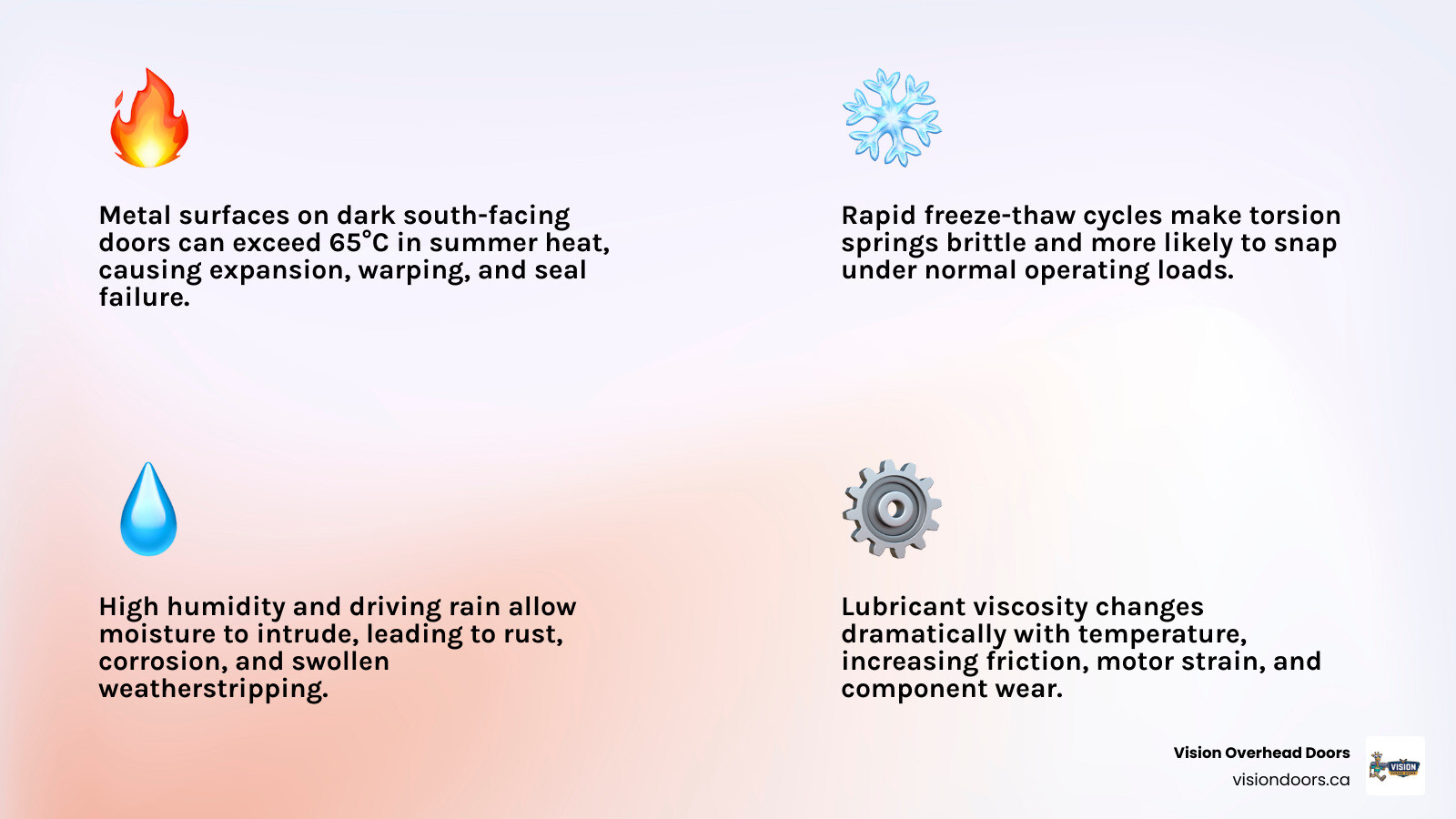
Protecting Your Garage Door from Temperature Extremes: What Heat, Cold, and Humidity Do
Garage doors look tough, but they are large moving systems made of metal, rubber, plastic, insulation, electronics, and fasteners. Every one of those materials reacts differently when the weather changes.
In the Okanagan Valley, we see three big weather stressors:
- Hot summer sun and dry heat
- Winter freezing, thawing, and ice buildup
- Moisture from rain, snow, lake-effect humidity, and storm exposure
The problem is not just one hot day or one cold night. It is the repeated cycle of expansion, contraction, drying, freezing, and moisture exposure. Over time, that can affect alignment, spring tension, opener performance, seals, panels, and hardware.
| Weather condition | What it does | Parts most affected | Common warning signs |
|---|---|---|---|
| Extreme heat | Expands metal, thins lubricant, heats opener motor, dries seals | Tracks, rollers, opener, panels, weatherstripping | Sticking, slow movement, grinding, afternoon reversals |
| Extreme cold | Contracts metal, thickens lubricant, makes springs more brittle | Springs, rollers, hinges, opener, seals | Loud popping, stiff movement, frozen bottom seal |
| Freeze-thaw cycles | Creates ice, traps moisture, shifts seals and thresholds | Bottom seal, threshold, tracks, hardware | Door stuck to floor, water inside garage, uneven closing |
| Humidity and rain | Speeds corrosion and causes wood swelling | Hinges, cables, springs, wood panels, electronics | Rust spots, swollen panels, mildew, noisy hardware |
| Wind and hail | Flexes panels, dents surfaces, bends tracks, stresses hardware | Panels, tracks, struts, rollers, seals | Dents, gaps, rubbing, uneven door movement |
How Extreme Heat Affects Springs, Tracks, Rollers, Panels, and Openers
Heat is sneaky. Your door may work fine in the morning, then hesitate or reverse in the afternoon when the sun has been beating on it for hours.
Here is what happens:
- Springs lose efficiency under repeated heat stress. Torsion and extension springs are designed for cycle life, but heat accelerates metal fatigue.
- Tracks expand slightly. Even small expansion can increase friction if the door is already close to being out of alignment.
- Rollers work harder. When tracks expand and lubricant thins, rollers can drag, chatter, or grind.
- Lubricant breaks down. Standard grease can thin, drip, or dry out in high heat, leaving hinges and rollers under-protected.
- Openers overheat. Opener motors may shut down temporarily when internal thermal protection is triggered.
- Sensors become temperamental. Direct sunlight can interfere with photo-eye sensors, especially on west-facing doors.
- Panels absorb heat. Dark, sun-facing steel doors can reach surface temperatures above 150°F, which increases thermal stress and can contribute to bowing, fading, or finish breakdown.
If your opener works in the morning but struggles later in the day, the door itself may be creating extra resistance. The opener is often blamed, but it may simply be reacting to heat-related friction. For a deeper look at opener-specific heat problems, read our guide on how summer heat affects your garage door opener.
Protecting Your Garage Door from Temperature Extremes During Cold Snaps and Freeze-Thaw Cycles
Winter creates the opposite problem. Instead of expansion, metal contracts. Lubricants get thicker. Rubber seals harden. Moisture freezes where it should not.
Common cold-weather issues include:
- Springs becoming more brittle under tension
- Rollers moving stiffly in the tracks
- Hinges creaking or binding
- Bottom seals freezing to the concrete
- Ice forming along the threshold
- Weatherstripping cracking or shrinking
- Opener force limits triggering because the door feels heavier
- Snow or ice blocking the bottom section from closing fully
Cold does not actually make your door heavier, but it can make the system act heavier. When friction increases, the opener has to work harder. That can cause reversals, incomplete travel, or extra wear on the motor.
Before winter sets in, clear debris from the threshold, inspect the bottom seal, lubricate moving parts with a cold-suitable silicone or lithium-based product, and test the door manually. If you are considering a new opener for winter reliability, our article on choosing a winter proof opener explains what matters most.
How Humidity, Rain, and Coastal Air Accelerate Wear
Even though the Okanagan is known for dry summers, many local homes still deal with moisture from lake proximity, spring rain, melting snow, irrigation overspray, and poorly drained driveways.
Moisture affects garage doors in several ways:
- Rust forms on exposed steel. Springs, cables, hinges, brackets, and tracks are especially vulnerable.
- Wood can swell or rot. If a wood door’s finish fails, moisture can enter and cause warping or soft spots.
- Hardware wears faster. Corrosion increases friction and weakens moving parts.
- Electrical issues become more likely. Moisture around sensors, wall controls, or opener wiring can cause intermittent operation.
- Seals degrade. Damp conditions can encourage mildew and make old rubber crack faster.
The best defence is a complete seal system, good drainage, corrosion-resistant hardware, and regular visual inspections. If water runs toward your garage, a threshold seal or drainage improvement can make a major difference.
Best Garage Door Materials, Insulation, and Weatherproofing for Harsh Climates

The right door material makes protecting your garage door from temperature extremes much easier. A door that looks great but cannot handle heat, cold, moisture, and wind will need more attention and may age faster.
For Okanagan homes, we usually look for four things:
- Dimensional stability
- Insulation performance
- Moisture resistance
- Quality weather sealing
Choosing Materials for Hot, Humid, and Storm-Prone Regions
Here is how common garage door materials perform in harsh seasonal weather:
Insulated steel
Insulated steel is one of the most dependable choices for homes that see both hot summers and freezing winters. Steel provides strength, while the insulated core improves temperature stability and helps reduce panel flex. A light-coloured, insulated steel door is especially useful on south- or west-facing garages.
Polyurethane-core steel
Polyurethane insulation bonds to the door skins and adds rigidity. It usually provides stronger thermal performance than basic foam-board inserts and can help the door resist warping and vibration.
Polystyrene-core steel
Polystyrene is a rigid foam insulation option. It can still provide good thermal improvement over an uninsulated door, especially when installed as part of a properly sealed door system.
Composite
Composite doors can mimic the look of wood while resisting moisture better than traditional wood. They are a good option when appearance matters but you want less maintenance.
Fiberglass
Fiberglass resists rust and moisture, but it should have a quality UV-resistant finish if exposed to strong sun. Without proper protection, long-term UV exposure can fade or weaken finishes.
Aluminum
Aluminum is lightweight and rust-resistant, but it can dent more easily and may expand faster in heat. It can be a good fit for certain designs, but insulation and panel quality matter.
Wood
Wood is beautiful, but it needs the most upkeep. In Okanagan conditions, wood doors should be sealed or painted properly and checked often for peeling finish, cracking, swelling, or moisture entry.
Insulation Options That Reduce Heat Transfer and Energy Loss
Insulation does not just help in winter. It also reduces summer heat transfer and helps stabilize the temperature inside the garage. Research shows insulated garage doors can reduce summer heat transfer by 60-80%, and high-performing insulated systems can dramatically reduce heat movement compared with uninsulated doors.
That matters if your garage is:
- Attached to your home
- Below a bedroom or living space
- Used as a workshop, gym, or storage area
- Exposed to strong afternoon sun
- Heated in winter
- Prone to freezing pipes or stored items
Key insulation terms:
- R-value: Measures resistance to heat flow. Higher R-value means better insulation performance.
- Polyurethane: Foam injected into the door section; strong thermal performance and added rigidity.
- Polystyrene: Rigid foam board; effective, often more basic than polyurethane.
- Thermal break: A design feature that reduces heat transfer through the door structure.
- Insulated sections: Door panels built with layers that reduce temperature swings and noise.
Insulation can also reduce opener strain. A more stable door is less likely to bow, bind, or shift dramatically during hot afternoons or cold mornings.
Weatherstripping, Threshold Seals, and Perimeter Protection That Work
Weatherproofing is where small upgrades make a big difference. If you can see daylight around your closed door, air, water, insects, leaves, and cold drafts can get in too. Nature is persistent. It has no hobbies.
Essential weatherproofing upgrades include:
- Bottom seal: Compresses against the floor to block drafts, water, and debris.
- Side seals: Close gaps along the vertical edges of the door.
- Top seal: Prevents wind-driven rain and cold air from entering above the door.
- Threshold seal: Attaches to the concrete floor and helps block water, especially on uneven floors.
- Retainer replacement: Holds the bottom seal securely and should be replaced if bent or corroded.
- Perimeter weather seal system: Creates a full seal around all four sides.
- Garage drainage improvements: Helps move water away from the door opening.
- Seal inspection after storms: Catches gaps caused by wind, debris, or shifting.
Threshold seals are especially helpful when the driveway slopes toward the garage or when the concrete floor is uneven. Before installing one, make sure water will not be trapped inside the garage. Seals should block water, not create a tiny indoor pond.
Storm, Wind, Hail, and Sun Protection for Garage Door Durability
Temperature extremes are not the only weather issue. The Okanagan also sees strong winds, thunderstorms, hail, snow load around openings, and intense UV exposure. Your garage door is one of the largest moving surfaces on your home, so it takes a lot of weather punishment.
How High Winds and Storms Damage Garage Doors
During strong wind events, pressure pushes and pulls on the door. If the door flexes too much, panels can buckle, rollers can pull against the tracks, and the whole system can become misaligned.
Wind-related protection can include:
- Reinforced door sections
- Horizontal struts
- Heavy-duty tracks
- Stronger hinges and brackets
- Wind-rated hardware
- Properly anchored track systems
- Professional installation and alignment
Wind-rated garage doors are designed to handle specific pressure loads. General guidance in the industry ranges from around +/-20 psf for 100 mph winds up to much higher ratings for severe wind zones. The right rating depends on local exposure, door size, building design, and code requirements.
If your door shakes heavily in wind, pulls away from the seals, or sounds like it is flexing more than usual, do not ignore it. Storm stress tends to worsen small alignment problems.
What Hail and Flying Debris Can Do to Panels and Hardware
Hail damage is not always just cosmetic. Yes, dents are annoying. But impacts can also damage internal stiles, crack fiberglass, loosen fasteners, or knock the door slightly out of alignment.
After a hailstorm or debris impact, check for:
- Dented or creased steel panels
- Cracks in fiberglass or composite sections
- Bent hinges or brackets
- Rollers that no longer sit properly in the tracks
- Scraping sounds during operation
- Gaps around the perimeter seals
- Door sections that appear bowed or twisted
If the door still moves but sounds different, stop and inspect it before repeated use. Running a damaged door can turn a panel issue into a track, roller, cable, or opener problem.
Sun Exposure, UV Damage, and Panel Warping Prevention
Strong sun is one of the biggest long-term threats to exterior finishes. South- and west-facing garage doors take the hardest hit because they absorb heat during the hottest part of the day.
Sun damage can cause:
- Fading paint or finish
- Peeling or chalking surfaces
- Brittle weatherstripping
- Wood cracking or checking
- Fiberglass coating breakdown
- Panel bowing from uneven heat
- Extra heat transfer into the garage
To reduce UV and heat damage:
- Choose lighter door colours when possible
- Use UV-resistant coatings or factory finishes
- Keep wood doors sealed and maintained
- Improve garage ventilation
- Consider insulated panels for sun-facing doors
- Add shade where practical
- Replace brittle seals before they split
A light-coloured insulated door can be dramatically cooler than a dark uninsulated door in direct sun. That is not just comfort; it is component protection.
Seasonal Maintenance Routine for Protecting Your Garage Door from Temperature Extremes
A garage door does not need constant attention, but it does need seasonal attention. Think of it like dental care for your house: a little routine care prevents a lot of unpleasant surprises.
For a broader maintenance overview, we recommend reading all about annual garage door maintenance.
Spring and Summer Heat-Readiness Checklist
Before the hot season arrives, give your door a simple heat-readiness check:
- Inspect the weatherstripping. Look for cracking, shrinking, gaps, or hardened rubber.
- Clean the tracks. Remove dust, grit, leaves, and debris. Do not grease the tracks.
- Lubricate moving parts. Use silicone or lithium-based garage door lubricant on hinges, rollers, springs, and bearings.
- Check safety sensors. Wipe lenses clean and confirm both sensors are aligned.
- Watch afternoon operation. If the door only struggles in heat, note the time, temperature, and symptoms.
- Look for panel bowing. Stand inside with the door closed and check for uneven gaps.
- Test remote range. Heat can affect electronics and batteries.
- Improve ventilation. Vents or fans can reduce extreme garage ceiling temperatures.
- Listen for new noises. Grinding, squealing, or popping is your door politely asking for help.
Avoid WD-40 as your main lubricant. It is useful for some tasks, but it is not a proper long-term garage door lubricant because it can strip grease and attract dirt.
For safe homeowner maintenance steps, see our guide on how to maintain your garage door between professional service visits.
Fall and Winter Freeze-Protection Checklist
Before freezing weather hits, prepare your garage door for cold mornings and freeze-thaw cycles:
- Replace damaged seals. Do not wait for the first icy draft.
- Clear the threshold. Remove leaves, gravel, and dirt that can trap moisture.
- Check the bottom seal. Make sure it is flexible and not torn.
- Use cold-rated lubricant. Apply it to rollers, hinges, bearings, and springs.
- Remove snow buildup. Keep snow and ice away from the bottom of the door.
- Prevent frozen seals. Keep the floor edge clean and dry where possible.
- Test manual balance. If the door feels heavy or drops quickly, stop and call us.
- Watch opener force. If the opener strains or reverses, do not keep forcing it.
- Inspect cables visually. Look for fraying, rust, or uneven winding.
A well-maintained door lasts longer and runs more safely. Our article on the easiest way to extend the life of your garage door explains why small routine steps make such a difference.
Safe DIY Tasks vs. Repairs That Need a Professional
Some garage door maintenance is safe for homeowners. Some is absolutely not. The tricky part is knowing the difference.
Safe DIY tasks usually include:
- Cleaning tracks
- Wiping safety sensors
- Checking for daylight gaps
- Inspecting weatherstripping
- Clearing snow and debris
- Lubricating hinges and rollers with the right product
- Looking for visible rust, dents, or loose hardware
- Testing the auto-reverse system with care
Call a professional for:
- Broken torsion or extension springs
- Frayed or loose cables
- Bent tracks
- Door off track
- Loud bangs from the spring system
- Door that feels extremely heavy
- Opener motor failures
- Storm or impact damage
- Severe panel bending
- Any repair involving high-tension parts
Springs and cables store a dangerous amount of force. They can cause serious injury if handled incorrectly. If you are unsure, do not experiment. Read our safety-focused guide on why garage door springs should be left to the pros.
Frequently Asked Questions About Protecting Garage Doors from Extreme Weather
What are the first signs temperature extremes are damaging my garage door?
The earliest signs are usually small changes in operation. Watch for:
- Door sticking more in the afternoon
- Slow or uneven movement
- Grinding, squeaking, or popping
- Door reversing before it reaches the floor
- Cracked or shrunken weatherstripping
- Rust spots on hinges, tracks, springs, or cables
- Uneven gaps around the door
- Opener overheating or shutting off temporarily
- Panel bowing or finish damage
- Sensors failing in direct sunlight
If symptoms change with the weather, temperature is probably part of the problem.
What is the best garage door choice for hot summers and cold winters?
For most Okanagan homes, a high-quality insulated steel garage door is a strong choice. Look for:
- Polyurethane or quality polystyrene insulation
- A suitable R-value for your garage use
- Durable weatherstripping on all sides
- Rust-resistant hardware
- UV-resistant finish
- Lighter colour for sun-facing doors
- Reinforced construction if wind exposure is a concern
- Professional installation for proper balance and alignment
A good door is not just about the panel. The springs, tracks, opener, seals, and installation quality all matter.
How often should homeowners inspect and maintain a garage door in extreme weather?
We recommend:
- Monthly visual checks during peak summer and winter
- Seasonal lubrication in spring and fall
- Sensor testing every month
- Seal inspection before summer heat and winter freezing
- Balance awareness any time the door feels heavy or uneven
- Professional maintenance annually, or sooner if the door is noisy, misaligned, storm-damaged, or unreliable
If your garage is attached to your home, exposed to strong sun, or used daily, regular maintenance is even more important.
Conclusion
Protecting your garage door from temperature extremes is really about staying ahead of the weather. Heat expands metal and strains openers. Cold stiffens parts and can make springs brittle. Humidity and rain speed up corrosion. Wind, hail, and UV exposure add another layer of wear.
The good news? Most weather-related garage door problems can be reduced with the right door materials, good insulation, proper seals, seasonal lubrication, and professional inspections when needed.
At Vision Overhead Doors, we help homeowners throughout the Okanagan Valley, including Kelowna, Vernon, Lake Country, Armstrong, Salmon Arm, Enderby, Sicamous, Coldstream, Lumby, and surrounding communities, keep their garage doors safe, smooth, and weather-ready. We offer same-day service whenever possible, local expertise, industry-leading products, and a personal approach to every repair, installation, and maintenance visit.
If your garage door is sticking, noisy, drafty, storm-damaged, or struggling through temperature swings, we are here to help. Schedule garage door repair service with Vision Overhead Doors and let us get your door ready for whatever the Okanagan weather does next.