Why Summer Garage Door Tips for Homeowners Matter More Than You Think
Following the right summer garage door tips for homeowners can be the difference between a door that works flawlessly all season and one that breaks down on the hottest day of the year. Here’s a quick look at what every homeowner should do before summer peaks:
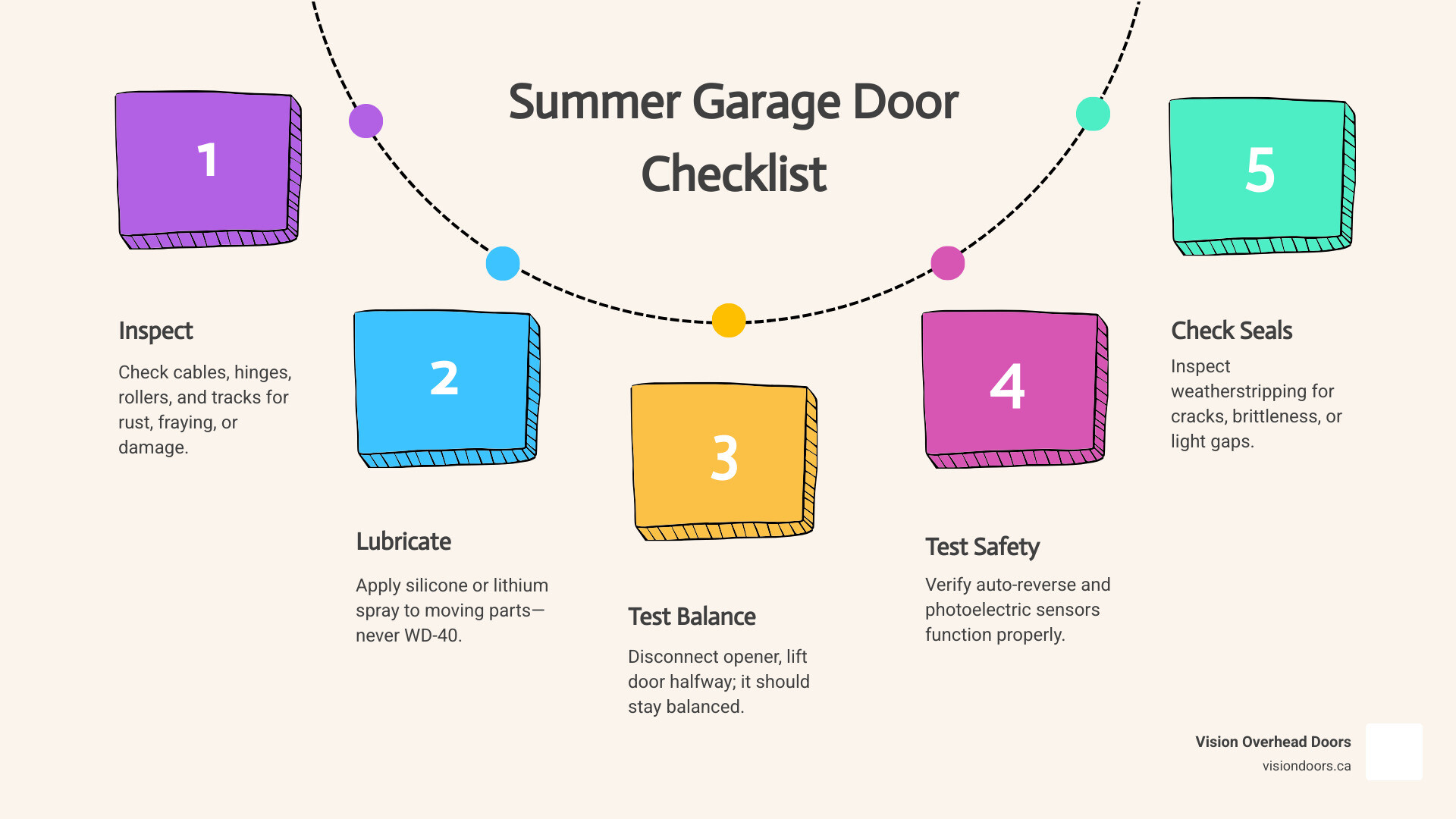
Summer Garage Door Maintenance Checklist:
- Inspect cables, hinges, rollers, and tracks for rust, fraying, or damage
- Lubricate moving parts with a silicone-based or lithium-based spray — not WD-40
- Test the balance by disconnecting the opener and lifting the door halfway
- Test safety features including the auto-reverse and photoelectric sensors
- Check weatherstripping for cracks, brittleness, or gaps letting light through
- Clean the tracks with a damp cloth — no grease or lubricant on the track interior
- Tighten all hardware — bolts and brackets loosen from heat expansion and vibration
- Inspect insulation and consider upgrading if your garage gets uncomfortably hot
- Improve ventilation with a vent, fan, or window to reduce heat buildup
- Schedule a professional tune-up if anything looks worn, misaligned, or suspicious
Summer puts real stress on your garage door. Metal parts expand in the heat, rubber seals dry out and crack under UV exposure, and a door that gets heavy daily use — think kids home from school, weekend barbecues, and backyard activities — takes on a lot more wear than it does in quieter months. In the Okanagan Valley specifically, where summer temperatures can soar well past 30°C, those stresses are amplified. Garage interiors can heat up dramatically even when outside temperatures feel manageable, and repeated daily heat cycling quietly shortens the life of your springs, seals, and opener motor. The good news is that a little proactive care goes a long way — in fact, regular maintenance is widely credited with preventing the vast majority of common garage door service calls.
I’m Daryl Rands, owner of Vision Overhead Doors and a garage door professional with 26 years of experience serving the Okanagan Valley — and these summer garage door tips for homeowners are exactly what I walk my own customers through each year before the heat sets in. Let’s get into each one so you can head into summer with confidence.
Why the Okanagan Heat Challenges Your Garage Door
When May 2026 rolls around in the Okanagan, we all start looking forward to beach days at Shuswap Lake or wine tours in Kelowna. But for your garage door, the rising mercury is a serious test of endurance. The primary culprit is thermal expansion. As temperatures climb, the metal components of your door—the tracks, hinges, and rollers—physically expand. This expansion increases friction, making your opener work harder and potentially leading to misaligned rollers that can reduce your opener’s lifespan by as much as 20%.
Humidity and intense UV rays also play their parts. High humidity can lead to rust on springs, which is a leading cause of sudden failure. Meanwhile, the sun’s rays act like a slow-motion wrecking ball on your rubber and vinyl seals, making them brittle and prone to cracking. We’ve even seen cases where bottom seals have practically melted onto scorching hot garage floors during extreme heat waves.
Perhaps most concerning is spring fatigue. In the hottest parts of the interior, repeated daily heat cycling can reduce spring life by 15-25% compared to milder coastal areas. This is why you need to don’t let your springs snap early with these maintenance tips and learn how to look for clues that your garage door spring is failing. Understanding these environmental stressors is the first step in protecting your home’s largest moving part.
Essential Summer Garage Door Tips for Homeowners in the Okanagan
In places like Vernon, Salmon Arm, and Enderby, we use our garages for everything from storing boats to housing home gyms. This increased summer activity means your door is cycling more often. To keep things running smoothly, start with a thorough visual inspection. Look for frayed cables, rusted hardware, or any parts that look like they’ve seen better days.
Next, grab a socket wrench and perform some hardware tightening. The constant vibration of the door, combined with the expansion and contraction caused by temperature swings, can loosen the nuts and bolts that hold your tracks and hinges together. A quick turn to ensure everything is snug can prevent a major mechanical failure later.
Finally, let’s talk about track cleaning. A common mistake is thinking the tracks need grease. In reality, grease only serves to trap dust, pollen, and debris, creating a “gummy” mess that actually hinders movement. Instead, use a damp cloth or a vacuum with a brush attachment to clear out the tracks. Keeping them clean is a vital part of keeping your home secure with expert residential garage door repair in Vernon. A clean, well-maintained door is a safer door, which is essential to stop the games and keep kids safe near the garage during summer break.
Summer garage door tips for homeowners: Lubrication
Lubrication is the “lifeblood” of your garage door system. However, using the wrong product is often worse than using nothing at all. You should never use WD-40 or household oils. These products are cleaners or degreasers, not long-term lubricants; they actually attract dust and grime which can grind down your hardware.
Instead, reach for a high-quality silicone-based spray or white lithium grease. Apply these to the hinges, metal rollers (specifically the bearings), and the full length of the springs. This reduces the friction caused by heat expansion and keeps the operation quiet. If you’re tired of the neighborhood hearing every time you come home, proper lubrication is one of the best ways to stop the racket and enjoy the quietest garage door openers. Wipe away any excess to prevent it from dripping on your car or the garage floor.
Summer garage door tips for homeowners: Balance Testing
A garage door that is out of balance is a ticking time bomb for your opener. When a door is properly balanced, the springs do the heavy lifting, not the motor. To test this, close the door and pull the red emergency release cord to disconnect the opener. Manually lift the door about halfway up and let go.
If the door stays in place (or moves only slightly), it is well-balanced. If it slams shut or shoots upward, your springs are under the wrong tension. This puts immense strain on your opener and can lead to a premature burnout. Learning how to test your garage door without breaking it is a skill every homeowner in the Okanagan should have in their toolkit.
Testing Safety Features and Weatherstripping
Safety should always be your top priority. Modern garage doors are required by law to have safety reversal systems, but these can fail if not checked. To perform the auto-reverse test, place a 2×4 piece of wood flat on the ground in the door’s path. When the door closes and hits the wood, it should reverse immediately. If it doesn’t, the force settings need adjustment.
Next, check your photoelectric sensors (the “eyes” at the bottom of the tracks). Summer dust and pollen can coat the lenses, causing the door to refuse to close. Wipe them with a soft cloth and ensure they are perfectly aligned. You can test them by waving an object through the beam while the door is closing; the door should stop and reverse. Understanding the magic of auto-reverse and photo-eye sensors is key to meeting the top safety requirements for BC garage doors.
Don’t forget the weatherstripping. In our dry, hot climate, these seals can crack, allowing hot air and pests to enter your “cool” garage. Perform a “light test” at night: if you can see light leaking in around the edges of the door from the inside, your seals are failing and need replacement to maintain energy efficiency.
Improving Ventilation and Insulation for Summer Efficiency
If your garage feels like an oven, your garage door might be the reason. An insulated garage door can reduce interior temperatures by as much as 20-40°F compared to an uninsulated door. This is measured by “R-value”—the higher the R-value, the better the thermal resistance. For homeowners in Lake Country or Kelowna, an R-12 or higher rating is a fantastic investment that protects stored items and reduces the heat transfer into the rest of your home.
Beyond insulation, ventilation is crucial. Installing a garage fan, vents, or even a small window can help move stagnant hot air out of the space. This not only makes the garage more comfortable for DIY projects but also prevents the opener motor from overheating during the hottest part of the day. Taking these steps helps keep your family safe with these garage door tips by ensuring the garage remains a usable, healthy environment.
When to Call a Professional for Summer Repairs
While many summer garage door tips for homeowners are DIY-friendly, some tasks are simply too dangerous for the average person. Garage door springs and cables are under extreme tension—enough to cause serious injury or even death if they snap. If you hear a loud “bang” from the garage or notice a gap in your torsion spring, do not attempt to fix it yourself.
Other red flags include frayed cables, a door that is visibly crooked, or a motor that is making a loud grinding noise. These are signs that the system is failing and requires specialized tools.
| Task | DIY | Professional |
|---|---|---|
| Visual Inspection | Yes | Yes |
| Lubrication | Yes | Yes |
| Cleaning Tracks | Yes | Yes |
| Testing Safety Sensors | Yes | Yes |
| Tightening Hinges/Bolts | Yes | Yes |
| Replacing Weatherstripping | Yes | Yes |
| Spring Adjustment/Replacement | No | Yes |
| Cable Repair | No | Yes |
| Track Realignment | No | Yes |
| Opener Motor Repair | No | Yes |
If you notice any of these five signs you need garage door repair, it’s time to call in the experts.
Frequently Asked Questions about Summer Garage Door Care
Why does my garage door opener struggle more in the summer heat?
The heat causes metal parts to expand, creating more friction in the tracks and hinges. Additionally, high temperatures can cause the motor to overheat, leading to temporary shutdowns. If your door is uninsulated, the heat buildup in the garage makes the motor work in an “oven-like” environment, accelerating wear and tear.
How often should I lubricate my garage door during the hot months?
While we generally recommend lubrication twice a year (spring and fall), if you live in a particularly dusty or hot area of the Okanagan, a mid-summer “touch-up” is a great idea. If you start hearing squeaking or grinding noises, that’s your door’s way of telling you it needs help.
Can I replace my own garage door springs if they snap in the heat?
Absolutely not. Torsion springs are under incredible tension. Replacing them requires specific training and heavy-duty tools. Attempting a DIY spring replacement is one of the most common causes of garage-related injuries. Always leave spring and cable work to a professional.
Conclusion
Taking care of your garage door this summer doesn’t just save you from a headache; it protects your home’s value, security, and safety. From the North Shuswap down to the Central Okanagan, the heat is a force to be reckoned with, but with these summer garage door tips for homeowners, you’ll be ready for whatever the season throws your way.
At Vision Overhead Doors, we pride ourselves on being the local experts for the Okanagan Valley. Whether you’re in Salmon Arm, Vernon, or Kelowna, we offer same-day service, competitive pricing, and the industry-leading products you need to keep your home running smoothly. Don’t wait for a breakdown to happen in the middle of a July heatwave.
If you’ve noticed any issues during your inspection or just want the peace of mind that comes with a professional tune-up, contact us today for expert garage door repair services. We’re here to ensure your garage door stays happy all summer long!